
Buying a Rolex is a deliberate decision. Not because of the brand, but because the piece is meant to stay with you for decades and the secondary market has its own rules. This guide walks the process step by step, the way we walk it with clients in our Grünwald atelier every week. If you want help picking a model, start with our companion piece Which Rolex to buy. The article you are reading now assumes the model question is settled and focuses on the how.
Step 1: Frame a realistic budget
Budget is the anchor. Before you fixate on a specific reference, sort the price bands.
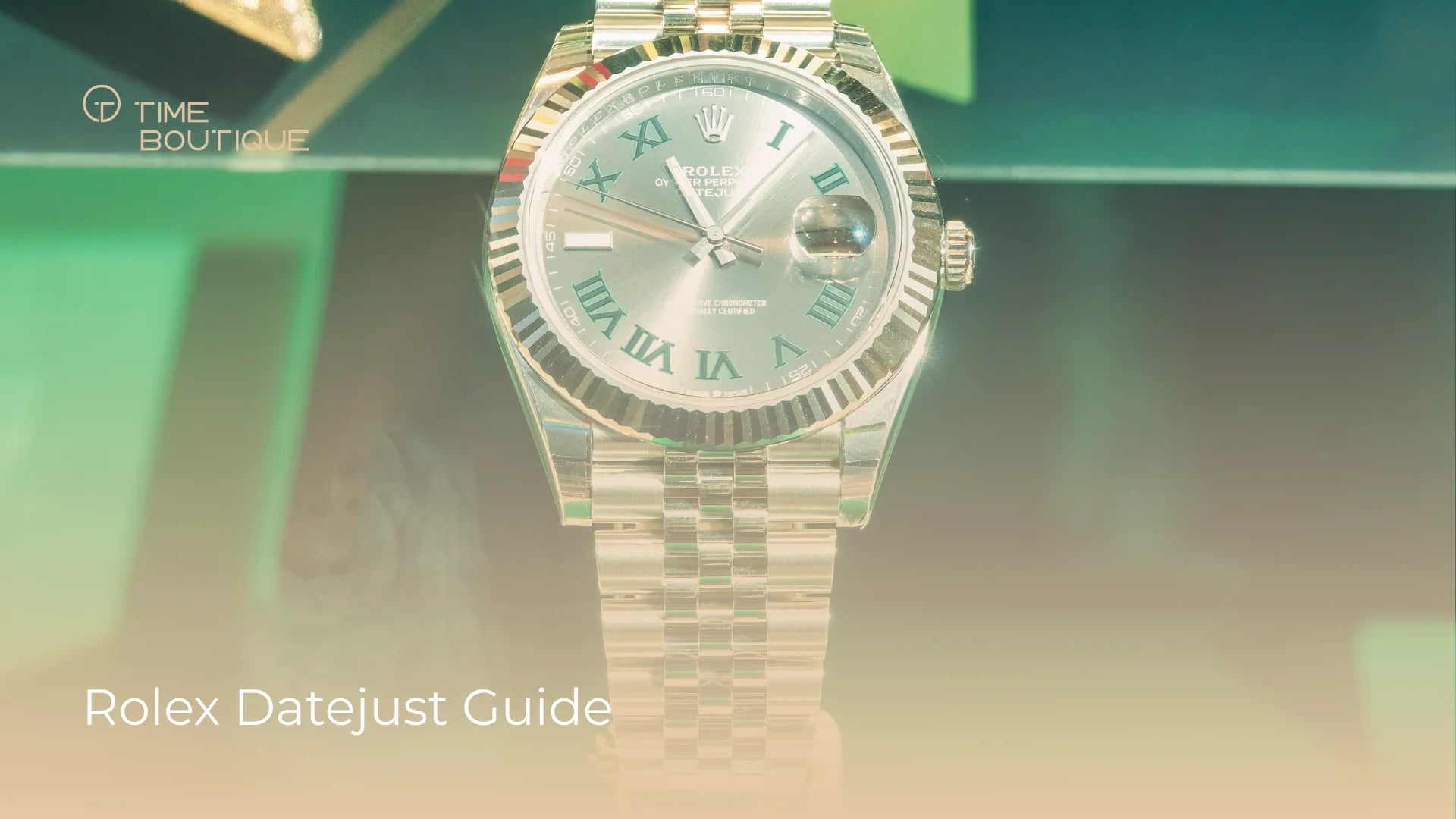
At the entry end, roughly 6,500 to 8,500 €, sit the Datejust 36 in steel with classic dial and the smaller Oyster Perpetual variants. Clean entry into the brand without collector premium.
In the middle band, roughly 11,000 to 18,000 €, you find the popular steel sports pieces. The Submariner Date 126610LN trades around 11,500 to 13,500 € on the secondary market today, the GMT-Master II 126710BLNR ("Batman") usually in the 15,000 to 18,000 € range, the 126710BLRO ("Pepsi") on Jubilee a touch above.
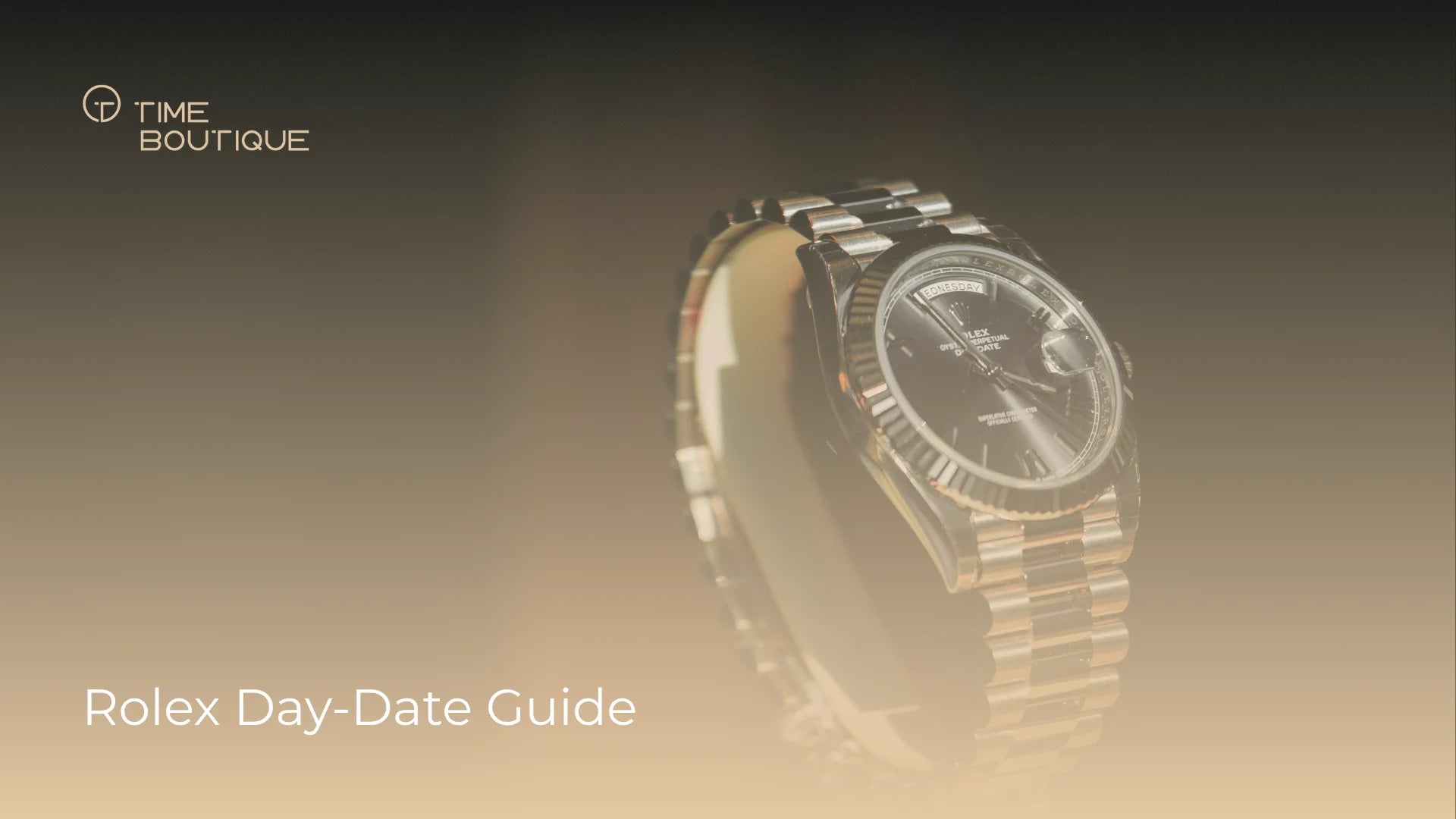
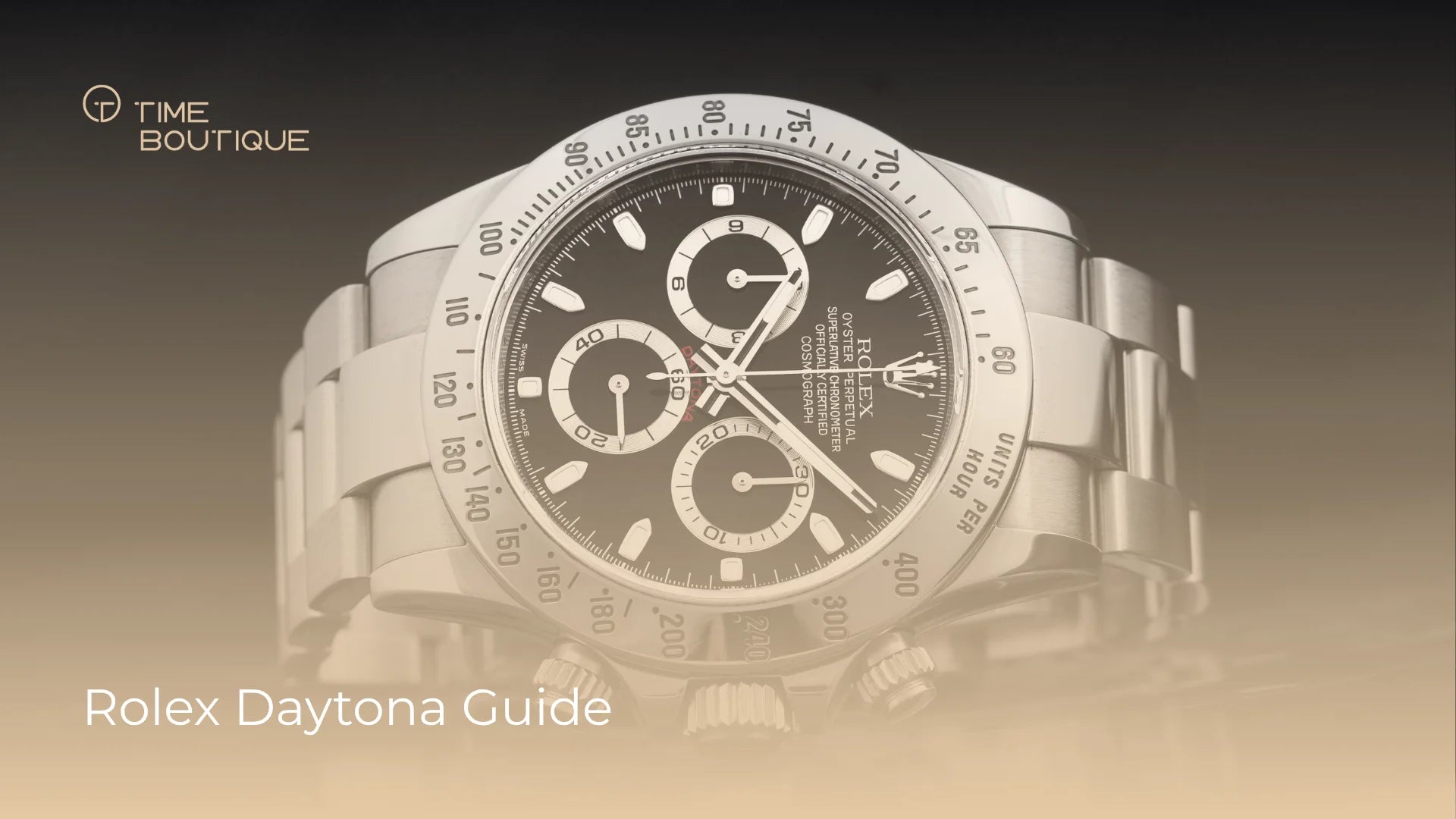
The upper third, from around 25,000 €, is Daytona 116500LN and precious-metal Day-Date territory. Budget here is driven by the specific reference, dial, year and completeness, not just the model name.
Above 50,000 € we are talking collector territory. Vintage Daytonas, early Submariner references, rare Day-Date dials. People who land here buy on provenance, not price list.
Hold back five to ten percent of the purchase price for the next service and small items like bracelet sizing, possibly a new link, replacement springs. That reserve is part of a realistic budget.
Step 2: New, pre-owned, or vintage
Three routes to a Rolex, each with its own math.
New at an authorized dealer gets you the official international warranty and the list-price experience. The catch is availability. For the sought-after sports references (Submariner, GMT-Master II, Daytona), ADs run waiting lists that range from one to several years depending on city and your relationship with the advisor. Nobody can tell you reliably when a Daytona 116500LN will appear in a window. For Datejust, Oyster Perpetual and Day-Date in less common configurations, the AD route is often fast.
Pre-owned on the secondary market means immediate availability against a premium. On the Submariner 126610LN the premium over list is currently moderate, on the GMT-Master II and Daytona considerably higher. The 2026 market is sober compared to 2021, the pandemic-era hype multipliers are gone, but premiums are still reality.
Vintage starts roughly with references pre-2000. Here, dial originality, lume patina, original hands and an unpolished case matter more than service history. Vintage is a passion category. Anyone entering should have a specialist alongside.
The honest answer from inside the atelier: for most first-time buyers, a carefully curated pre-owned Rolex in its second or third year of life is the best route. The piece has its first bracelet scratches, the premium over new is moderate, and you are not waiting two years for a phone call.
Step 3: Where to buy
Four sourcing channels, four risk profiles.
Authorized dealer: highest security, list price, waiting time. Sensible for anything that is not Submariner, GMT or Daytona.
Grey market: specialist dealers, often with stock in Geneva, Munich, Zurich, London. You can get the desirable sports references immediately, with a premium. Quality varies considerably. Look for a registered business, VAT number, physical storefront, multi-year track record, membership in trade associations.
Atelier sourcing: the model we run at Time Boutique. Curated inventory, every piece checked by Helmut in the workshop, documented service pass, personal handover or insured shipping. You pay for the inspection and the security, not for an anonymous warehouse.
Auction: the route of choice for vintage and rare references. Christie's, Phillips, Sotheby's, Antiquorum, plus specialist houses like Ineichen. Hammer price plus buyer's premium (regularly 25 to 28 percent) plus VAT mechanics. Auctions are no longer a bargain market, but for rare provenance they are often the only source.
Private purchase from an unknown seller over online platforms is the riskiest path. Even reputable platforms cannot guarantee physical authenticity. If you go this route, have the piece inspected by a watchmaker before payment clears.
Step 4: Physical inspection
When the watch is in front of you, there is an order we follow in the atelier.
Dial first. The printing of indices and inscriptions must be razor sharp. Printed logos show no pixels, no double contours, no uneven ink saturation. Applied indices sit exactly centred between the minute markers. The coronet at 12 has a clear three-dimensional shape.
Lume. On modern Rolex (Chromalight) the material fills indices and hands evenly, no gaps, no clumps. On vintage, patina must age consistently across all indices and hands. A single index in a different colour is a warning sign, often pointing to service replacement.
Bezel. On Cerachrom models, check the sharpness of the minute scale and the seating of the inlays. On aluminium bezels (vintage) the colour saturation of the insert is the indicator. Tropically faded bezels have real character, but their authenticity should be communicated openly by the seller.
Case. Turn the piece sideways. The transition between the case flank and the lugs has to be crisp, not rounded. An over-polished Rolex shows itself through rounded lug profiles, blurred crown guards and a lost transition between brushed top and polished side.
Bracelet. On the Oyster bracelet check the play of the links. Bracelet stretch shows when the bracelet visibly sags as you lift it. Stretch is not a defect, but it tells you about wear intensity. The Glidelock clasp mechanism should click precisely into each detent.
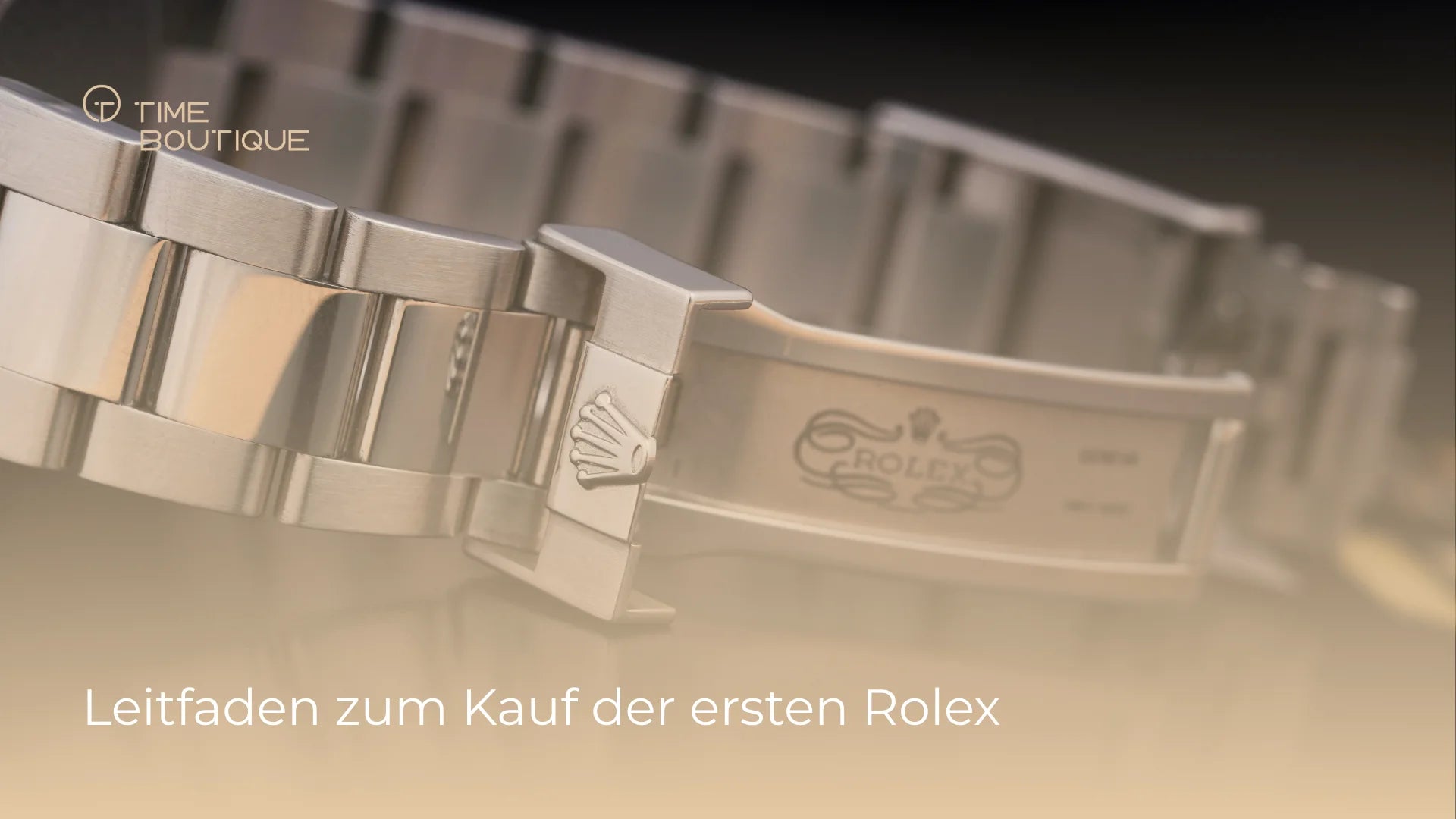
Clasp logo. The coronet on the clasp is laser-engraved today with a fine dot matrix. On fakes it is often blurred or too angular.
Crown and seal. The crown screws down cleanly with a defined stop in the first position. Stiffness or rough running points to seal wear and a due service.
Step 5: Papers and box
A Rolex with a full set (watch, box, warranty card, tags, applicable booklets) is meaningfully more valuable than one without papers. The math is not two percent, it is often a ten to twenty percent premium.
Warranty card: credit-card format since 2007, with embossed reference and serial number. Before that, the "punched papers" had model and date punched out. Both formats are legitimate depending on the year. Watch for consistency between card data and the watch itself. A card without the dealer stamp has no informational value.
Service receipts: more important than the original warranty card is a documented service history. A Rolex that has had its factory service every seven to ten years runs better, lasts longer, and sells more confidently later. More in our piece Box and papers, how important are they really.
Step 6: Authentication
For any Rolex above 5,000 € we recommend a professional check before money changes hands. On Submariner and Daytona, the rate of high-quality fakes on the market is highest. Our detailed guides walk through the typical weak points: Spotting a Submariner fake and the broader Spotting a luxury watch fake.
What you can do yourself: check the serial number (between the lugs at 6 on older models, on the rehaut around the dial on modern pieces from 2008/2010 onwards), watch the rate over 24 hours, check the weight in your hand (a steel Rolex feels noticeably dense, fakes often feel too light), study the cyclops magnifier on date models (the original magnification is 2.5x, precisely centred).
What only a watchmaker can check: the calibre under an opened caseback, the beat rate on a timing machine, the factory stamps and bridge engravings. Helmut handles this in the atelier in twenty minutes. Buying without ever seeing the movement is buying on risk.
Step 7: Payment and handover
For amounts above 10,000 €, bank transfer is the standard. In Germany, cash payment for precious-metal and watch transactions triggers ID requirements from 2,000 €, and above 10,000 € is essentially not workable any more. Reputable dealers respect this. If a vendor offers cash for an invoice without identity verification, that is a warning sign.
Escrow arrangements through established platforms are an option if you buy remotely and want the piece inspected by an independent watchmaker before handover.
Handover in person: the ideal case. You see the watch, the papers, the box and the payment in the same room. We offer this in the Grünwald atelier, with espresso and without pressure.
Shipping: at our house exclusively insured by DHL Express or UPS with full insurance, signed receipt and tracking. Above 25,000 € we prefer personal handover or armoured transport.
Step 8: After the purchase
A Rolex is a mechanical object with service needs. Helmut recommends a workshop inspection every seven to ten years, with a water-resistance test in between if you wear the piece around water. We have broken down the cost of a full overhaul in Rolex service cost.
Insurance becomes sensible above roughly 5,000 € per piece. Household contents policies often cover watches only up to 2,500 or 5,000 €, depending on the contract. A separate valuables policy with all-risks cover is the clean solution. We provide the necessary valuation certificates.
Daily care: warm water with mild soap, soft toothbrush for the links, microfibre cloth to dry. No ultrasonic cleaners, no aggressive chemicals, no perfume on the crown. If the crown turns stiff or the crystal fogs under temperature change, off to the watchmaker.
If you ever want to sell your Rolex, plan for it. Service history, original papers and the box set become value drivers at that point. Our buy-back is one option, or we help with market estimates even if you sell elsewhere.
A conversation in the atelier
Eight steps sound formal. In practice it is a conversation. People buying a Rolex usually have more questions than an article can answer. Helmut sits two doors down in the workshop, Matthias handles the market side, Max and Viktor join for strategic decisions.
Arrange a visit through our enquiry form, by phone on +49 89 38164962, or by email at info@timeboutique.de. We take time, even if you end up buying somewhere else.