
The question about the cost of a Rolex service is one I hear at the bench almost every day. Some clients bring the movement in hand, others only an idea in mind. Both are fair. What I prefer to do, before we talk about a figure, is to explain what sits behind an honest overhaul. Only then does the price make sense to you.
What a Rolex service is, and what it is not
A service (in workshop language an overhaul) is the complete reworking of the movement. The movement is taken out of the case, dismantled into parts, cleaned, inspected, worn parts are replaced, the movement is re-lubricated, reassembled, regulated, then refitted into the case. A pressure test follows.
A service is not a battery change (Rolex no longer makes quartz movements for the current line), not a quick polish, and not a pressure test on its own. If someone offers you a service for under 250 euros, that is in most cases a partial service or merely an exterior clean. An honest overhaul takes time, material, and a watchmaker who documents every step cleanly.
A service is also not a promise that the watch will look new afterwards. A proper overhaul restores function. The patina and the honest signs of wear stay. Anyone looking for a watch that looks new after service is thinking of restoration, not maintenance. That is different work and a different price.
When a service is due
Rolex today recommends a service every ten years. From our experience at the bench, that is an upper limit, not a default. We suggest:
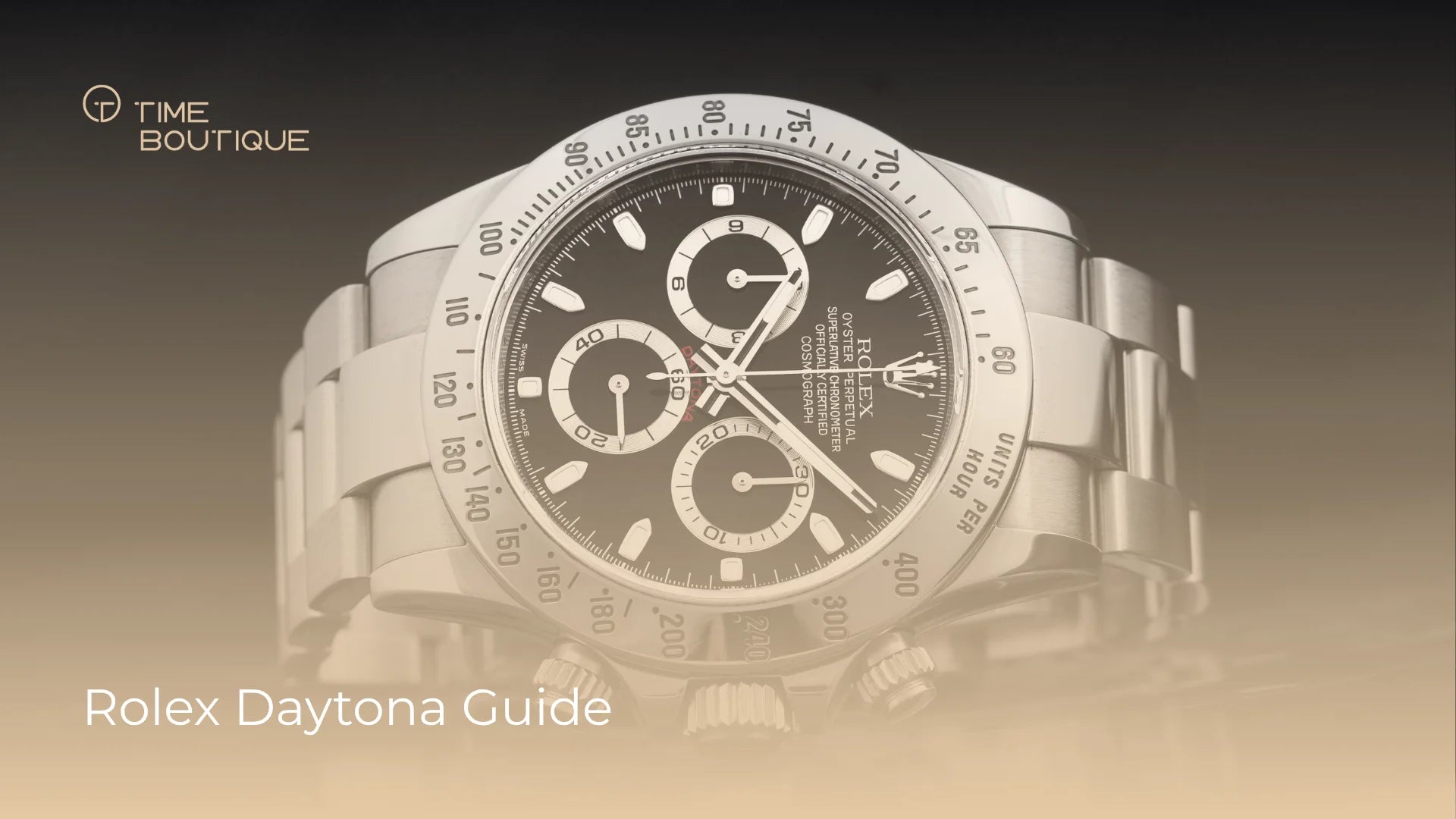
- Current sport models (Submariner, GMT-Master II, Daytona): every 7 to 10 years with normal wear
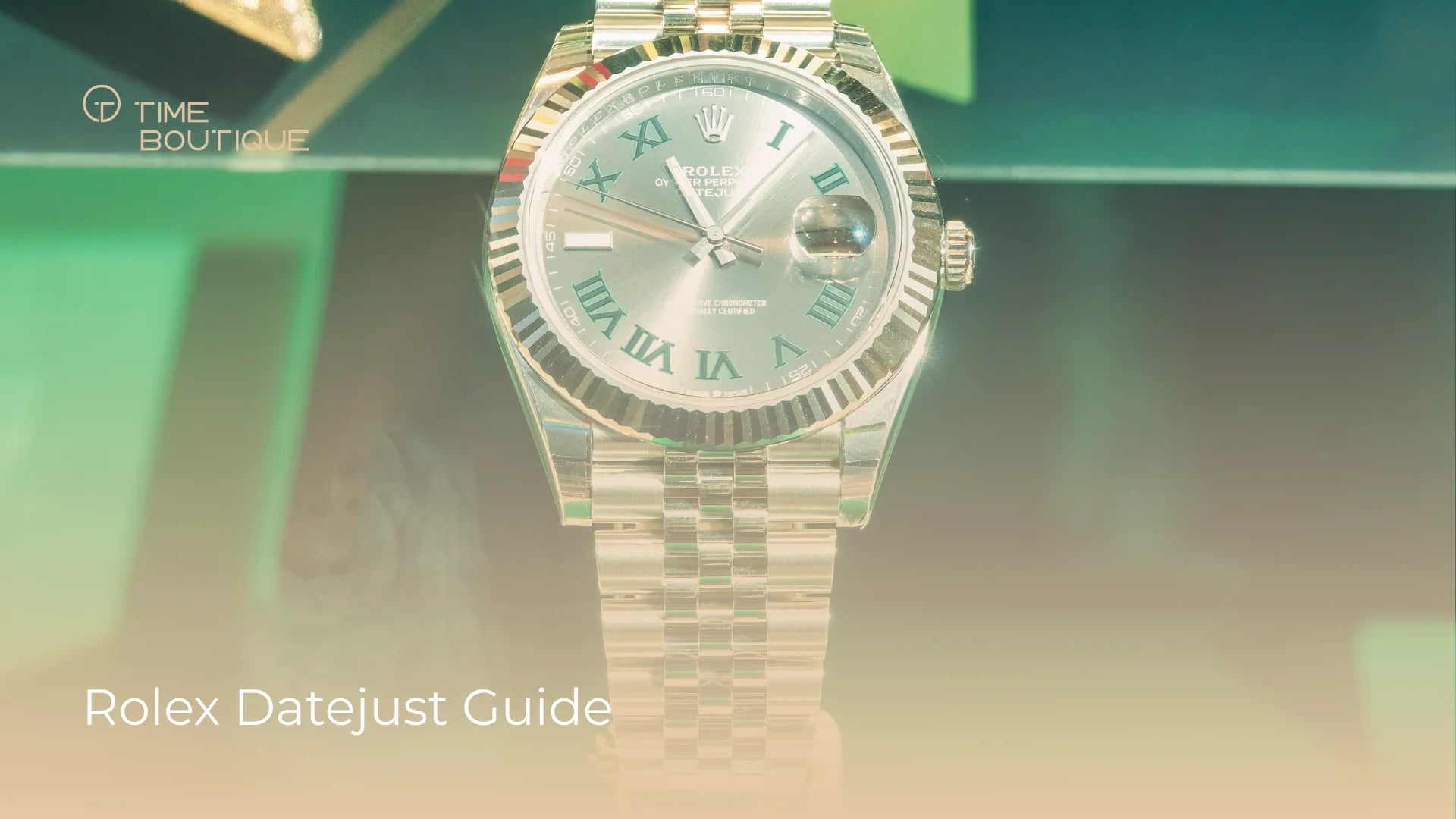
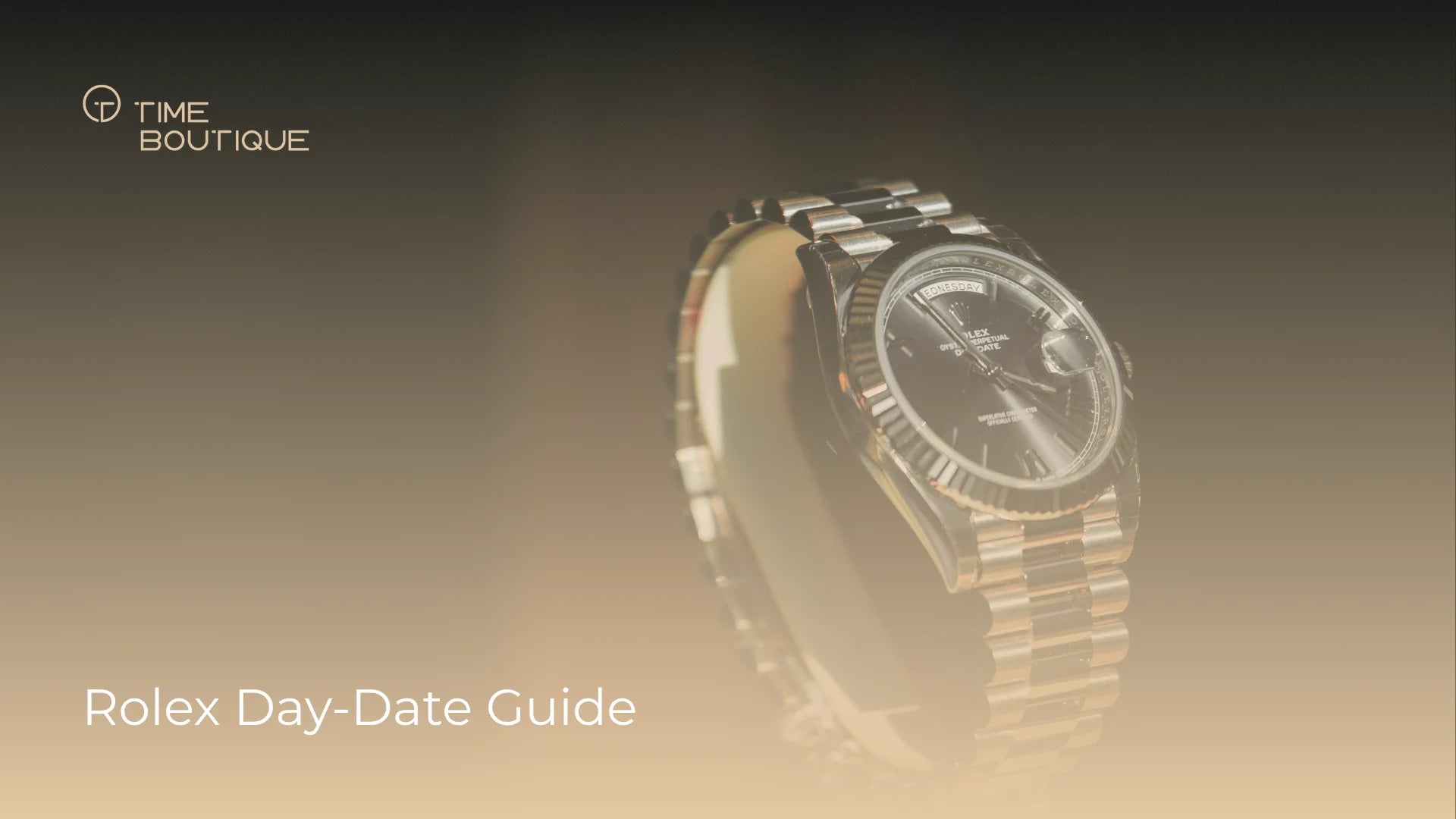
- Datejust, Day-Date in daily wear: every 7 to 8 years
- Vintage models before 1990: every 4 to 6 years, because older oils break down faster and older gaskets fatigue earlier
- Dive watches in active water use: annual water-resistance test, full service every 5 years
Do not wait for failure. If you notice a stiff crown, fogging under the crystal, a sudden drop in power reserve, or rate deviation well over 10 seconds per day, act soon. Bearings that run dry score themselves. That drives the cost up.
If you pull an old heirloom from a drawer that has not run for decades, do not wind it. Bring it to us unopened. We will look at it free of charge and tell you what makes sense. In many cases we find oils that have congealed; the first wind then presses wheels into each other and causes expensive damage. An hour of inspection often saves several hundred euros in later repair.
An important note about wear frequency: a Rolex worn daily lives longer than one sitting in a safe for years. Movement distributes oil, keeps the wheels clean, and reveals problems early. If you keep a collection, rotate the pieces. A few hours on the wrist once or twice a month is enough.
What happens during a service, step by step
I will describe the sequence every Rolex goes through with us. That way you see where the hours come from.
- Intake check: visual inspection, rate measurement in five positions, pressure test before opening the case. That is the diagnosis we deliver before any quotation.
- Disassembly: crown, crystal, movement, dial, hands, bridges and wheels each by themselves.
- Cleaning: ultrasonic baths with several different cleaning solutions, followed by drying.
- Inspection: every part under the microscope. Worn jewels, tired mainsprings, scored winding pinions, damaged teeth, all noted.
- Parts replacement: wear parts are swapped. On a Rolex, typically the winding stem, individual jewels, gaskets, occasionally the hairspring.
- Assembly and lubrication: the movement is reassembled and point-lubricated with specific synthetic oils. Each pivot gets the right oil in the correct quantity.
- Regulation: on the timegrapher, the movement is regulated in five positions. Target: ±2 seconds per day on average.
- Recasing: movement back into the case, new gaskets, crown, crystal, caseback.
- Pressure test: pressure rating matched to the model's stated depth.
- Final check: 48 hours of observation on the test stand in different positions before the watch goes back to you.
That is between 6 and 14 hours of actual bench work depending on the model, plus standing time. Anyone giving you a fixed price without a diagnosis has either pre-calculated the effort or is cutting a step from the list.
Price range, what drives the cost
We do not name a fixed price before we have seen the watch. That is not a sales tactic, it is workshop practice. A service for a modern Datejust in good intake condition is very different from a vintage Submariner whose movement has not been open in twenty years.
The price range in our atelier moves as follows:
- Quick service, regulation, gasket swap: in the 250–450 € range. No full movement disassembly.
- Datejust, Oyster Perpetual, Air-King (modern line, good condition): in the 650–850 € range, provided no movement damage.
- Submariner, GMT-Master II, Sea-Dweller: in the 750–950 € range, since deeper pressure testing and a rotating bezel add work.
- Daytona (chronograph): in the 900–1,400 € range, because the chronograph mechanism asks for noticeably more parts and adjustment time.
- Full restoration, vintage, Day-Date in precious metal, complications: individual, often from 1,500 € to 2,500 € and above, because crystal, dial, lume and parts are harder to source and more diagnostic time is needed.
Add-ons follow concrete findings: a new Cerachrom bezel, crystal replacement, bracelet refresh, damaged crown, missing parts we need to source. Full restorations with dial or lume work also pass over a specialist's bench, which adds time and material cost.
An important distinction from factory service: certain jobs we deliberately do not run in-house. Cerachrom bezels, new factory crowns, factory dials and warranty-relevant swaps stay with the Rolex Service Centre (RSC), because original parts are reserved there. Mechanical service, cleaning, regulation, pressure testing and clean surface refresh we carry out fully ourselves. When in doubt, we will tell you which route makes more sense.
We give you the price in writing before work begins, with a breakdown of expected tasks. If we are mid-disassembly and find additional damage, we stop and ask you before continuing.
A question I hear often: is a service worth it for a Datejust that the market values at maybe 6,000 euros? Yes, almost always. A service sits in a range that doubles or triples the watch's lifespan, and it preserves resale value. An unserviced Rolex loses value on the market faster than one with current service history. Anyone running the numbers should run them on the next ten years, not just today.
Factory service vs. independent watchmaker vs. Time Boutique
There are three honest routes to service a Rolex. Each has its place.
Factory service (Rolex Service Centre)
Service to the manufacturer's specification, original parts, worldwide service warranty. The price is transparent and uniform. Drawbacks are turnaround (often 8 to 14 weeks) and a standard approach: polishing is frequently included, whether you want it or not. For a young watch under warranty this is often the right choice. For vintage pieces, the factory service can take away character you do not get back.
Independent watchmaker
A good independent watchmaker works at a standard comparable to the factory and respects the patina. The question is qualification. Check: training, workshop conduct, references, insurance cover, parts sourcing. An independent without a written diagnosis and service report is the wrong address.
Time Boutique
We work as an independent does, but with the comfort and the documentation of a small manufacture house. Written diagnosis, fixed price before work begins, service pass after completion, 12 months of warranty on the movement work. We polish only on your explicit request. Vintage patina stays intact.
If you are not sure which route fits, write to us. We will tell you honestly whether a piece belongs at the factory (for example under an active manufacturer warranty) or whether we take it on. The recommendation is not sales-driven. We lose no margin if we send you to the Rolex Service Centre, but we gain trust for the next conversation.
A third note: warranty and service history hang together. Anyone planning to sell their piece later and wanting a clean factory service pass in the set should run the RSC route once before handing the watch to another collector. Whoever keeps the watch and wears it regularly gets the more honest care and the leaner invoice with us.
A brief note on turnaround: in recent years, the factory has extended its lead times. Hand a watch in during spring and you sometimes get it back in summer. Our standard turnaround sits between 3 and 5 weeks depending on model and findings. If time is short, please mention it at the start.
What is included in our price
A service at Time Boutique covers:
- Intake diagnosis: written report with rate values, water resistance, condition of the movement
- Full disassembly and cleaning: movement, case, bracelet
- Movement service: cleaning, inspection, replacement of wear parts, re-lubrication with original synthetic oils
- Regulation: in five positions on the timegrapher
- New gaskets: crown, caseback, crystal seal
- Pressure test: matched to the model's rated depth
- Final check: 48 hours of observation on the test stand
- Service pass: written, listing every step
- Warranty: 12 months on the movement work
- Shipping: insured with UPS or DHL Express, or personal handover in Grünwald
What is not included
Honestly, this is usually the source of later debate, so let me state it up front:
- Polishing (we do not polish by default; it is an extra item on request, and the cost depends on effort. A gentle brush refresh is less than a high-gloss polish)
- Bezel replacement (Cerachrom or aluminium; cost varies with availability and model)
- Crystal replacement if the original shows cracks or deep chips
- Dial restoration (we do not do this in-house; we work with a specialist)
- Bracelet replacement (refresh yes, new part no)
- Crown and stem if heavily damaged and needing replacement
Each of these items appears as a separate line in the quote. You decide what is carried out.
How it works, your route with us
- You write to us via the service form, naming the model, the reference number (if known), the approximate age, and your observations.
- We usually reply within an hour with an initial assessment and the shipping route.
- You send the watch insured, or bring it in person.
- We inspect, measure, and send you a written report with a fixed price. The diagnosis is free.
- You give the go-ahead. Only then does the actual work begin.
- The watch runs for 48 hours on the final test, then goes back to you with a service pass and invoice.
Request service for your Rolex: create a custom request or see our Rolex service in Munich. For a broader package, the Maison Full Service sets the right frame. If you prefer the phone, reach us at +49 89 38164962 or info@timeboutique.de. We advise personally, free of charge and without obligation.