
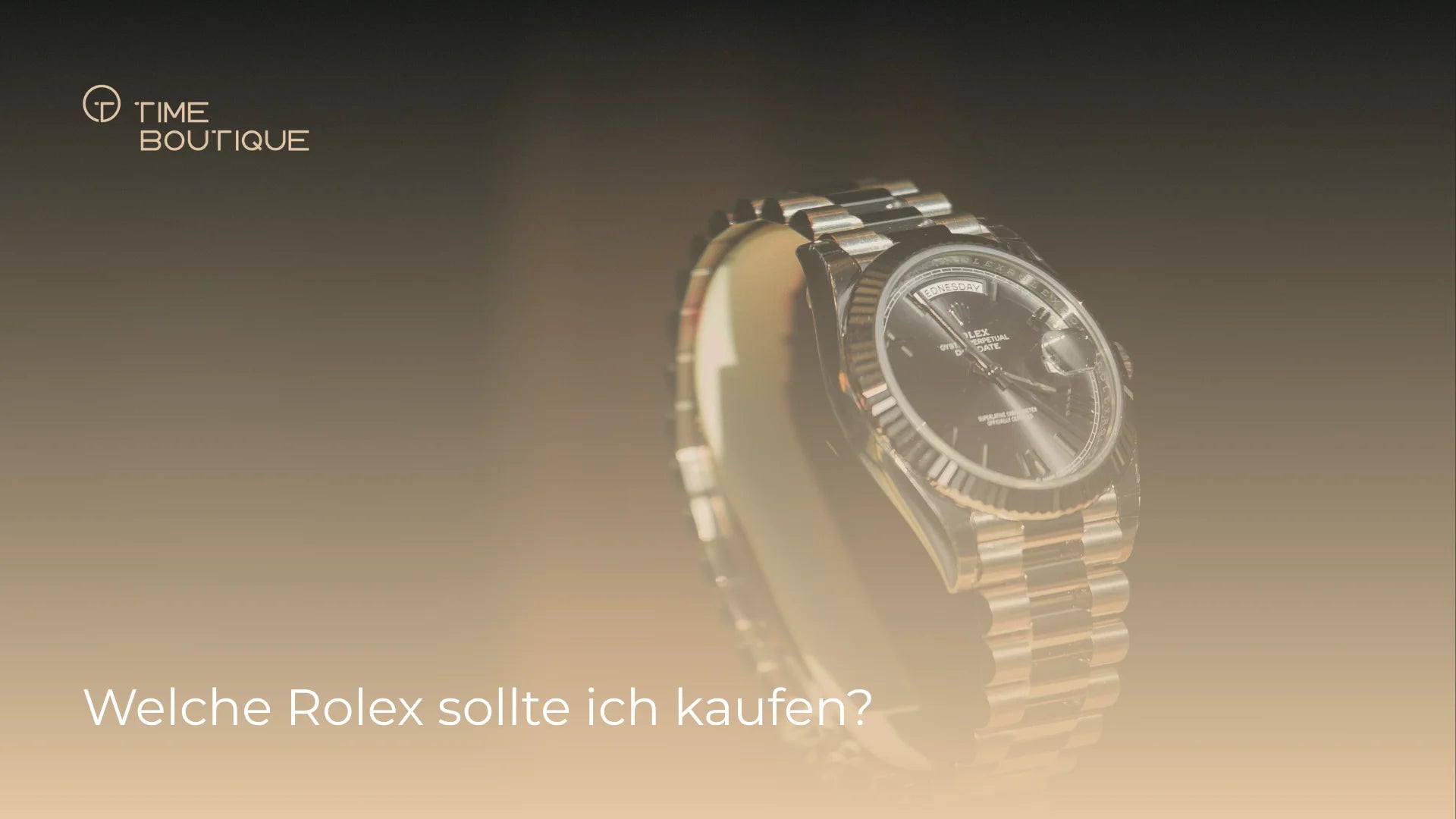
"Which Rolex should I buy?" is the question we hear most often in the atelier. The honest answer rarely is: this one specific model. The honest answer is: depends on you. What it depends on, this guide sorts out. We go through the important families, with real reference numbers, realistic price ranges from the 2026 secondary market and the observations we make in the Grünwald atelier every week. If you want the process side (sourcing routes, inspection, payment), follow up with our Rolex buying guide.
The short answer
- First Rolex, everyday, classic: Datejust 36 (126200) or 41 (126300) in steel on Jubilee.
- Sporty, one watch for everything: Submariner 124060 (no-date) or 126610LN (date).
- Travel, second time zone, visible presence: GMT-Master II 126710BLNR (Batman) or 126710BLRO (Pepsi).
- Collector centrepiece, chronograph: Daytona 116500LN.
- Status, precious metal, for life: Day-Date 40 (228238) in yellow gold.
- Outdoor, restraint: Explorer 36 (124270) or Explorer II 42 (226570).
- First ladies' Rolex: Datejust 28/31 or Oyster Perpetual 31 with a colour dial.
If you find yourself in the short answer, you can stop here. If you want more substance, read on.
Submariner, the sports watch as default
The Submariner is the Rolex most people picture first when the words "luxury watch" come up. There is a reason. 41 mm steel case, 300 m water resistance, Cerachrom bezel, Oyster bracelet with Glidelock clasp. It handles suits, beaches, workshops and restaurants.
The current family has three main references that come up most often in atelier conversations.
The 124060 is the no-date. Black dial, black Cerachrom bezel, no cyclops. People who prize design purity buy this one. Secondary market currently in the 11,000 to 13,000 € range. Helmut says of the 124060: the most honest Submariner, because the dial is not visually distorted by the cyclops lens.
The 126610LN is the Submariner Date in black. Identical case and movement, with date and cyclops. Secondary market roughly 11,500 to 13,500 €. The best-selling modern sports watch of the brand.
The 126610LV is the Kermit, green bezel with black dial. Introduced in 2020 as successor to the Hulk. Secondary market currently 14,000 to 17,000 €. In the atelier we usually meet Kermit buyers as second-Submariner buyers, someone who has already lived with a 126610LN and now wants a piece with more personality on the bezel.
What to watch on a pre-owned Submariner: bezel insert for cracks and colour trueness, cyclops magnification (original 2.5x, centred), Glidelock detent precision, lume consistency across all indices. More in our Submariner fake guide.
Who the Submariner is for: people who want a single Rolex for everything. People who want robustness without rotating between pieces. People who care about resale liquidity.
GMT-Master II, the travel watch with character
The GMT-Master II is the Submariner for people who actually use a second time zone or want a more characterful bezel. Four-hand layout with a 24-hour scale on the rotating bezel. The bezel colour nicknames are collector culture.
The 126710BLRO is the Pepsi. Red-blue, on a Jubilee. Secondary market currently 18,000 to 22,000 € depending on condition and completeness. The most iconic bezel of the family. People who buy a Pepsi buy the image of the brand.
The 126710BLNR is the Batman. Black-blue, usually on Jubilee. Secondary market 15,000 to 18,000 €. The more rational choice in the family. The bezel reads black in sunlight and blue in interior light. Often discussed in the atelier as an "everyday GMT".
The 126711CHNR is the Root Beer in Everose bicolour. Brown-black bezel, rose gold and steel. Secondary market 16,000 to 19,000 €. A warmer, slightly more formal appearance. The GMT for someone who wants a suit-friendly version.
The 126720VTNR is the Sprite, the left-handed GMT with a black-green bezel and the crown on the left. Polarising, rarely top-of-mind in atelier conversations, but a piece with strong personality.
Who the GMT-Master II is for: frequent travellers with real time-zone needs. Anyone after a stronger visual statement than a Submariner. Anyone who appreciates the bezel culture of the brand.
Daytona, the chronograph as collector object
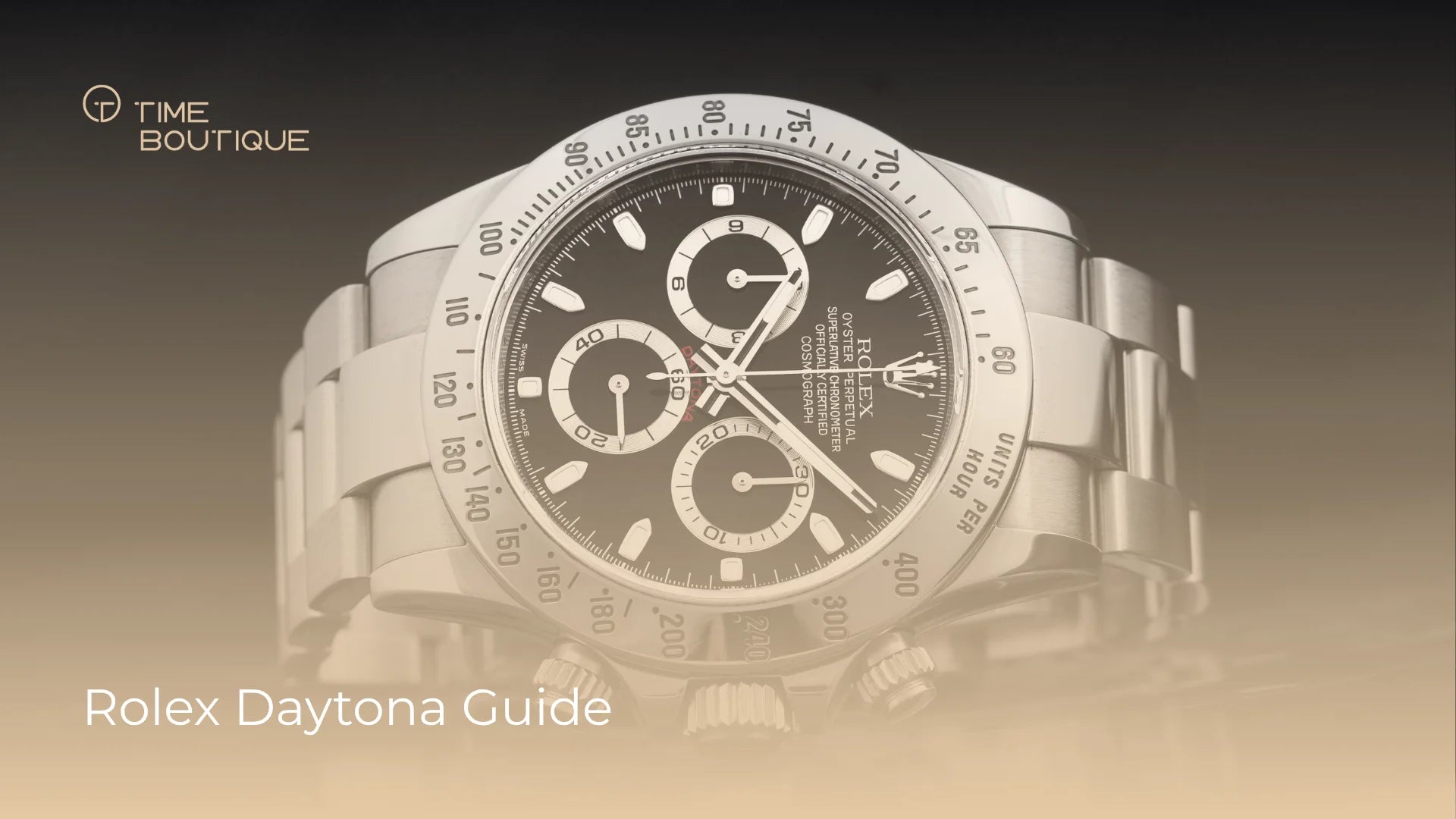
The Cosmograph Daytona is the most discussed Rolex sports watch after the Submariner. Chronograph with three subdials, fixed tachymeter bezel, manual winding until 1988, automatic since. Established as a collector category in the 1990s, lifted into cultural phenomenon territory after the "Paul Newman" reference 6239 hammered at 17.75 million USD in 2017.
The 116500LN is the current steel Daytona with Cerachrom bezel. Two dials: white with black subdials (Panda) and black with white (reverse Panda). List price at AD around 16,000 €, secondary market currently 25,000 to 30,000 € depending on dial and completeness. The Panda regularly trades higher.
The 116508 is the Daytona in yellow gold on Oyster bracelet. With the green dial (introduced in 2023) it is one of the most coveted contemporary precious-metal Daytonas. Secondary market in the 60,000 to 80,000 € range.
Vintage Daytonas (6263, 6265, 6239) are their own chapter. Every detail counts: pushers, tachymeter printing, subdial tone, provenance. People who buy vintage Daytona buy with an auction catalogue and a specialist alongside.
In the atelier we see two Daytona buyer types. Those who buy a 116500LN as a personal piece and wear it. Those who buy it as a collector object and put it away. Both paths are legitimate. Anyone treating a Daytona as an investment should know the secondary market for modern Daytonas has cooled meaningfully from the 2022 pandemic peak.
Who the Daytona is for: collectors who want the most iconic chronograph of the brand. Lovers of manual-feel chronograph operation. Anyone willing to pay over list to have it on the wrist now.
Datejust, the unflashy classic
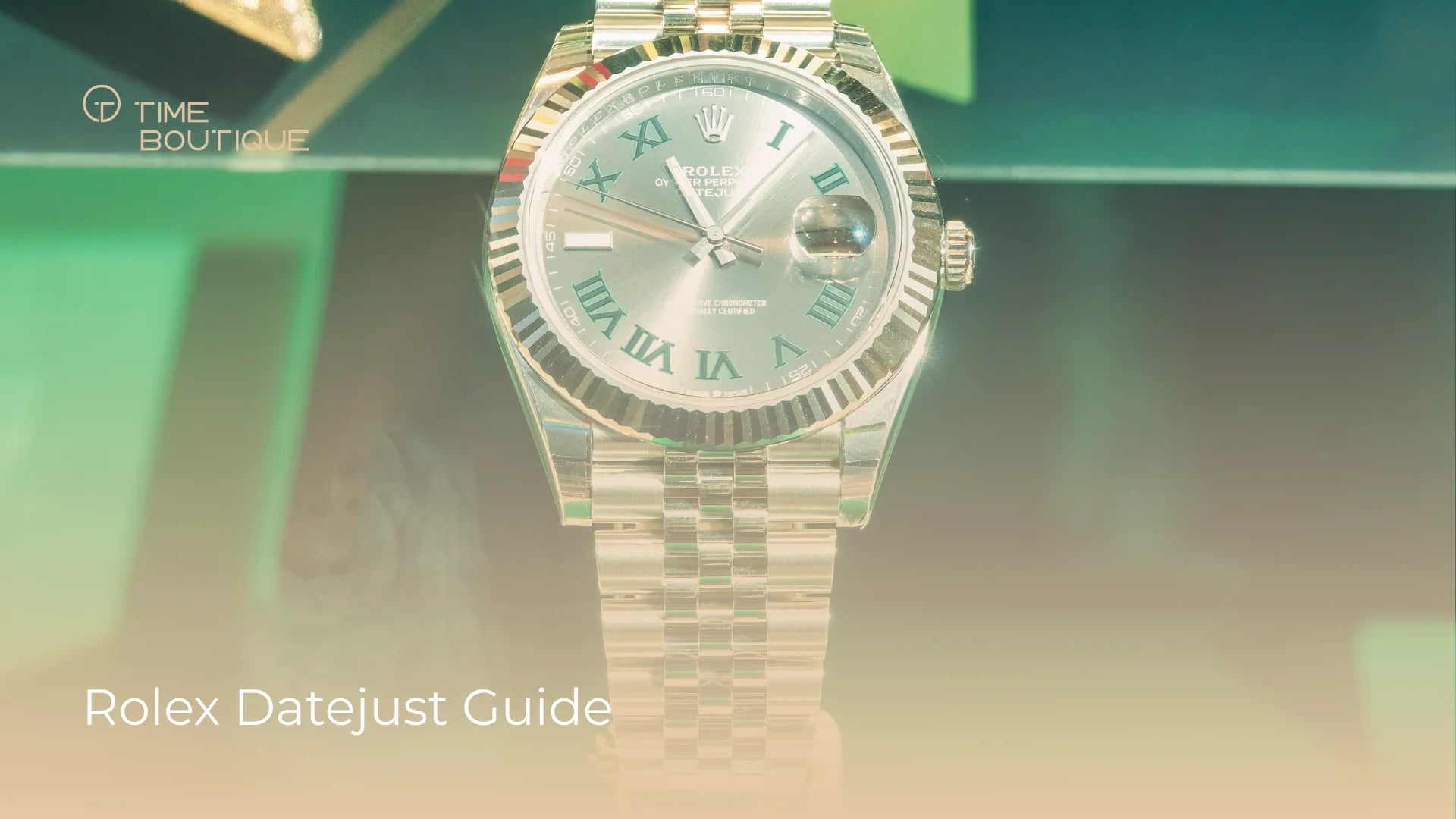
The Datejust has been in production since 1945. It is the Rolex that does not raise its voice. Four case sizes (28, 31, 36, 41 mm), three materials (steel, Rolesor bicolour, precious metal), two bezel types (smooth, fluted), two standard bracelets (Oyster, Jubilee) and a dial selection nobody fully memorises.
The 126200 is the Datejust 36 in steel with smooth bezel. We recommend it as a first Rolex regularly. Secondary market 7,500 to 9,500 € depending on dial and bracelet. With the Wimbledon slate dial (slanted Roman numerals on graphite grey) it is one of the most balanced steel Rolex pieces full stop.
The 126300 is the Datejust 41 in steel, also available with smooth or fluted bezel. Market price 8,000 to 10,500 €. The larger sibling, more present on the wrist but still understated.
The Datejust 36 in Rolesor (steel and gold combination at crown, gold bezel, bicolour bracelet) is a different aesthetic. It speaks to a different audience, polarises more, has loyal followers. Secondary market 11,000 to 14,000 €.
The Datejust 36 in solid yellow gold (128238) is the understated precious-metal Rolex. Anyone wanting Day-Date material without Day-Date presence finds the answer here. Secondary market 26,000 to 32,000 €.
In the atelier, the Datejust 36 is the watch clients most often come back to after three years with the line: good call. It ages honestly. It handles any occasion. It is not exciting, which is its strength.
Who the Datejust is for: first Rolex. People who want a watch for every situation. People who do not need sports-watch presence. Classic daily driver.
Day-Date, the precious-metal statement
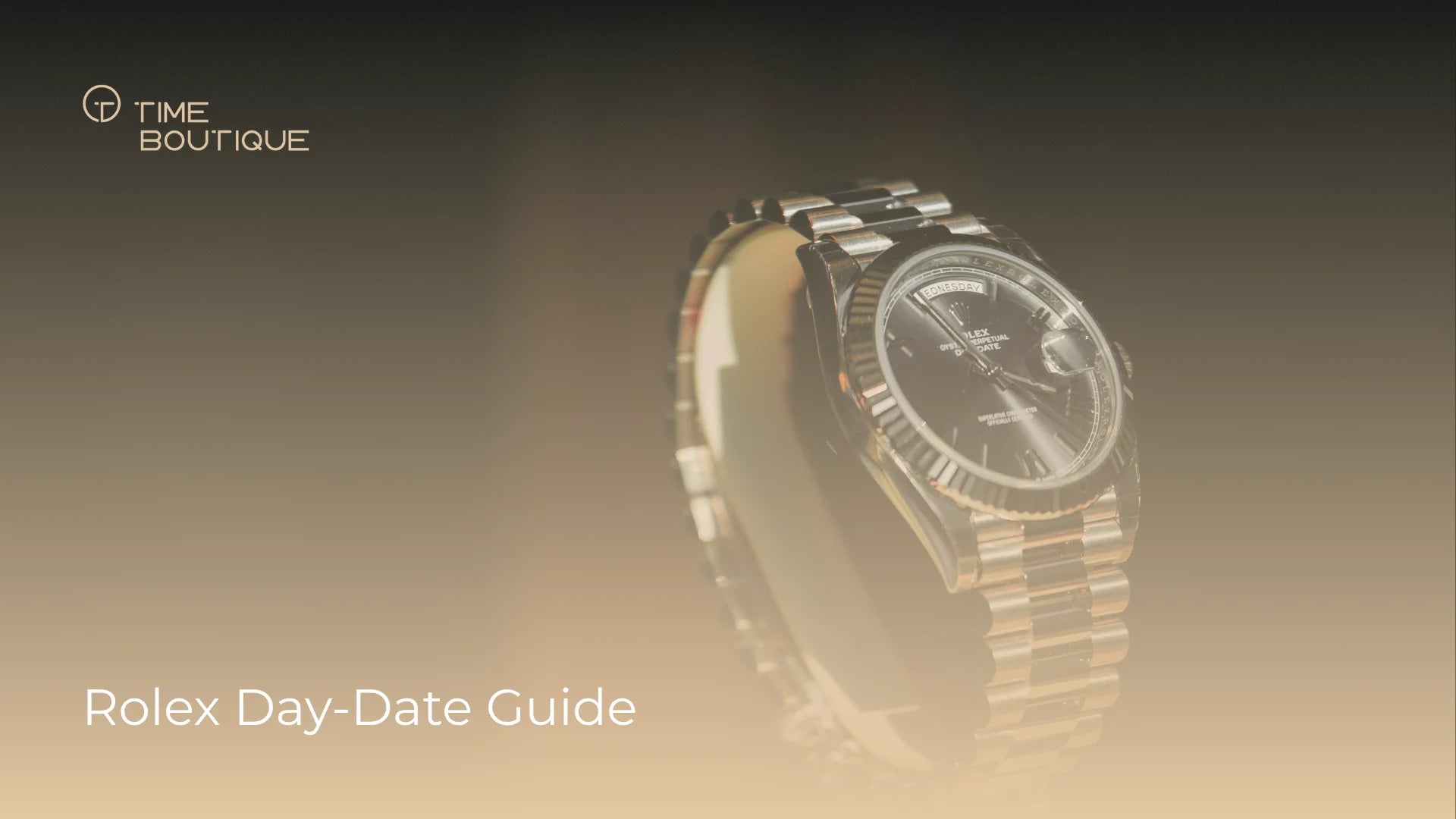
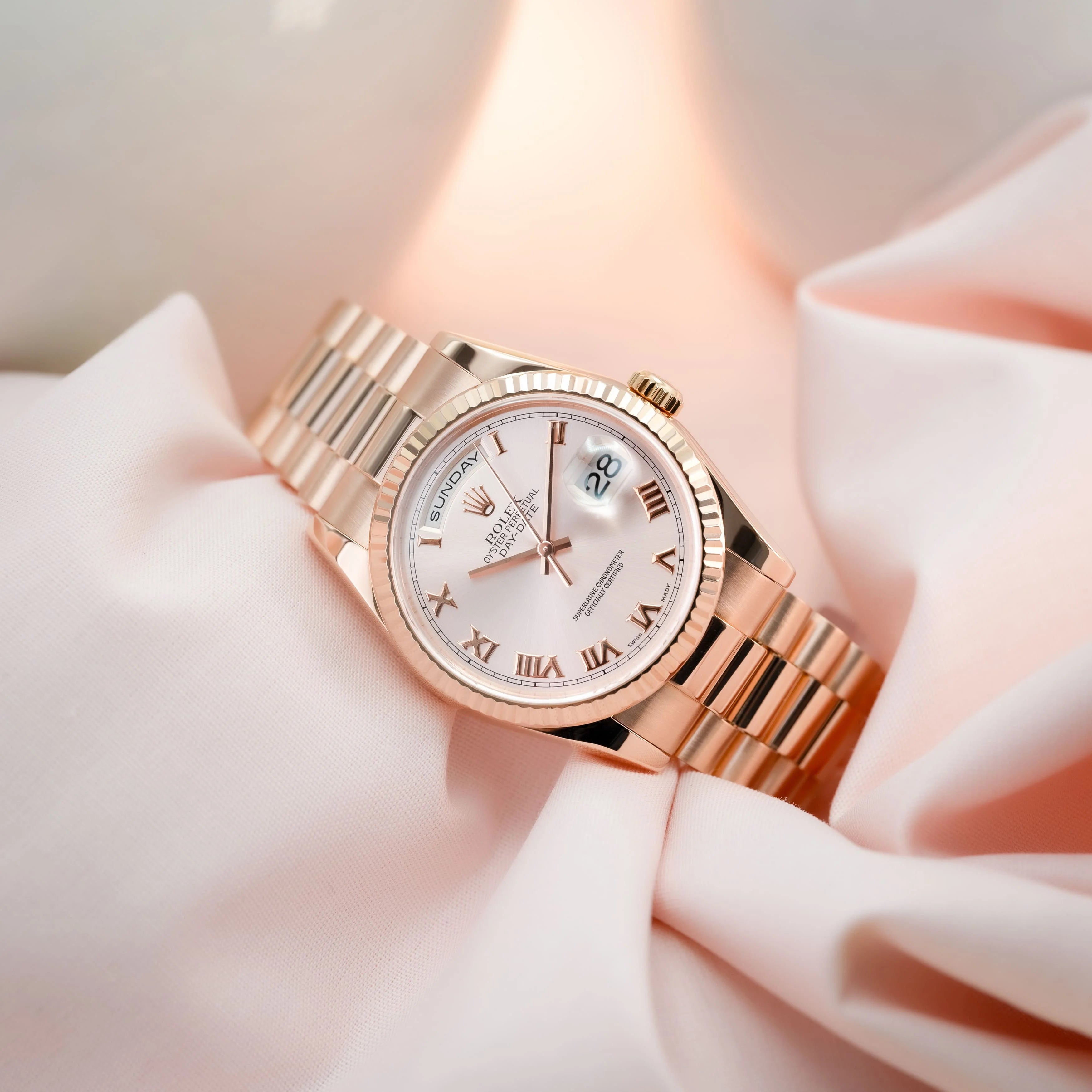
The Day-Date "President" has been around since 1956. It was the first wristwatch to display the day of the week fully spelled out alongside the date. Always in precious metal, traditionally on the President bracelet (three semicircular central links). Embedded in films, contracts and business cards of the past seventy years.
The 228238 is the Day-Date 40 in yellow gold. Secondary market 32,000 to 42,000 € depending on dial. With champagne dial and simple index markers, it is timeless. With the green sunray dial (introduced 2019) it gains noticeable presence.
The 228239 is the same size in white gold. More subtle, because precious metal on the wrist is less immediately readable. Secondary market 35,000 to 45,000 €.
The Day-Date 36 (118208 in yellow gold) is the classic size. People who like the traditional dimension buy 36. In the atelier this variant comes up often as a wish-list piece from older collectors or as an heirloom restoration.
What defines a Day-Date is the dial. There are Day-Dates with stone dials (onyx, lapis lazuli, carnelian, turquoise), with diamond setting, with computer dials from the 1990s (a collector category in itself), with wood dials. Anyone looking for a Day-Date is usually looking for a specific dial.
Helmut regularly points out in the atelier that the President bracelet construction is more delicate than an Oyster. The semicircular links can loosen with intense daily wear, the clasp mechanism needs servicing more often. That is not a defect, it is construction.
Who the Day-Date is for: anyone who wants a deliberate statement piece. Anyone who values precious metal on the wrist. Anyone after a Rolex that shows status openly without going into the sports-watch world.
Sky-Dweller, the underrated complication
The Sky-Dweller carries an annual calendar (the date jumps correctly across month changes and only needs correction once a year at the end of February) and a second time zone via a 24-hour ring around the dial. It is operated through the rotating bezel using the Ring Command system. The most complex movement layout in the current Rolex lineup.
The 336934 is the Sky-Dweller in Rolesor with white dial on Oyster. Secondary market 18,000 to 22,000 €. The 336935 in Everose bicolour sits above.
The Sky-Dweller is a watch rarely asked for by name in the atelier. Once people see it on the wrist and understand what it can do, they often become buyers. It is the right choice for someone who wants Rolex robustness with genuine complication and does not want to choose between GMT and Datejust.
Yacht-Master, the maritime middle ground
The Yacht-Master is the sports watch with a precious-metal twist. Rotating bezel with a scale for the first 15 minutes, often in platinum or precious metal, Oyster or Oysterflex bracelet.
The Yacht-Master 42 (226658) in yellow gold with black Cerachrom bezel on Oysterflex sits at 28,000 to 34,000 € on the secondary market. The Yacht-Master 37 (268655) in Everose is popular with women and men alike at 17,000 to 20,000 €.
We treat the Yacht-Master briefly here because it comes up less in the atelier than the other families. Buyers who decide on it usually know why already. It is the Rolex for someone who wants to combine Submariner character with a precious-metal appearance.
Explorer and Explorer II, the quiet sports watches
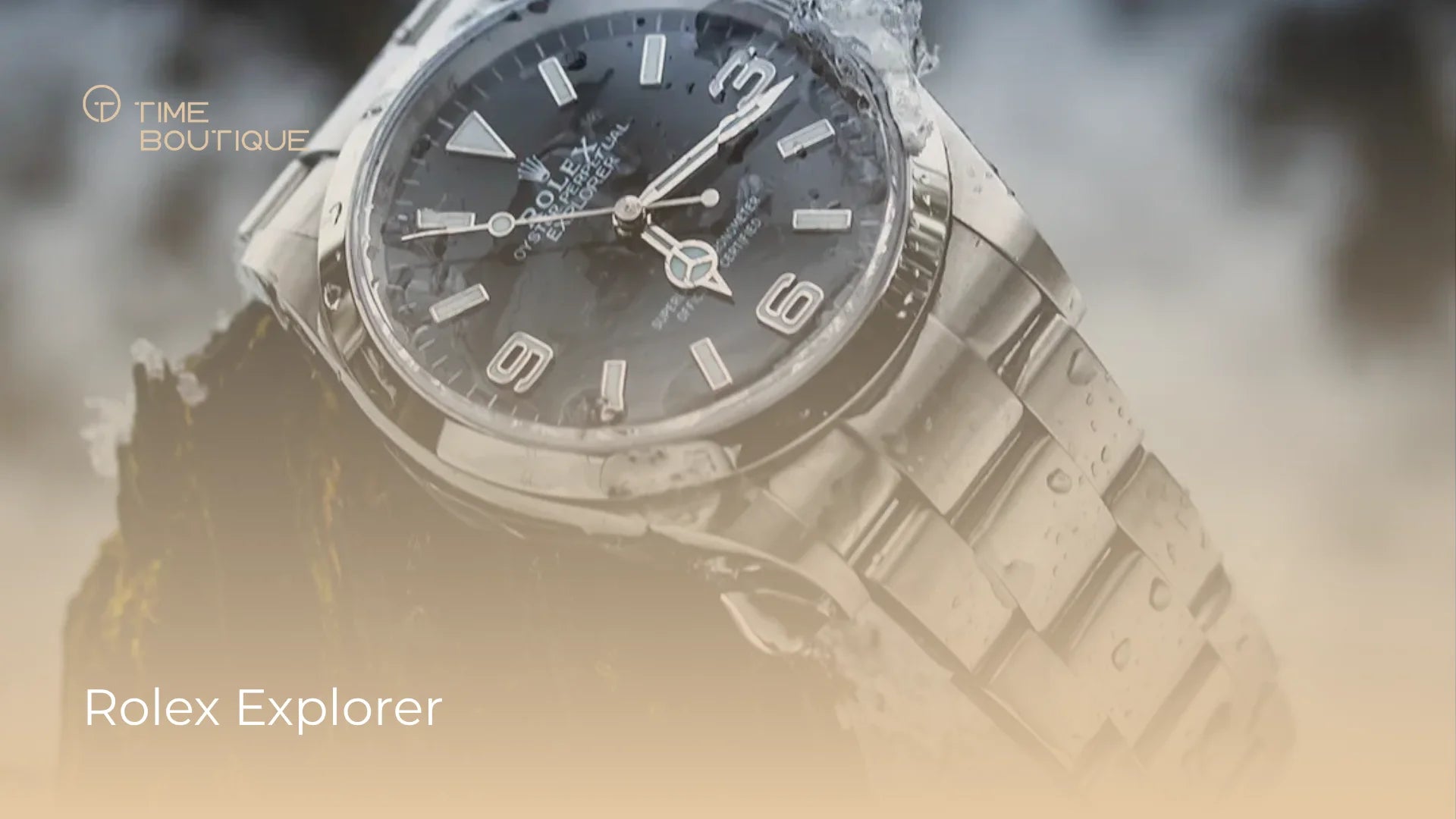
The Explorer 36 (124270) is the most restrained Rolex sports watch. Black dial, 3-6-9 indices plus stick markers, three hands, no date, Oyster bracelet. Launched in 1953 in the wake of the Hillary-Norgay Everest expedition. Secondary market 7,500 to 9,500 €.
In the atelier the Explorer is what clients buy when they want Submariner build quality without a bezel ring. It ages superbly. It is the "I do not need to be noticed" Rolex.
The Explorer II 42 (226570) is the larger variant. Fixed 24-hour bezel, four hands (hour, minute, second, GMT), date with cyclops. Choice of white dial ("Polar") or black. Secondary market 10,000 to 13,000 €. Originally intended for speleologists, today the GMT-Master II for people who do not want a rotating bezel.
Who Explorer and Explorer II are for: people who want robustness and restraint combined. People who do not need bezel culture. People looking for a Rolex outside the hype logic.
Lady-Datejust and Oyster Perpetual for the first ladies' Rolex
For a first Rolex on a woman's wrist there is a clear order in the atelier.
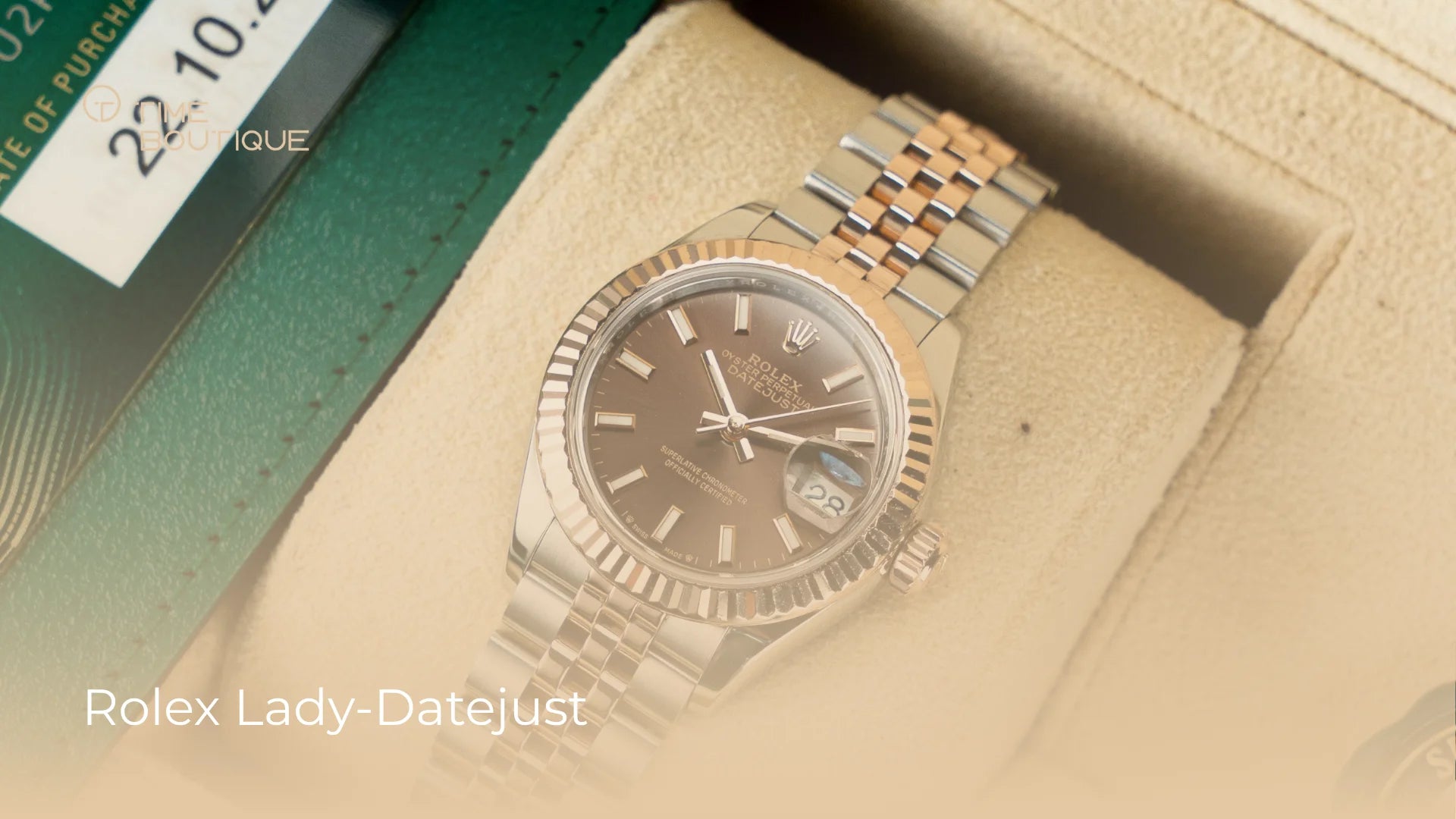
The Datejust 28 (279174 in Rolesor with diamond bezel) or the Datejust 31 (278274 in steel on Jubilee) are the classic recommendation. Secondary market 7,500 to 12,500 € depending on configuration. With mother-of-pearl dial and diamond indices, the small Datejust crosses into jewellery-piece territory.
The Oyster Perpetual 28 (276200) or 31 (277200) is the younger alternative without date. Since 2020, with the colour dials (Coral, Candy Pink, Turquoise Blue, Yellow), it has become its own statement. Secondary market 6,500 to 8,500 € for steel variants. The turquoise variant (often called "Tiffany", a name Rolex itself does not use) commands a meaningful premium.
The Lady-Datejust 28 with diamond setting on bezel and indices is the premium choice in the ladies' space. Secondary market 14,000 to 25,000 € depending on diamond grade.
Carlotta, who leads the ladies' consultations in the atelier, often points out that the Datejust 36 (the unisex size) is the better choice for women with stronger wrists or a taste for visible presence than the 31.
Universal checks before any purchase
Regardless of model, there is a short list we walk through in the atelier.
Reference number between the lugs at 12 must match the warranty card. Serial number on modern pieces sits on the rehaut (from 2008/2010), on older pieces between the lugs at 6. Lume evenly aged or evenly bright. Case edges crisp, no over-polished lugs. Cyclops magnification at 2.5x and centred. Clasp coronet cleanly laser-engraved. Service history ideally documented within the last five years.
At our house, every Rolex additionally goes through Helmut's workshop check: caseback open for movement inspection, rate measurement across several days in different positions, water resistance test. The result is recorded on the service pass that accompanies every sale, with a 12-month warranty on the movement.
Personal consultation in the atelier
Which Rolex fits you is best clarified in a conversation. We curate selected Rolex models continuously in our atelier in Grünwald near Munich. Personal appointments or insured valuables transport throughout Germany and the DACH region.
Arrange a visit through our enquiry form, by phone on +49 89 38164962, or by email at info@timeboutique.de. If you are planning your next steps, our Rolex buying guide and our notes on Rolex service cost are good companions, as is the workshop page Rolex service Munich.
Anyone still torn between Submariner and GMT-Master II will find the finer distinctions in the direct comparison Submariner vs GMT-Master.
- The short answer
- Submariner, the sports watch as default
- GMT-Master II, the travel watch with character
- Daytona, the chronograph as collector object
- Datejust, the unflashy classic
- Day-Date, the precious-metal statement
- Sky-Dweller, the underrated complication
- Yacht-Master, the maritime middle ground
- Explorer and Explorer II, the quiet sports watches
- Lady-Datejust and Oyster Perpetual for the first ladies' Rolex
- Universal checks before any purchase
- Personal consultation in the atelier