
Hardly any question comes up in the atelier as often as the one about price, and hardly any answer is as unpopular as ours. We are reluctant to name fixed numbers in an article that is still online tomorrow. Market prices move, and a number that is right today can mislead in half a year. What can responsibly be explained, by contrast, are the mechanisms behind it. Anyone who understands them judges a concrete number far better than if they only read it off. That is exactly the aim of this article.
Why this article is not a price list
A price list would be convenient, but dishonest. The Rolex market is no supermarket shelf with fixed tags, but a moving structure of supply, demand, condition and completeness. Two apparently identical watches can have very different prices, because the one brings its complete set and the other does not. Instead of numbers that age quickly, we give you the tools with which you can place any number you see.
List price and market price, the decisive difference
The list price is the official selling price that Rolex sets for its watches at authorised dealers. The market price is what a watch actually changes hands for, above all on the secondary market. On many models the two lie close together. On some sought-after pieces they gape clearly apart. This difference is the key to understanding the whole discussion of Rolex prices. Anyone who knows only the list price wonders at the market price, and the other way around.
Why some Rolex trade above list price
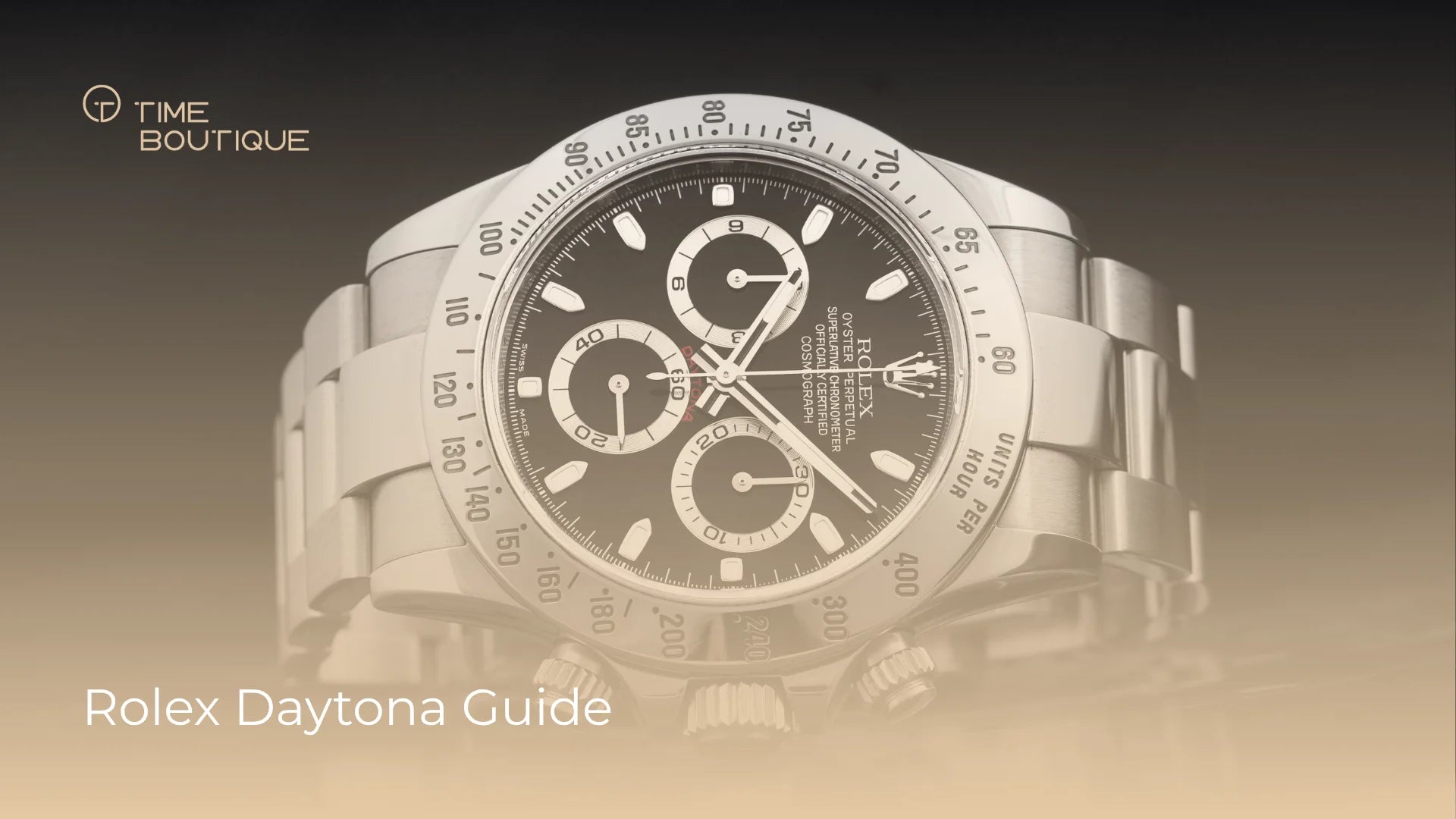
Trading above list price are above all the models whose demand has exceeded retail allocation for years. This concerns in the first instance the steel sports models, foremost the Daytona in steel, followed by certain GMT-Master II and Submariner. Because these watches can only be obtained new via waiting lists, a part of the buyers turns to the secondary market and accepts a premium there for immediate availability. This is no speculative bubble in the narrow sense, but simply the result of scarce allocation and high desirability. How this shows concretely on the Daytona you can read in our Daytona guide.
What drives the value of a Rolex
Four factors determine the value of a concrete watch more strongly than anything else. The first is scarcity, that is, the relationship between demand and availability of the reference. The second is condition, from the sharpness of the case edges to the originality of dial and hands. The third is completeness, that is, box and papers, ideally matching reference and serial number. The fourth is the desirability of the concrete configuration, for not every dial and not every bezel colour is equally in demand. Why box and papers in particular make so much difference we go into in box and papers, how important are they really.
Which models hold their value better
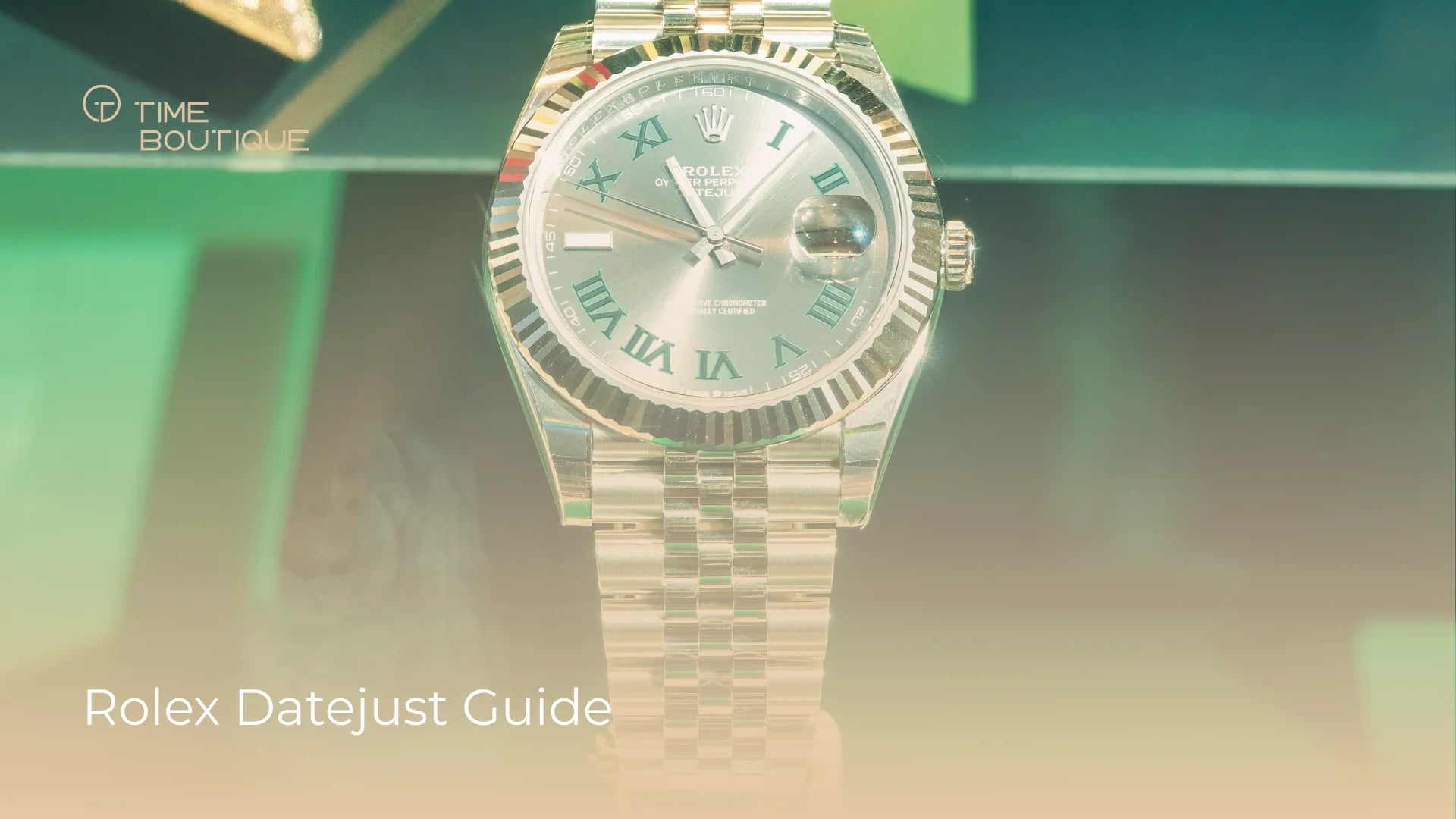
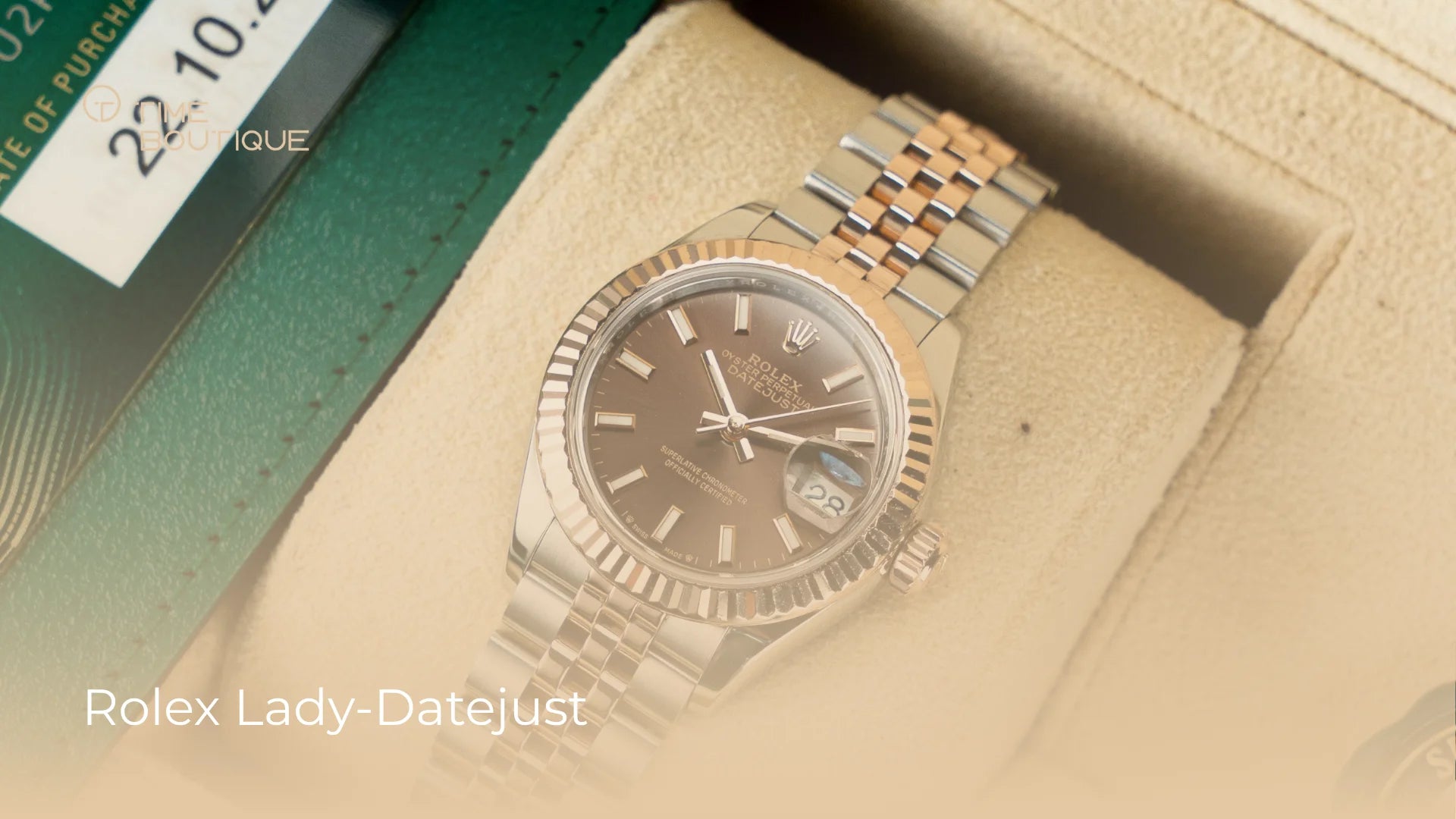
Historically the steel sports models have held their value most stably, because their demand is broad and constant. Complete sets with unbroken provenance also hold up better than single pieces without papers. Classic models like the Datejust or the Oyster Perpetual, by contrast, are mostly well available and sit closer to list price, which makes them sensible purchases but rarely value-appreciation machines. That is no disadvantage but an honest placement. A watch you above all wear and enjoy does not need to rise in value to be a good decision.
The market moves, an honest placement
The broader market for used luxury watches has calmed again after the very high levels of recent years. This movement is normal and healthy. Even in the quieter phase the sought-after steel sports models have held their demand better than many other references, while less in-demand pieces gave way more strongly. For today's buyer that means above all one thing. A quieter market is often a better market, because the choice is larger and the pressure smaller. Anyone looking for a particular watch finds it more easily in such phases and on more sensible terms.
How a fair price forms
A fair market price is no chance figure but the result of several traceable variables. The starting point is the current level of comparable sales for the same reference in similar condition. From there the price moves up or down, depending on completeness, state of preservation and the concrete configuration. A serious dealer also factors in a margin that covers his inspection, the warranty and a possible service. Exactly for this one pays a little more at a trustworthy provider than in an anonymous private sale, and exactly for this one gets security. Anyone who observes the market over weeks quickly develops a feel for a realistic level. Anyone in a hurry or unsure is better served by an expert placement, because it prevents costly mistaken purchases. In the atelier we deliberately take time for this placement, because a good purchase begins with an honest price basis.
Service and care as a value factor
The condition of a watch is no static value but depends on care and service. A Rolex that has been serviced regularly and whose service history can be proven is easier to convey in the sale and achieves more reliable prices. Conversely, a long-neglected watch can hold hidden costs that quickly eat up the supposedly cheap purchase price. Over-intensive polishing also reduces value, because it wears the case edges and removes substance that cannot be brought back. Anyone holding a watch for the long term should see the service as part of the overall reckoning, not as a tiresome duty. What an overhaul costs and at what intervals it makes sense our article Rolex overhaul costs places. A cared-for watch is in the end almost always the more value-stable one.
Rolex as an investment, a reality check
The notion that a Rolex is above all a financial investment holds on stubbornly and deserves a sober answer. A watch is no security. It has a spread between purchase and sale, it costs service, and its value depends on a market that can fluctuate. Some references have developed very well over the years, others not. Anyone buying a Rolex primarily as an investment should do so with the same caution as any other investment and not let themselves be dazzled by individual stories. Anyone who buys it because they want to wear it almost always makes the better decision. The whole argument on this is in our article luxury watch as an investment.
What keeps the market in motion
The market for Rolex never stands still, and it helps to know what moves it. When Rolex discontinues a sought-after model, interest in the last examples often rises, because collectors feel the phasing out of a reference as a turning point. New models, conversely, can shift attention and make older pieces appear temporarily cheaper. To this come larger moods that reach far beyond the watch world. In phases of great euphoria prices rise faster, in quieter times they normalise again. These movements are normal and no cause for concern. For the buyer that means above all that timing plays a role and that a cool head in hectic phases usually makes the better decisions. Anyone who thinks long-term is less impressed by short-term waves and buys in the end more calmly and more wisely.
Buying used as a clever entry
For many the secondary market is not the stopgap but the cleverer route. The steel sports models in particular are barely available new, but immediately available used. With classic models a cared-for used piece can additionally offer a better ratio of price to substance than a new purchase. What is decisive is the careful inspection, ideally by someone who knows the references. The full process we describe in the Rolex buying guide, and which models make sense for which wearer is placed by which Rolex to buy.
Why patience pays off on the market
The perhaps most underrated factor when buying is patience. Anyone who waits for a particular reference in good condition and with a complete set, instead of taking the first best offer, usually buys better in the end. The market moves, good pieces surface, and in quieter phases the terms are often more favourable than in hectic ones. This patience pays off doubly, because a carefully chosen, complete piece not only gives more pleasure but is also easier to sell on later. We therefore tell customers in the atelier openly when waiting for the right example is worthwhile, even if that means making no deal today.
Frequent questions about Rolex prices
Why do some Rolex cost more than the list price? Because their demand exceeds availability at authorised dealers. This concerns above all the steel sports models, which can only be obtained new via waiting lists.
Will my Rolex rise in value? That cannot be responsibly promised. Some references have developed well, others not. Anyone betting above all on appreciation should do so with the caution of a financial investment.
Is a used Rolex cheaper than a new one? Not necessarily. With sought-after steel models the used price often lies above the list price, because the watch is immediately available. With classic models a cared-for used piece can, by contrast, offer the better ratio of price to substance.
Do I need box and papers? They are no must but raise value and resale noticeably. A complete set is distinctly easier to convey in the sale.
Learning prices at Time Boutique
Concrete, current ranges for a particular reference we are glad to name, but in conversation, because they depend on condition, completeness and the day's market. In our atelier in Munich we place for you what a fair price is for exactly the watch you are looking for or wish to part with. Anyone wishing to sell will find in selling a Rolex how a fair purchase works with us. You will find an overview of our current stock in our Rolex selection. Appointments are by arrangement, in person and without haste.
- Why this article is not a price list
- List price and market price, the decisive difference
- Why some Rolex trade above list price
- What drives the value of a Rolex
- Which models hold their value better
- The market moves, an honest placement
- How a fair price forms
- Service and care as a value factor
- Rolex as an investment, a reality check
- What keeps the market in motion
- Buying used as a clever entry
- Why patience pays off on the market
- Frequent questions about Rolex prices
- Learning prices at Time Boutique