
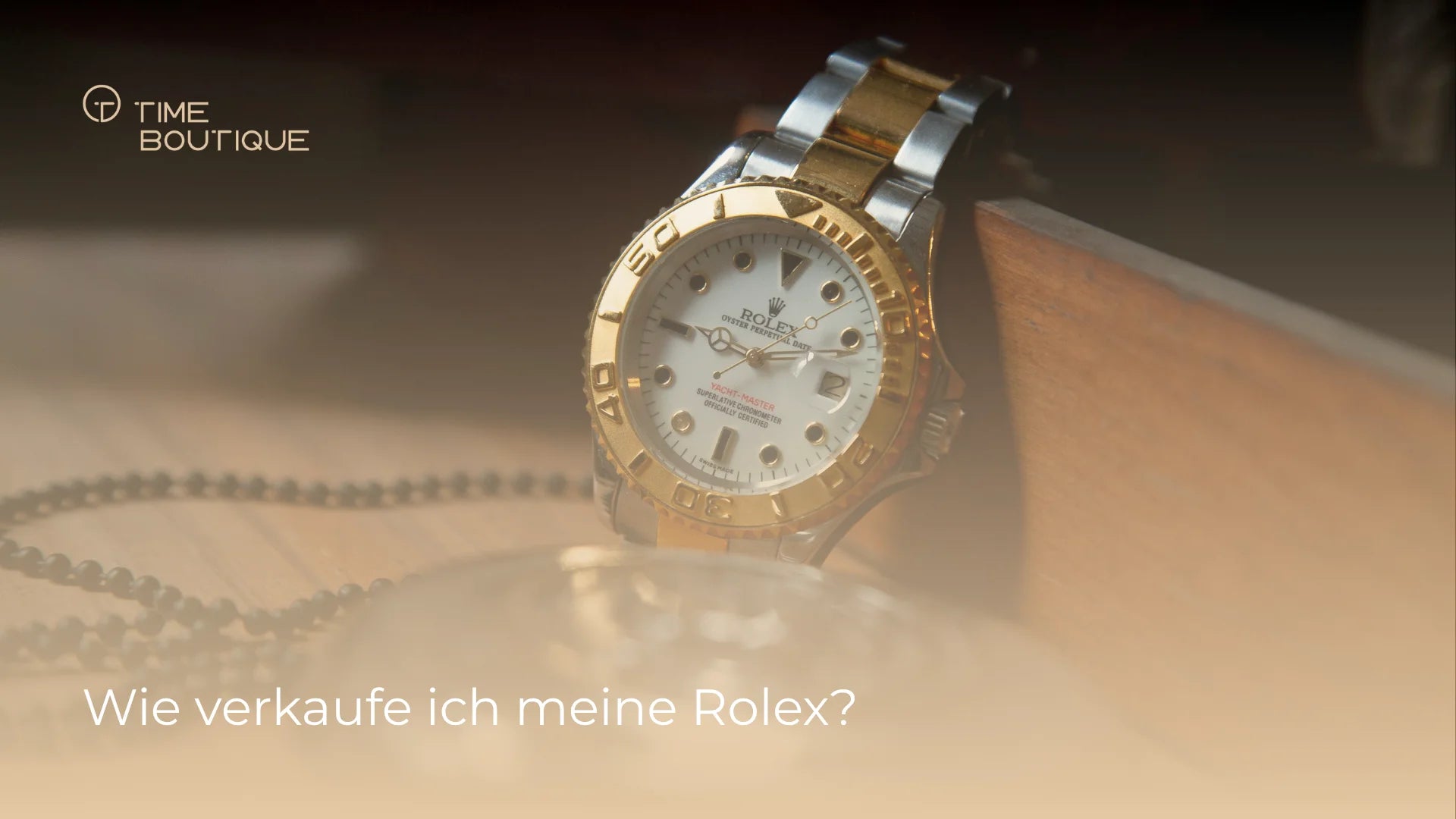
Anyone selling a Rolex thinks about the price first. That is understandable. From daily trading work I know that the price is the result of many small decisions, not the starting point. Whoever understands the market value, picks the right route, and prepares cleanly often gets 10 to 20 per cent more for the same piece.
This guide is my attempt to walk you through the decisions in the order they actually come up.
When is the right time to sell
There is no perfect market day on which Rolex prices stand at a high. What does exist are personal reasons and recognisable cycles.
A sale usually makes sense personally when:
- the watch has sat unworn in a drawer for years
- you have another watch in mind and want to finance it
- an inheritance has reached you that you have no connection to
- a collection wants pruning
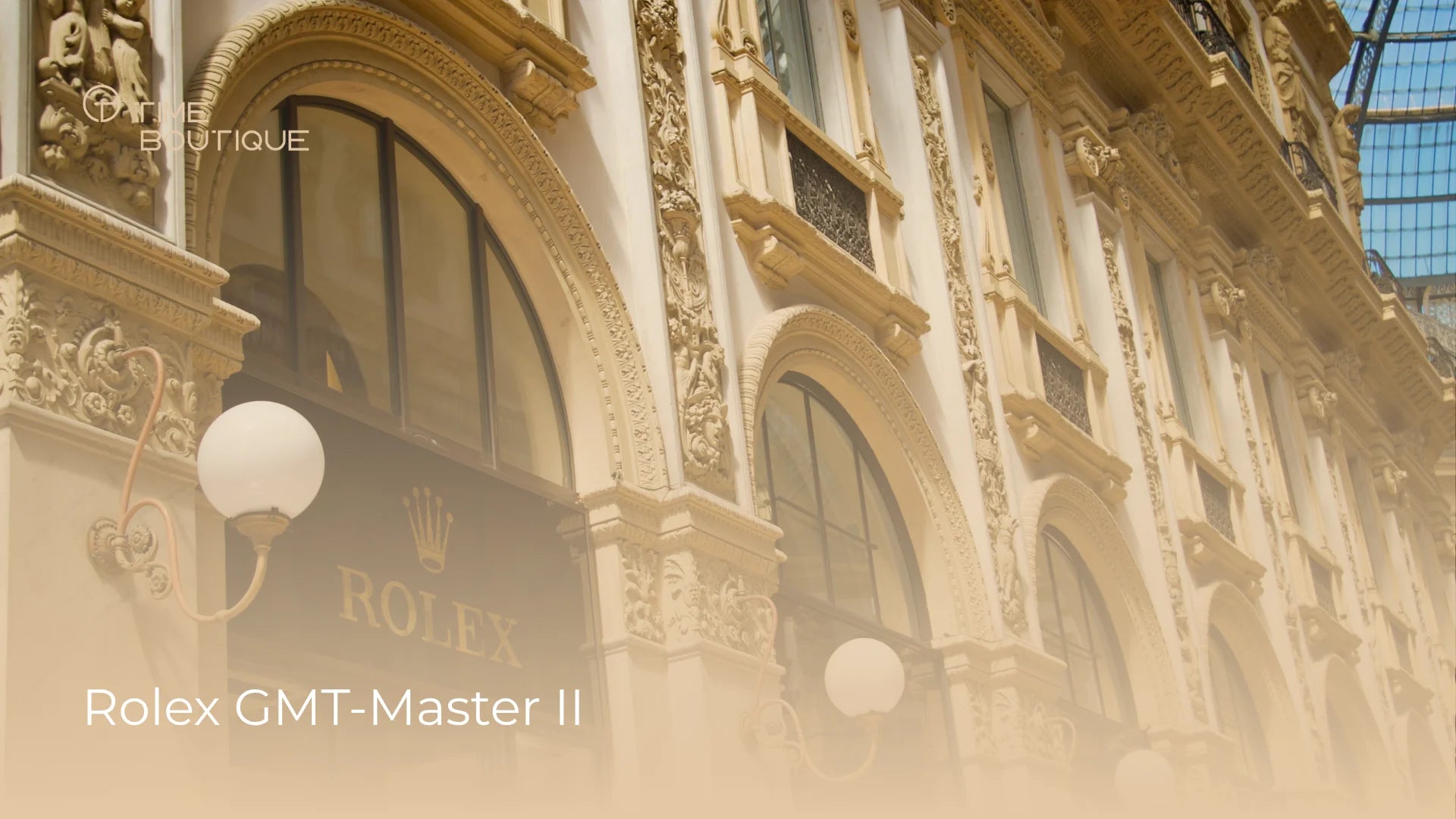
On the market side: prices for sought-after sport models (Submariner, GMT-Master II, Daytona) have settled after the wild swings of the early 2020s. There is no clear advantage today in waiting for the next hype. Stable classics (Datejust, Day-Date, Explorer) move less anyway and tend to follow general inflation.
Whoever wants to optimise timing usually ends up optimising effort rather than proceeds. My sober advice: sell when you want to sell, and put your focus into the route.
A small exception: heavily in-demand special editions or limited pieces follow their own dynamic. If you own a Daytona Le Mans or a rare Pepsi GMT from recent production, watching the market for a few weeks before selling can pay off. For standard models the effort is not worth it.
Understanding market value, where to research
Before you contact anyone, you should have an idea. Three sources are enough.
Public marketplaces (Chrono24, Watch Charts)
The listed prices show what dealers are asking, not what is actually paid. Real selling prices usually run 10 to 20 per cent below the listing. Pieces also differ markedly in condition, completeness and service history. Only compare directly comparable reference numbers in similar condition and configuration.
Auction results (Phillips, Christie's, Sotheby's)
Indispensable for vintage and collector pieces. The hammer prices (plus premium) are more real than platform listings. Look closely at the lot description. A Daytona "Paul Newman" with original dial is a different world from one with a service replacement.
Dealer enquiries
Get three to four independent initial assessments. We give ours free of charge and without obligation, as do other reputable houses. Three figures from three houses give you a realistic range.
Watch for honesty. Anyone naming a price on the phone without seeing photos has not actually valued the watch; they have set a hook. A serious dealer wants to see at least five to seven good photos, asks for service records and the history of the piece before naming a range. And even then, the range stays a range without physical inspection, not a fixed price.
A note on online research: on Chrono24, filter by "box & papers" and by location Germany or EU. Prices from Asia or the US are distorted by taxes, duties and market cycles. A realistic comparable comes from the same market.
Immediate purchase, consignment or auction, what fits which watch
Three honest routes, three logics.
Immediate purchase
We buy the watch outright. You receive the amount in your bank account within a few days. We carry the resale risk, so the purchase price sits below the later selling price. The spread covers service, refurbishment, warranty for the next buyer and market risk.
Suits: standard models in good condition, pieces with stable and well-known market prices, sellers for whom time matters more than the last percentage points.
Consignment
You remain owner, we sell on your behalf. As soon as the watch sells, you receive the proceeds less the agreed commission. This usually takes longer (4 to 12 weeks, far longer for rare pieces), but typically brings a higher final price.
Suits: in-demand models with full set, vintage in good condition, pieces with notable provenance, sellers with a few weeks of patience.
Auction
International reach, collector audience, high visibility. Also meaningful premiums and waits between consignment and payout (often 4 to 6 months). For rare vintage and exceptional provenance, often the best route.
Suits: rare references, collector classics (Daytona "Paul Newman", early GMTs, military Submariners), vintage watches with complete documentation.
Our honest recommendation: for 80 per cent of all Rolex sales, immediate purchase or consignment is the right choice. Auction only pays off for clear collector pieces.
A fourth route comes up occasionally, trading against another watch. We do this when both sides fit. You hand in your Rolex and receive another piece from our stock; the difference in value is settled in cash. It works well when you already have a specific watch in mind. Otherwise a clean sale stays the better path.
Preparation, box, papers, photos, service history
Preparation makes a surprising amount of difference. The same piece is valued 10 to 15 per cent apart depending on presentation.
Gather the documents
Bring out box and papers and every service receipt from recent years. Older invoices, gift cards, the original crown tag, anything that adds to provenance. A watch with complete history is valued noticeably higher.
Take photos
Six to eight photos are enough if they are good:
- Dial straight on, sharp, free of reflection
- Profile with crown screwed in and crown out, so the serial number between the lugs is visible
- Caseback, provided no seal is broken
- Bezel from above
- Bracelet profile, coiled
- Box, card, receipts as a flat-lay
Daylight, neutral background, no filters. Not a quick mirror selfie from the wrist.
Document realistically
Write down what you yourself know: a scratch at position X, slight lacquer damage on index Y, rate deviation, last service dates. Buyers will find any hidden flaw later. Being open in advance keeps trust and margin.
Do not polish before sending
Please do not polish, oil or clean on your own. A maintained original patina is worth more than a cheap polished surface. We see immediately when a piece has just been polished, usually with a discount, because sharp edges have been lost.
Common mistakes when selling
The following mistakes regularly cost money.
- Getting only one valuation: no benchmark means no sense of reality.
- Closing with the first quick buyer: classified ads frequently draw professional resellers buying under value.
- Confusing immediate purchase with consignment: anyone choosing immediate purchase and then surprised when the buyer resells at a higher price has missed the business model. You traded security for speed. A fair trade, but it costs margin.
- Polishing at home: see above.
- Selling box and papers separately: this reduces both values. Sell the set together.
- Shipping without proper insurance: never standard letter, never uninsured, never improvised packaging. More on this in the next section.
- Cash handover to strangers: every year we see cases of ostensibly serious buyers turning up with counterfeit cash or failing to pay at all. Personal handover only at a house you know, or under bank supervision.
Shipping and security, how a high-value transport works
For amounts beyond 10,000 euros, shipping deserves its own chapter.
We work with two carriers:
- UPS Express Saver, insured up to 50,000 euros: fast, reliable, with pickup and delivery proof. For higher-value shipments or pieces above the standard limit, we use additional insurance.
- DHL Express, with optional declared-value service: similar level, sometimes more traceable on certain routes.
What you should do:
- Watch in original box, box inside an unmarked outer carton
- No brand markings on the outside, no hints about contents
- A note with sender and recipient inside
- Where possible, hand over at a branch, not a corner pickup point
- Pass on the tracking number immediately
We offer to issue the shipping label. You only stick it on and hand it in. That reduces your burden and our uncertainty. The insurance then runs through us, which gives you double coverage: you have our insurance proof as recipient and your own pickup receipt as sender.
A question on packaging: never use the old original watch box as the outer layer. It is conspicuous, easily damaged, and makes the parcel a target. The original box goes on the inside, the outer layer is a neutral carton, ideally with extra bubble-wrap padding.
If you live in or around Munich, bringing the watch in person is easier. We take it in at the atelier in Grünwald, inspect it in your presence, document it and hand you the written valuation report directly.
Which Rolex models we particularly like to take
As orientation: in our atelier these pieces are always wanted because we have buyers waiting in our network.
- Submariner Date, every generation from 1680: stable demand, clear market prices. Steel in all configurations.
- GMT-Master II, especially Pepsi and Batman: sought-after, easy to value, quick to sell.
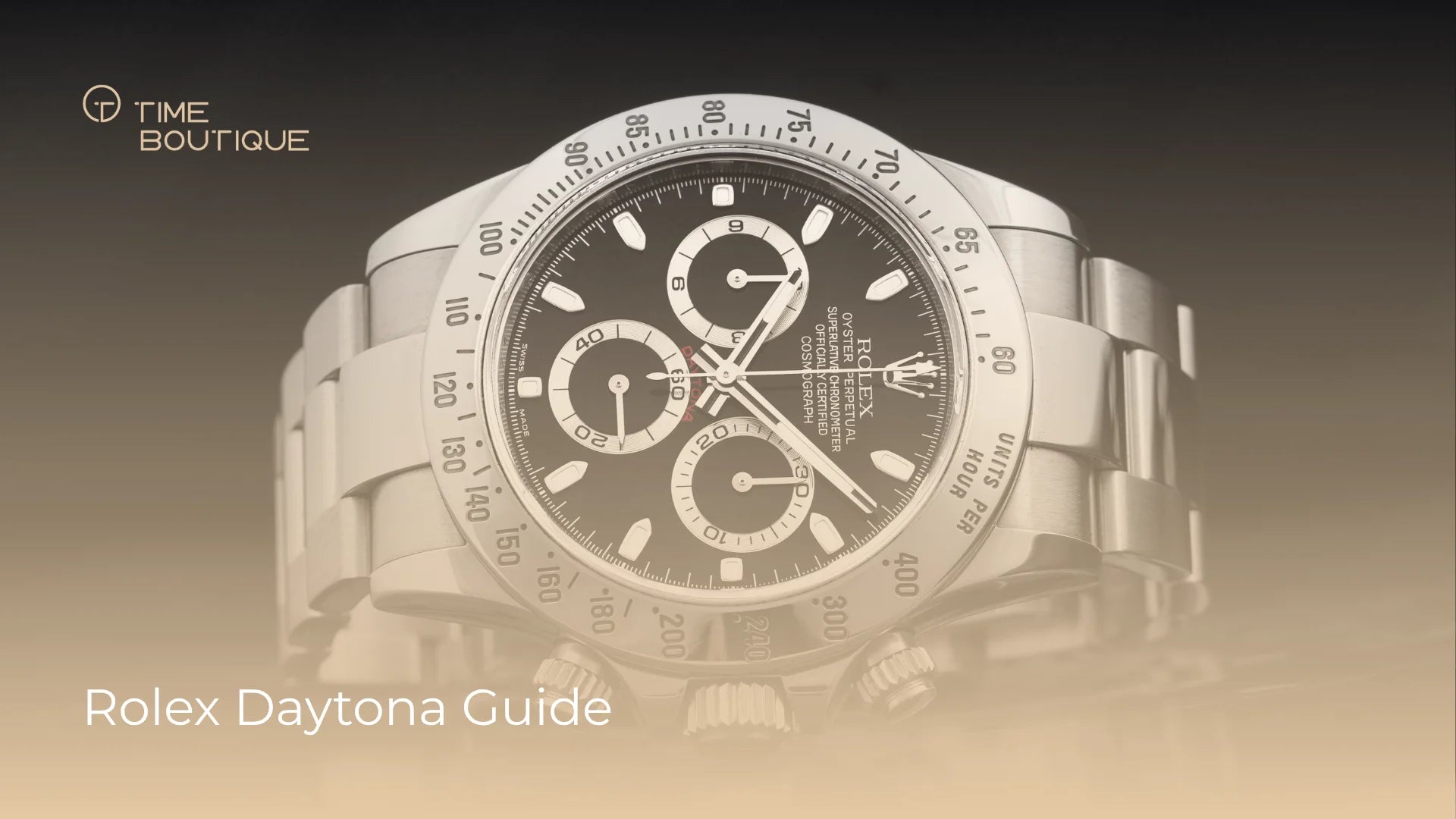
- Daytona steel from reference 16520: collector market, high prices, long authorised-dealer waiting lists, equally attractive on resale.
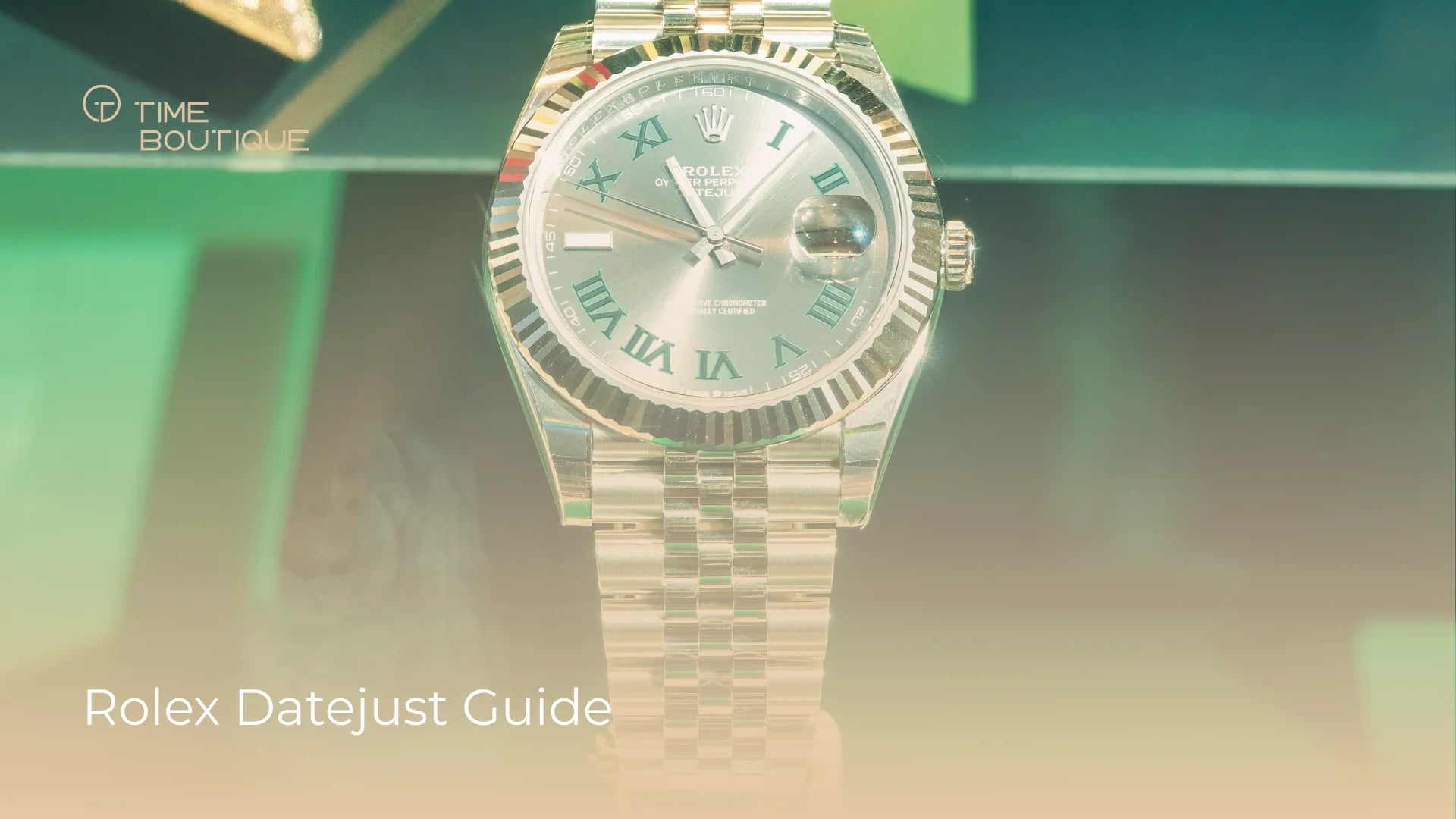
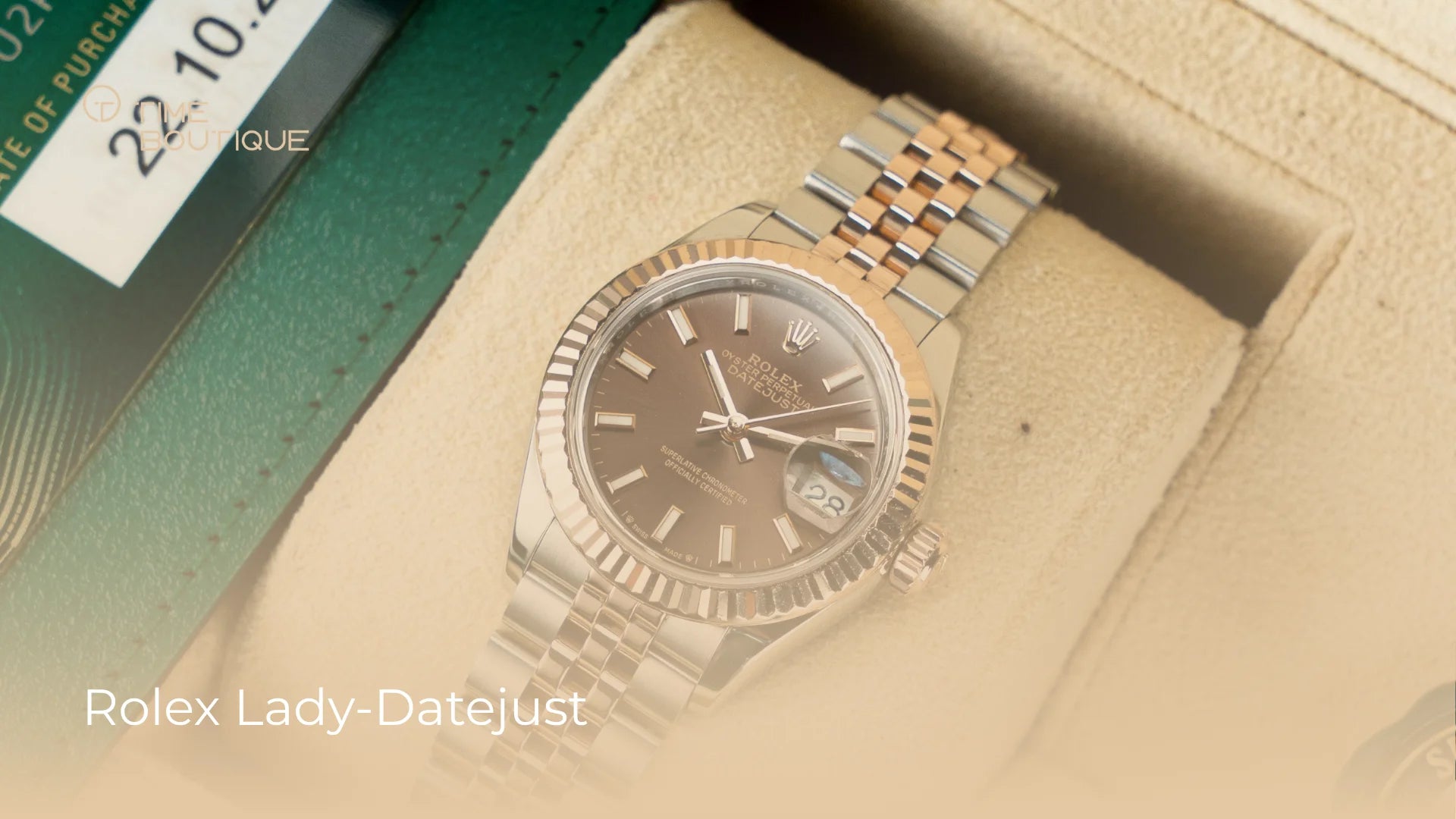
- Datejust 36, 41 in understated configurations: the classic, always sellable, especially in steel with Jubilee bracelet.
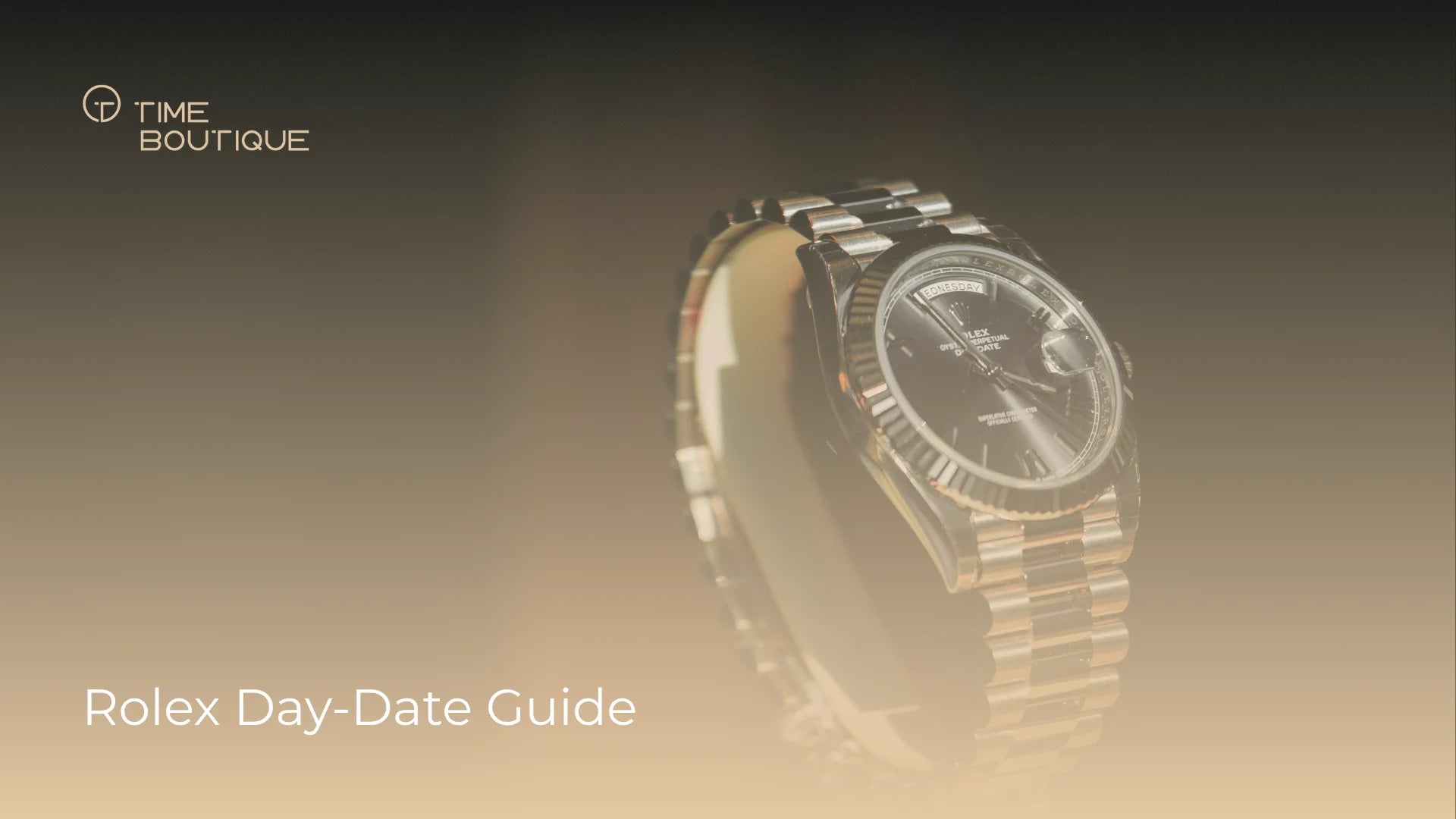
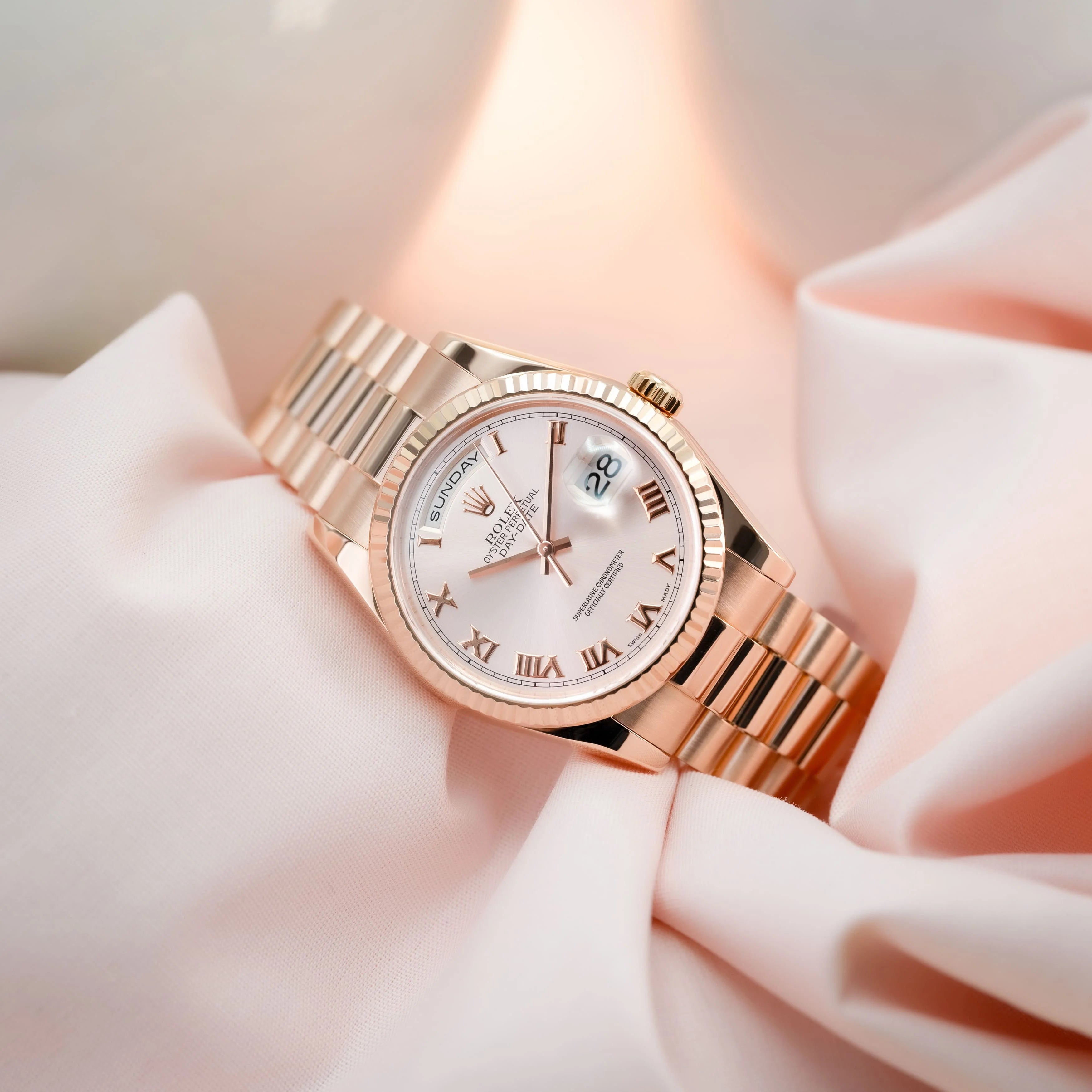
- Vintage Day-Date in yellow gold with champagne dial: a classic clientele, strong returns with clean patina.
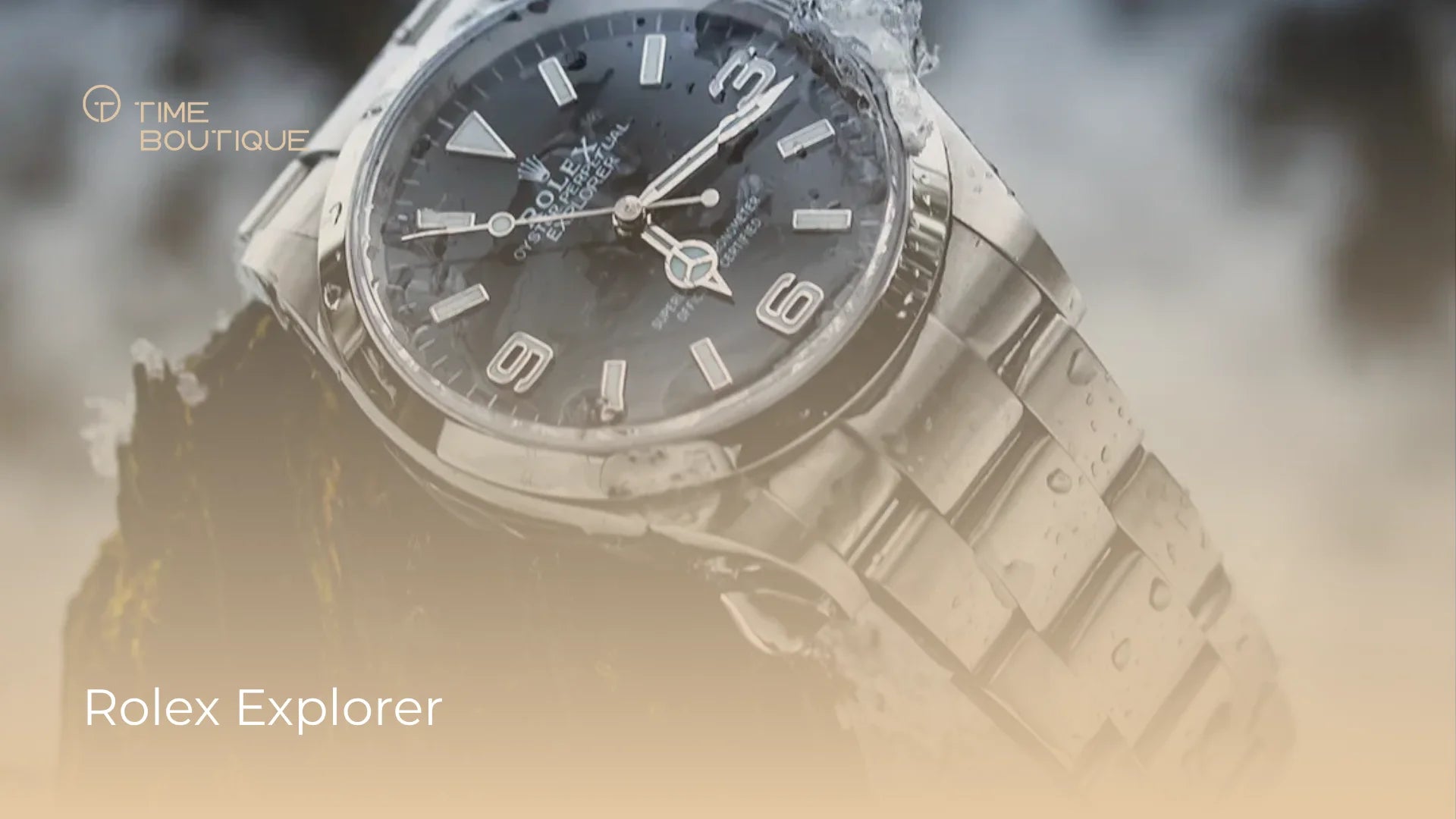
- Explorer I and II, all generations: a quiet market, but consistent demand.
Special editions and pieces with notable provenance (original invoice, early dealer stamps, factory service records) we value individually. Same rule applies: enquiry first, conversation next.
How it works at Time Boutique
Our process:
- Enquiry via the buying form. Include the model, the reference number (if known), the approximate age, and your photos.
- Initial assessment within an hour on a working day. We name a realistic valuation range and propose the suited route: immediate purchase, consignment, or possibly auction.
- Shipping or handover. For shipping, we provide the label. For handover, we set a time at the atelier.
- Inspection at the atelier. Workshop check, valuation with a breakdown of factors (condition, completeness, service history). You receive the report in writing.
- You decide. With immediate purchase you receive a binding offer; on acceptance, the transfer follows within 48 hours. With consignment you sign a contract with clear minimum price and commission.
- If you do not accept: the watch returns to you insured, at no cost.
We do not buy under pressure. It is your watch, and the sale has to feel right. If our valuation does not match your expectation, we say so openly, and you lose nothing.
Discretion is standard with us. We do not publish data on buyers or sellers and treat values and provenance the way a bank treats account information. Anyone selling from an inheritance can provide proof as needed. We run the necessary checks discreetly and handle the notary work if your situation calls for it.
A last note on tax: a private sale of a Rolex in Germany is tax-free after the one-year speculation period. Within that period, the capital gain can be taxable. We are not tax advisors and do not replace proper advice, but we like to point out that this should be clarified before the sale if the watch was recently bought.
Submit a request
Ready to sell? Submit a Rolex buying request. We usually respond within an hour.
More on how we buy and our standards: Buying at Time Boutique. If you prefer to speak in person, reach us at +49 89 38164962 or info@timeboutique.de. Our advice is free and without obligation, whether you end up selling to us or elsewhere.
- When is the right time to sell
- Understanding market value, where to research
- Immediate purchase, consignment or auction, what fits which watch
- Preparation, box, papers, photos, service history
- Common mistakes when selling
- Shipping and security, how a high-value transport works
- Which Rolex models we particularly like to take
- How it works at Time Boutique
- Submit a request