
Whether a Rolex is genuine is harder to answer at a glance today than it was a few years ago. This guide shows you which features you can check yourself, from the weight, the seconds hand and the Cyclops lens to the engravings, dial, caseback and bracelet, and where the limits of such a check lie.
You will also learn why box and papers alone prove nothing, what only a watchmaker can see once the case is open, and when it is worth having a Rolex authenticated professionally. The aim is not to distrust every watch, but to take a calm, structured look that helps you ask the right questions.
Why authenticity checks matter more today
For a long time the rule of thumb was that a fake gave itself away through its feel and through crude printing errors. That still holds for simple copies. Today, however, there are high-quality fakes that imitate the case steel, the weight, the engravings and even the look of the movement so closely that experienced buyers can be unsure at a casual glance. Then there are watches that are only partly genuine: an original case with a foreign movement, a reprinted dial or diamonds set after the fact.
For you as a buyer this means two things. Knowing the external features is worthwhile, because many fakes already fail on one of them. Yet no single point counts as proof. Only the sum of your observations forms a picture, and with any significant purchase, an expert check belongs at the end. For a cross-brand overview, see the guide how to spot a fake luxury watch.
The first impression: weight, finish and sound
Rolex makes its steel cases and bracelets from its own 904L alloy, which the brand calls Oystersteel. A genuine Rolex therefore feels dense and substantial in the hand. The edges are precise, and polished and brushed surfaces meet along clearly defined lines, without blurred borders.
Handling tells you a good deal too. The screw-down crown turns smoothly and evenly into its thread, without scratching or catching. A rotating bezel clicks firmly and evenly. A clearly audible rattle or grinding from inside is a reason to look more closely.
The limit of this impression is plain, though: high-quality fakes now use heavy steel as well. Weight and feel can raise a suspicion, but they cannot confirm that a watch is real.
The seconds hand and the rhythm of the movement
Modern Rolex calibres such as the 3135, 3235, 2236 or the chronograph calibre 4130 beat at 28,800 vibrations per hour. The seconds hand therefore moves in eight fine steps per second and appears to glide across the dial. Under a loupe the motion should be even and calm, without stuttering.
A hand that jumps once a second points to a quartz movement. Rolex did once make a small number of quartz models, such as the Oysterquartz, whose dial says as much. Leaving those rare collector's pieces aside, a Rolex with a ticking seconds hand, whether a Submariner, a GMT-Master or a current Datejust, is certainly not genuine. Some older mechanical Rolex calibres beat more slowly, so their hand moves less fluidly, but it still does not jump once a second.
Conversely, a gliding hand proves little, because many fakes now use automatic movements with a similar frequency. The seconds hand is a good test for ruling out simple copies, and no more than that.
The Cyclops lens over the date
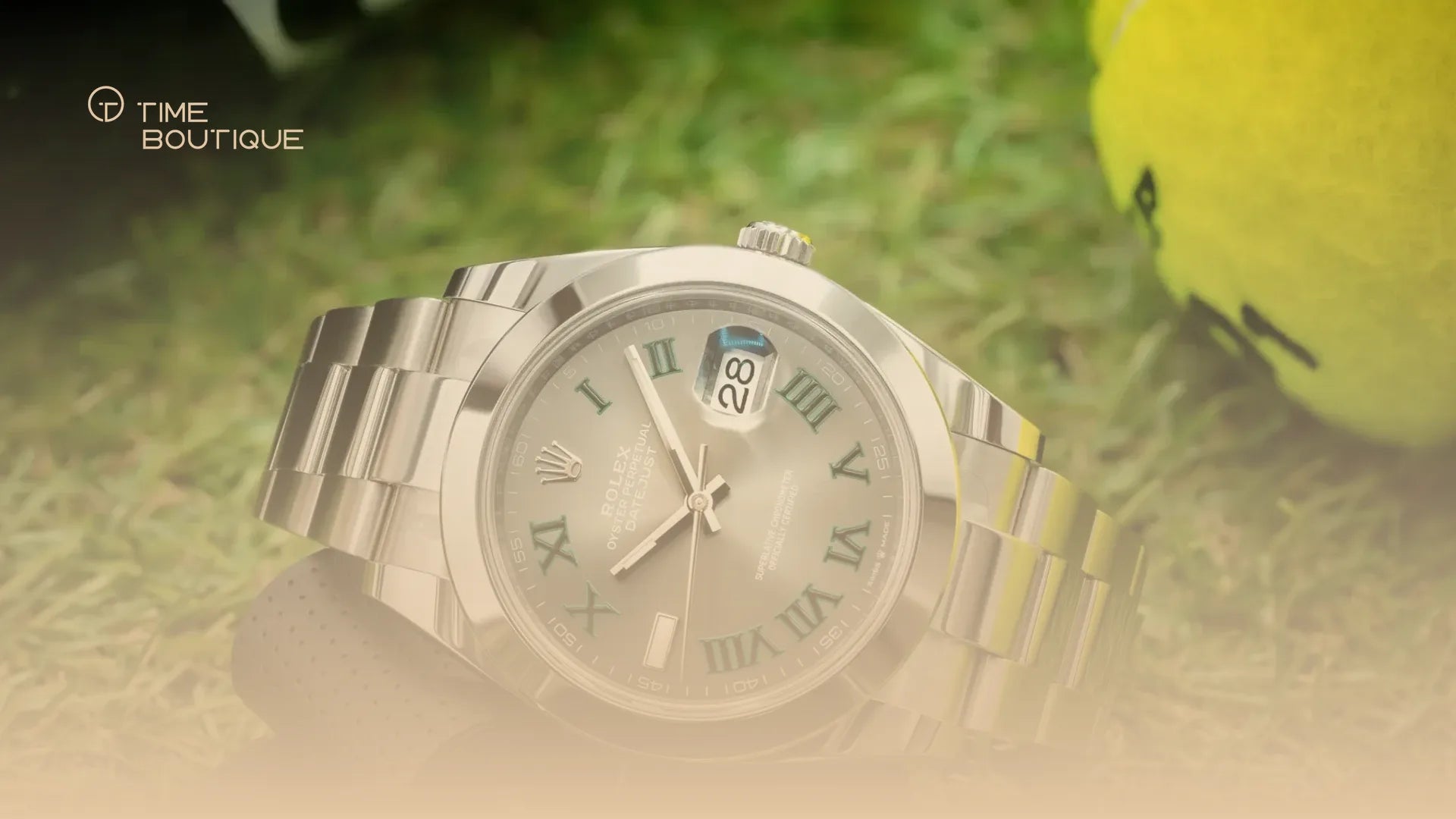
On nearly every model with a date display, the Cyclops lens sits over the window. It magnifies the date about 2.5 times, so the numeral almost fills the aperture. Weak magnification, where the numeral looks small and lost in its window, is one of the classic warning signs.
Check, too, that the lens sits exactly over the date window and that the numeral appears centred beneath it. A date shifted to one side, distorted edges or a lens fitted at a slight angle all deserve a second look. The model-specific details of a dive watch are covered in how to spot a fake Rolex Submariner.
Engravings: rehaut, crown in the crystal and between the lugs
Three kinds of marking repay a look through the loupe. Since the early 2000s Rolex has laser-etched a tiny crown into the sapphire crystal at 6 o'clock, close to the edge. It is barely visible to the naked eye and usually shows only when you tilt the crystal against the light under a loupe. A crown that is plainly visible or looks coarse is more a warning sign than evidence.
Since the mid to late 2000s the rehaut, the inner ring between dial and crystal, has carried an engraving of the word ROLEX running all the way round, with the serial number at 6 o'clock. The letters should be sharp, evenly deep and precisely aligned with the minute track. Offset letters, uneven spacing or a shallow, blurred engraving justify a careful check.
On older watches the serial number sits between the lugs at 6 o'clock and the reference between the lugs at 12 o'clock. Both become visible only once the bracelet is removed. Genuine engravings here are fine and crisp-edged, whereas fakes often look shallow or grainy.
Dial print and lume
The dial is where Rolex shows the greatest care, and where many fakes give themselves away. Under a ten-times loupe every line of text should be razor sharp, with clean edges, even stroke width and no frayed borders or drops of paint. Applied indices sit exactly, are cleanly polished and aligned in parallel. Text is centred and symmetrical, with nothing cramped.
The lume on indices and hands should be applied evenly, without overspill or gaps. In the dark a genuine Rolex glows evenly and for a long time, greenish or, on more recent models, bluish depending on the year of production. Indices that glow unevenly, or hands that glow differently from the markers, can point to replaced parts or a fake. On older watches, though, such a difference can also stem from a service that fitted replacement hands.
The caseback: what the back of a genuine Rolex looks like
Almost every Rolex model has a solid, plain, screw-down caseback with no display window. A glass back that shows the movement is a strong warning sign on a classic Oyster model such as the Submariner, Datejust or GMT-Master. Only a very small number of recent models, such as the Perpetual 1908, show their movement through a sapphire caseback, and even there you should check that reference and execution match.
Caution is equally due with casebacks bearing elaborate engravings, lettering or stickers. A few dive watches carry a caseback engraving from the factory, but on most models the back is plain. A sticker proves nothing, as it is copied like everything else. A personal dedication, on the other hand, is no warning sign. It was simply added later.
Bracelet and clasp
An original Rolex bracelet feels solid and precise. The links sit tightly, without lateral play, yet move smoothly. On modern bracelets the end links are solid and meet the case without a gap. A hollow rattle or gaps at the end links do not match the brand's standard of manufacture.
The clasp deserves a careful look. The crown logo should be sharp and well defined, and the stampings on the inside clear and clean. The clasp closes with a firm, unambiguous click and then sits securely. Wobbly parts, rough edges or a spongy mechanism are all hints. Bear in mind, though, that a genuine watch may wear a non-original bracelet and a fake an original one. The bracelet tells you, first of all, only about the bracelet.
Reference and serial number must match
Every Rolex carries a reference that describes the model and a serial number that identifies the individual piece. The reference must belong with the case, bezel, dial and bracelet, and the serial number with a period in which that reference was made. How Rolex references are structured is explained in understanding the Rolex reference number. You can find the approximate production period with the Rolex serial number check.
The limit matters here. A plausible number shows that the details are consistent, not that the watch is genuine, because counterfeiters copy valid serial numbers from real watches. A contradiction, such as a serial number from before the reference was introduced, is on the other hand a clear warning signal.
Box and papers: useful, but not proof
The warranty card, certificate and box add confidence and value, but they too are faked or paired with a different watch. What matters is that the serial number on the papers matches the number on the case. Papers are one piece of the puzzle, not proof of authenticity. The role a full set plays in value and resale is set out in box and papers, how important are they really. And because a genuine watch can still be stolen, it is also worth reading how to check if a Rolex is stolen.
Rolex Datejust and Daytona: what to look for
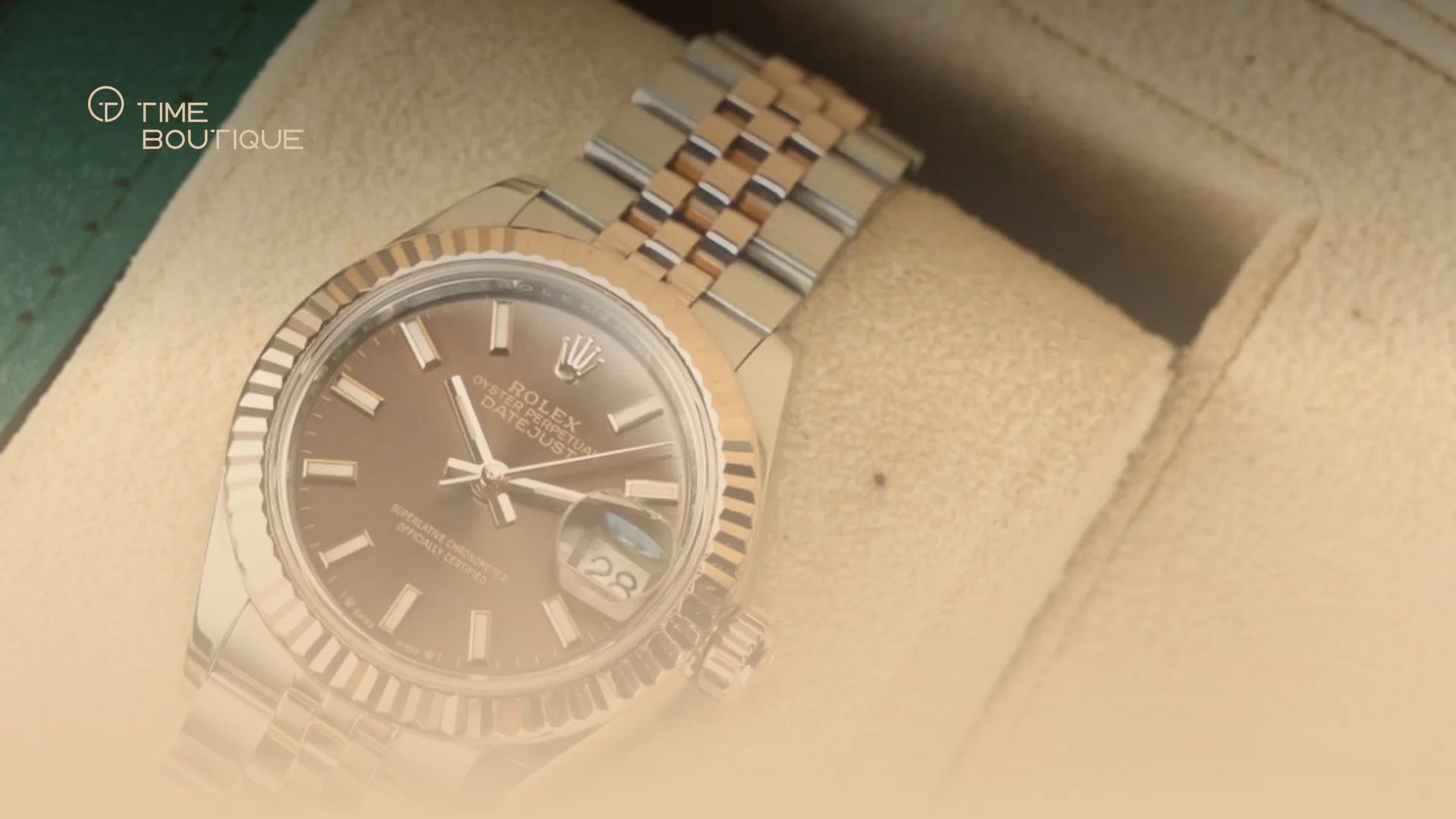
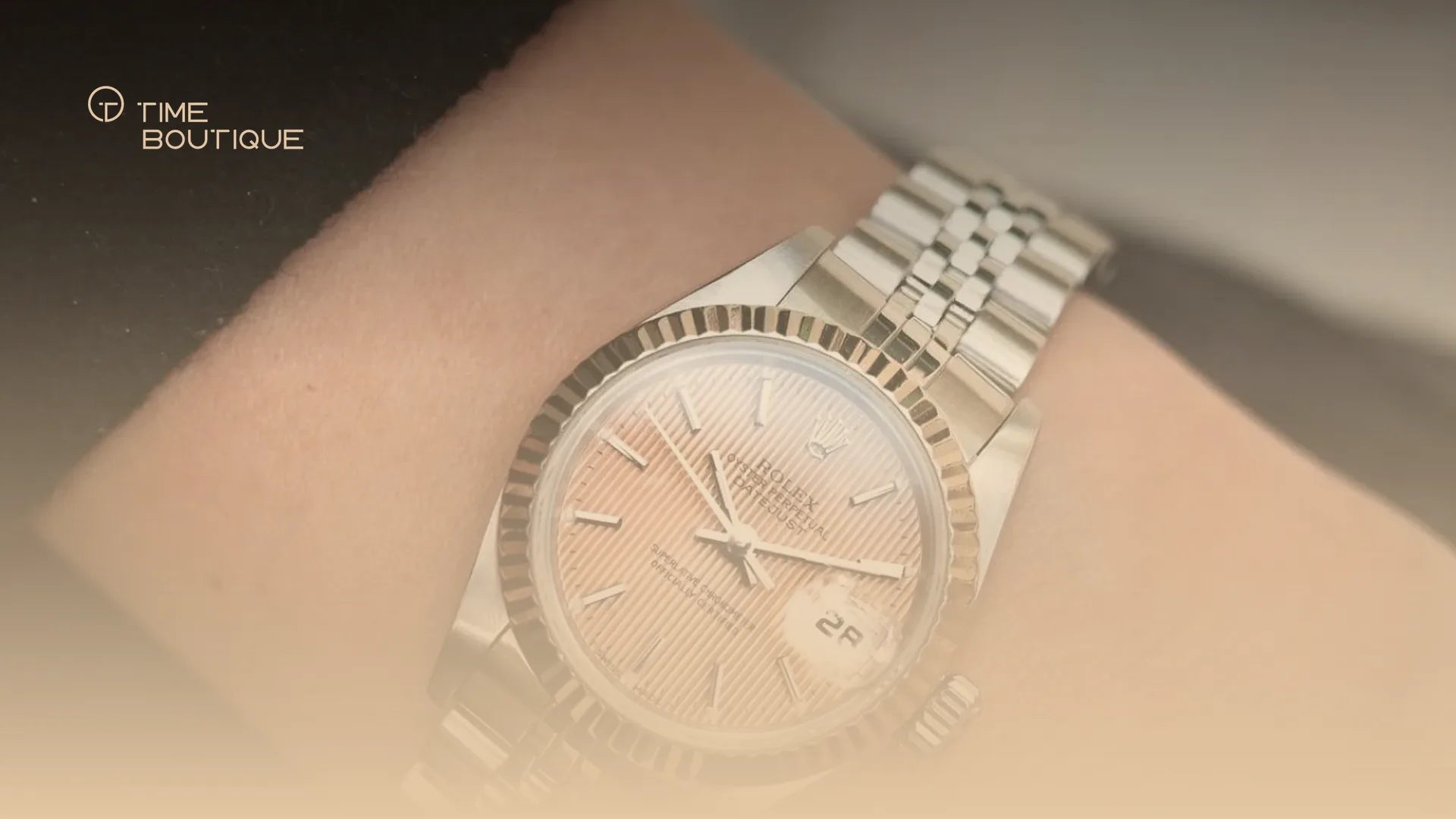
On a Datejust, besides the Cyclops lens, look at the fluted bezel where fitted. On a genuine watch the fluting is even, sharply cut and breaks the light into clean facets. Check the date change as well: on a genuine Datejust the date switches over briskly around midnight, rather than creeping forward over several hours.
On a Daytona the chronograph is the most important functional test. It should start, stop and return exactly to zero cleanly, and the sub-dials must actually count the elapsed time. On simple fakes they are sometimes mere decoration or show a different function from the genuine watch. Keep one thing in mind for the seconds test: the large central seconds hand on a Daytona is the chronograph hand and stays still while the chronograph is not running. The running seconds appear on one of the small sub-dials.
What only opening the watch reveals
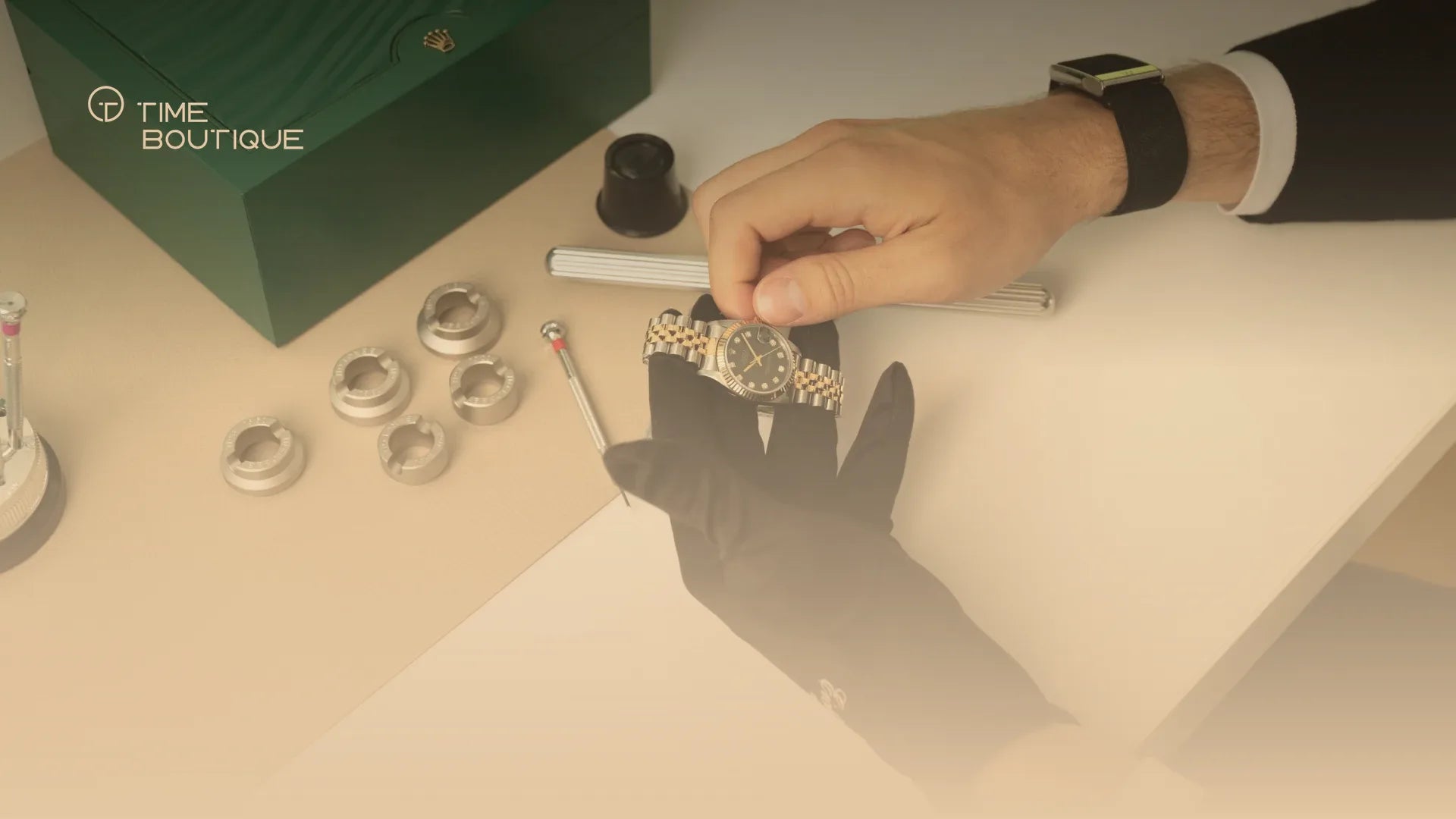
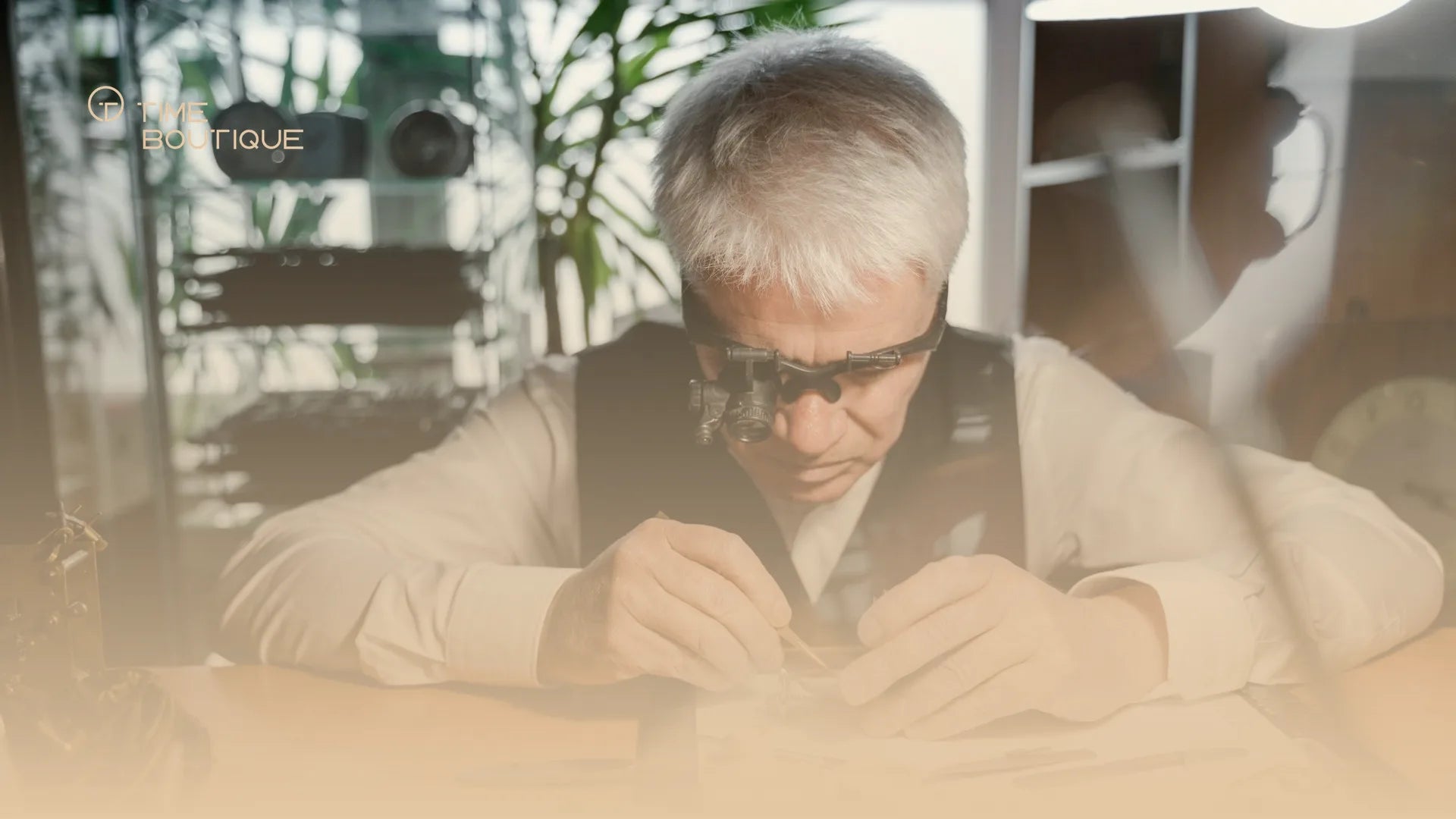
Everything checked so far concerns the exterior, and that is exactly what counterfeiters copy most intensively. Certainty only comes from looking inside the case. A watchmaker opens the screw-down caseback with the proper tool and examines the movement: the signature and calibre designation, the quality of the finishing, the execution of rotor, bridges and balance, and the condition of the parts. Replica movements imitate the look, but rarely reach the detail quality.
The watchmaker also establishes whether the watch is original throughout. With pre-owned and older pieces in particular, genuine and foreign parts are sometimes combined, for instance a replica movement in a genuine case. A timing machine additionally measures rate and amplitude. Frequency alone proves nothing, however, because fakes often beat at the same frequency.
| Check | Can you do it yourself | How much it tells you |
|---|---|---|
| Weight and finish | Yes | Little, good fakes are heavy too |
| Seconds hand | Yes | A lot against quartz, little against automatic copies |
| Cyclops lens | Yes, with a loupe | Moderate |
| Rehaut and crown in the crystal | Yes, with a loupe | Moderate |
| Dial and lume | Yes, with a loupe | Moderate |
| Caseback | Yes | A lot if a classic model has a glass back |
| Serial number and papers | Yes | Little, but contradictions are telling |
| Movement and parts | No, watchmaker only | Decisive |
Having a Rolex authenticated: when and where
A professional check is worthwhile before any private purchase, when the provenance is unclear, when you are unsure about any of the external features, and before selling an inherited watch. In a private sale, agree that the watch will be checked before payment. Reputable sellers will usually agree to this.
Three routes are open to you. An independent watchmaker with Rolex experience can open the watch, examine the movement and give an assessment, in writing if you wish. The brand's official service network examines a watch thoroughly as part of a service. Whether and in what form a written confirmation results from it is worth asking in advance. If you want to buy a pre-owned Rolex with the greatest possible certainty, official retailers have offered the brand's Certified Pre-Owned programme since the early 2020s, in which pre-owned watches are inspected and sold certified.
The cost depends on whether the watch is opened and whether the check forms part of a service. What happens during a service is summarised on the Rolex service page, and the guide to buying a Rolex describes how to make a purchase safely.
Buying a Rolex at Time Boutique
Every watch in our Rolex collection is inspected in our own workshop in Munich before it goes on sale. For us, authenticity is the foundation, not the sales pitch.
Our collection changes constantly. If the Rolex you want is not in it right now, we will find it for you. Get in touch.
If you already own a Rolex, we handle service and overhaul in our own workshop and will buy your watch if you wish, via the selling enquiry.
Frequently asked questions
How can you tell a real Rolex at first glance?
Most readily by a gliding seconds hand, a strong Cyclops magnification of about 2.5 times, razor-sharp dial printing and a plain, solid caseback. These features rule out many simple fakes. A high-quality fake can imitate all of them, however, so the first glance is never the final word.
Does a valid serial number prove a Rolex is real?
No. The serial number reveals the approximate production period, which you can look up with the Rolex serial number check, and it must match the reference and papers. Counterfeiters do, however, copy valid numbers from genuine watches. A consistent number is a good sign, but it is not proof.
Where can I have a Rolex checked for authenticity?
With an independent watchmaker experienced with Rolex, through the brand's official service network or, when buying a pre-owned watch, through the Certified Pre-Owned programme of official retailers. What matters is that the check includes opening the case and examining the movement.
How much does a Rolex authenticity check cost?
That depends on its scope. An external inspection involves less work than opening the watch, and if the check is combined with a service, the price follows that of the service. Ask beforehand what will be checked, whether you will receive a written result and what it will cost.
Is there a reliable Rolex fake check from photos?
Photos help to spot crude errors, such as a weak Cyclops lens or sloppy printing. They cannot replace a reliable authenticity check, because the movement and the quality of workmanship can only be judged on the watch itself. For any serious buying decision, the watch therefore belongs in the hands of an expert.
- Why authenticity checks matter more today
- The first impression: weight, finish and sound
- The seconds hand and the rhythm of the movement
- The Cyclops lens over the date
- Engravings: rehaut, crown in the crystal and between the lugs
- Dial print and lume
- The caseback: what the back of a genuine Rolex looks like
- Bracelet and clasp
- Reference and serial number must match
- Box and papers: useful, but not proof
- Rolex Datejust and Daytona: what to look for
- What only opening the watch reveals
- Having a Rolex authenticated: when and where
- Buying a Rolex at Time Boutique
- Frequently asked questions
- How can you tell a real Rolex at first glance?
- Does a valid serial number prove a Rolex is real?
- Where can I have a Rolex checked for authenticity?
- How much does a Rolex authenticity check cost?
- Is there a reliable Rolex fake check from photos?