
"Which watch should I buy as an investment?" is one of the most frequent questions in the atelier. The most honest answer up front: a luxury watch is primarily an object to wear, not to store away. Anyone aiming purely at return is better served by an ETF. Anyone deliberately looking for a piece that, over twenty years, at least holds its current value and ideally appreciates, can be very targeted about it. This guide summarises what we have seen in the market over recent years, what we collect ourselves, and what we specifically advise against.
Store of value or investment
The most important distinction comes before any model recommendation. A luxury watch can play two roles, and they are not the same thing.
Store of value means: the money you put in stays preserved. Not always to the cent in inflation-adjusted terms, but in the range of tangible assets like gold jewellery or a solid property. A Submariner Date 126610LN bought today on market conditions has, across twenty years, a high probability of having held or slightly exceeded its nominal value, provided the market phase was neutral at entry.
Investment in the sense of real value gain is significantly narrower. It describes pieces whose secondary-market price has, across the years, risen in real terms after inflation. These are considerably fewer models than the collector bubble suggests, and entry demands patience on a ten-year-plus horizon.
In the atelier we tell clients clearly: a store of value is the realistic expectation, a genuine investment is a well-informed fortunate find over a long time.
What makes a watch hold its value
Four factors decide the long-term performance of a luxury watch.
Brand DNA. Brands with a clear identity and continuous market position age better. Rolex, Patek Philippe, Audemars Piguet and A. Lange & Söhne have stood at the top for decades. Vacheron Constantin, Cartier on certain lines and Omega for selected vintage references join them. Brands that constantly shift position and design language work less well as stores of value.
Model icon status. Within every manufacture there are a handful of references that count as culturally established. Daytona, Submariner, GMT-Master, Nautilus, Aquanaut, Royal Oak, Tank, Lange 1. These models are known worldwide, even outside the collector bubble, and find a buyer on resale within days.
Rarity. Limited editions, discontinued references, vintage pieces with documented history. What is no longer produced and cannot be reproduced is structurally scarce. The catch is that rarity only translates into value when real collector interest follows it. Otherwise it remains an expensive niche piece.
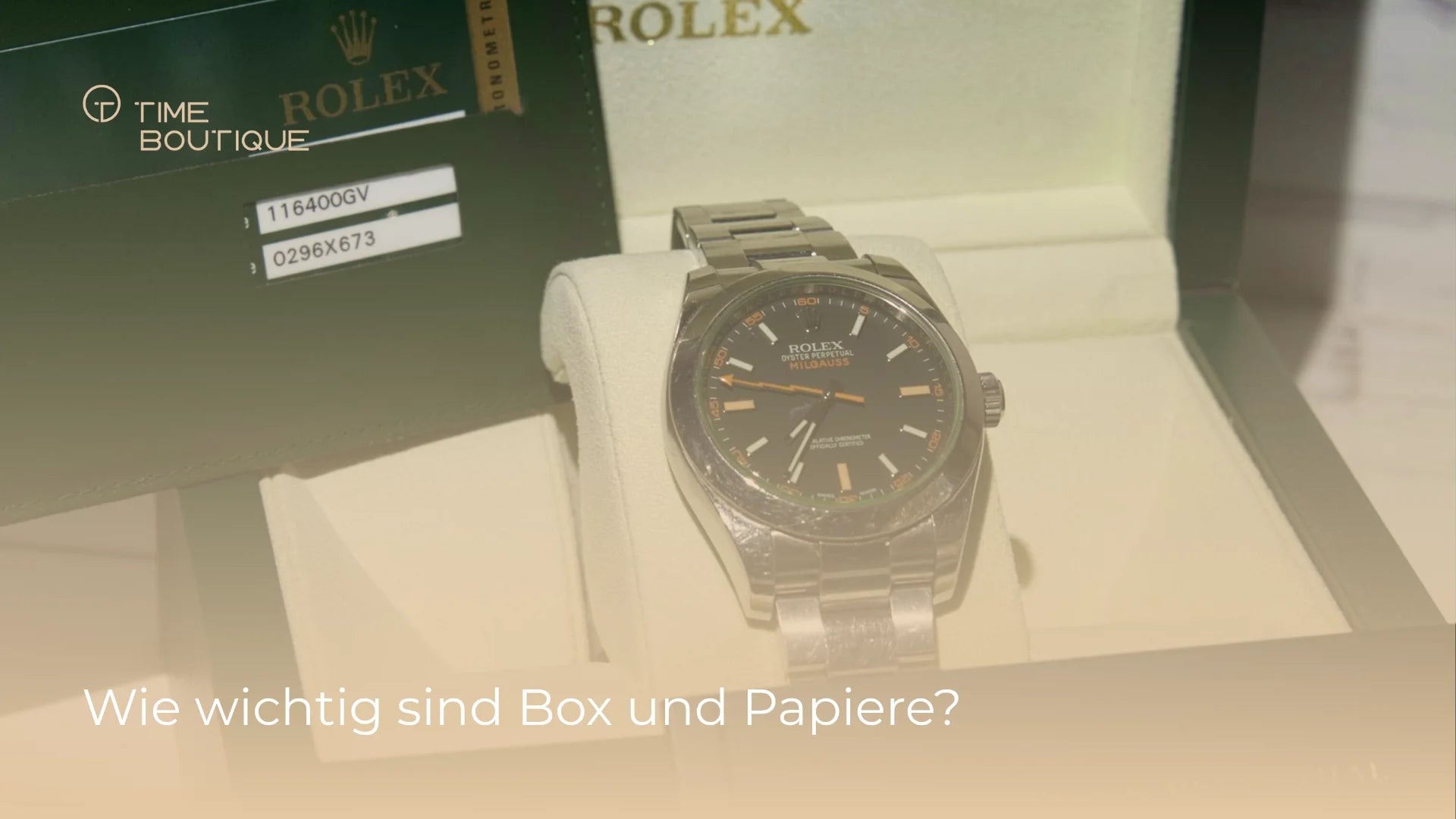
Completeness. Box, papers, service receipts, original invoice where applicable. A full set carries a surcharge of 10 % to 25 % above the naked piece, as we laid out in the box and papers guide.
The hype lesson from 2021 to 2024
Between 2020 and 2022 the prices of certain steel sports watches exploded. Rolex Daytona 116500LN, Patek Nautilus 5711/1A, AP Royal Oak Jumbo 15202. Private buyers purchased without ever intending to wear, because resale was profitable within weeks. On the secondary market a 5711/1A reached peaks above 200,000 €, the Daytona in steel hit the 45,000–55,000 € range at peak, the 15202 similar. List prices at authorised dealers were a fraction of this, but the AD was not selling, because waiting lists were closed.
In 2023 reality returned. A 5711/1A has since traded in the 110,000–135,000 € range. Daytona steel followed the same curve, with losses of 30 % to 40 % from peak, and currently stabilises around 25,000 € to 32,000 €. The 15202 was replaced by AP in 2022 as well, which set off its own dynamic: the original 15202 is no longer in production, the market is currently re-sorting, and that nicely illustrates the generation-flip risk.
The lesson is sober. Hype prices are not real values, but a function of scarcity plus speculation. Anyone who bought at the 2021 hype peak paid a good price for a good piece, but did not make an investment. Genuine appreciation develops across decades, not quarters. Anyone entering the segment in 2026 buys on considerably calmer terms than in 2021, but should not expect the hype wave to return in that form.
The real movers across 10 years
For this article we looked at the secondary-market curves of the past ten years on references we trade in the atelier ourselves. The following pieces moved robustly upward across that period, with the clear note that the curve was not linear.
Rolex Submariner Date 116610LN. Introduced 2010, replaced 2020 by the 126610LN. Traded in 2016 at a secondary level in the 6,500–7,500 € range, sits today at 12,000 € to 14,500 € for clean full-set pieces. Anyone who bought in 2016 and wore the piece since has roughly doubled the value. Drivers: model swap to the 126610LN, continuous AD waiting lists, high liquidity.
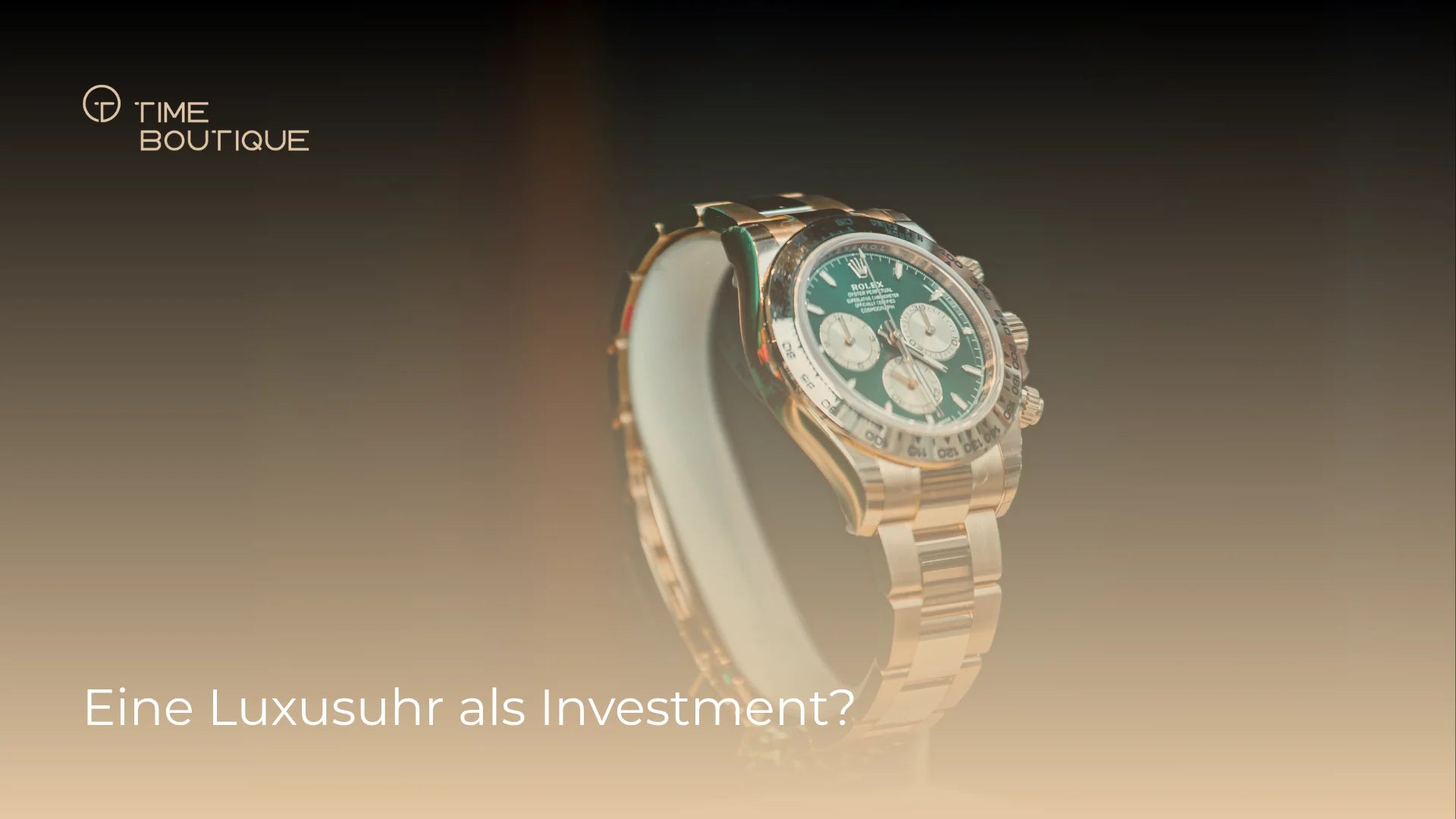
Rolex Cosmograph Daytona 116500LN. List price at launch in 2016 sat around 11,500 €, immediately above on the secondary market. Today, replaced by the 126500LN from 2023, the 116500LN sits at 25,000 € to 32,000 € depending on dial. Drivers: model swap, globally iconic status, broad collector buyer pool.
Patek Philippe Nautilus 5711/1A. Variant introduced in 2006, discontinued in 2021. Traded in 2014 in the 35,000–40,000 € range on the secondary market, reached hype-phase peaks above 200,000 €, sits today at 110,000–135,000 € for clean pieces. Anyone in for the long run has, measured against a 2014 entry, more than tripled value despite the correction. Drivers: discontinuation, structural scarcity, cultural symbol.
Audemars Piguet Royal Oak 15202ST. The "Jumbo" Extra-Thin, produced in original form until 2022. In 2014 at 20,000–24,000 €, in the hype phase at peaks of 110,000 € to 130,000 €, today oscillating around 60,000 € to 80,000 €. Drivers: original design without update across decades, discontinuation, AP brand strength.
Vacheron Constantin Overseas (4500V). Current generation since 2016. Less hype than Nautilus or Royal Oak, but a structurally similar sport-luxury positioning. Secondary market in 2018 in the 18,000–22,000 € range, today at 26,000 € to 33,000 €. Solid upward trend without crash risk, because it never entered the hype segment.
This list is not exhaustive. We deliberately picked the models we see most often in the atelier and for which we hold reliable curves over ten years.
What we do not recommend as an investment
As honestly as the movers, the pieces we do not treat as stores of value.
Most dress watches below Patek and Lange. Cartier Tank in the standard steel variant, Omega De Ville, older IWC Portofino. Beautiful watches, but the secondary-market curve has been flat or slightly down for years. Anyone wanting a Tank should wear it, not treat it as an asset.
Complications without a big name. A minute repeater from a mid-tier manufacture, a perpetual calendar below the A. Lange or Patek tier. Production effort is significant, but resale happens in a narrow collector circle that is hard to reach.
Sport pieces from second-tier brands. Tudor Black Bay, TAG Heuer Carrera, Breitling Navitimer. Excellent watches to wear, very fair on price, but structurally unsuitable as an investment because production is high and collector depth is low.
Hype-driven limited editions with questionable design language. If the model was in demand only in a short wave, the value drops after the wave.
Trend brands without manufacture movement. Microbrands often have fantastic design and a loyal community, but the secondary market is thin and value loss outside the community is high.
Pimped tuning watches with aftermarket dials or retrofitted diamond settings. Sold later as damaged, not as personalised.
Gold quartz watches from the 1980s. Material moves with the gold price, the movement itself is barely repairable today, and the design is generationally burnt.
Why rarity alone is not enough
Collectors often underestimate the role of liquidity. A rare complication may be mathematically worth double in ten years, but if only three collectors worldwide would buy it, you need luck on timing. Sports watch classics (Submariner, GMT, Daytona, Nautilus, Royal Oak), by contrast, can be sold worldwide within days because the market is deep. For most private investors this is the more sensible choice.
Allocation and waiting lists at the authorised dealer also play a role. A Daytona from the AD at list price is structurally a gift, because delivery time runs over multiple years and the secondary market pays a clear premium. Anyone who builds an AD relationship and acts on the first offer has the value build priced in already. Anyone buying on the secondary market pays that premium up front and has to wait for further movement.
The risks in plain terms
Gray-market correction. The 2022 crash is not the first of its kind, and will not be the last. Anyone buying at the hype peak has, by definition, the worst entry. We recommend patience, market observation and purchases in calm phases.
Generation-flip risk. When the manufacturer replaces the model, the old generation can either rise in value (because it is no longer produced) or fall (because the new generation is seen as more attractive). Which direction wins is not always predictable. The 5711 rose after discontinuation, the 116610LN first lost ground and stabilised only years later.
Condition decay. A watch worn daily ages. Deep scratches, polished case edges, dials swapped during service. A collector wants original condition, and the longer the watch sits with you, the more effort preservation demands.
Fake-papers risk. With the rise in values, forged warranty cards have become a segment of their own. Anyone unable to prove on resale that the papers are genuine stands on weak ground.
Theft and damage. Banal, but relevant. A watch in the five-figure range without separate insurance is an open risk that most household policies do not cover.
Tax and holding period in Germany
Important note up front: this is not tax advice. We give the general frame as we know it from client conversations, and refer to a tax adviser for your specific situation.
In Germany the one-year speculation period under § 23 EStG applies to private sales of economic goods that are not everyday items. Anyone who has held a luxury watch for more than a year and sells it privately can take the gain tax-free, provided the de-minimis threshold for other speculative gains is observed.
Anyone selling within the year taxes the gain at the personal income tax rate, where the threshold is exceeded. Current limits and detail rules belong in the hands of a tax adviser, because they move.
Anyone trading professionally, meaning regularly buying and selling with profit intent, enters a different world: commercial activity with VAT regulation, record-keeping obligations and margin-based taxation. That too belongs in professional advice.
For consultation in the atelier, particularly on larger inheritances or collection sales, talk to us. On request we refer you to our tax contacts in Munich.
Insurance and storage, the cost side
An investment you do not insure is open exposure. Household policies typically cover jewellery and watches only up to a cap that is regularly too low for luxury timepieces.
Specialist jewellery and watch policies cost typically in the range of 0.4 % to 0.8 % of insured value per year, depending on storage, wear frequency and location. For a collection in the 100,000 € range we are talking about 400 € to 800 € in annual premium, which noticeably erodes effective return unless the watch appreciates at the same pace.
Storage in a domestic safe lowers the premium, a bank safe deposit box lowers it further, but costs a fee itself and takes the pleasure of wearing out of your hands. Watch winders make sense for automatic movements but do not replace insurance.
Anyone who wears the watch accepts a higher premium but has, on the wrist, what the piece was built for.
We are not an investment adviser
We sell watches, we do not forecast markets. What we offer: authenticity and movement testing in our own workshop under Helmut, documented condition, 12 months warranty, and an honest assessment of which pieces we would collect ourselves and which not. We have traded in exactly this segment for years and see market movement first-hand.
Anyone entering with investment intent should keep a few rules in mind:
- Choose a piece you would actually want to wear. Carries better if appreciation comes slower than expected.
- Put a maximum of 20 % to 30 % of your tangible-asset budget into a single watch. Diversification across multiple brands and models reduces cluster risk.
- Pay attention to full set, meaning box, papers, service receipts, provided the model is younger than 25 years.
- Have the service history documented. A watch without proven maintenance sells harder and gets squeezed on price by the next buyer.
- On values above 20,000 €, take out a specialist jewellery and watch policy.
- Plan for patience. Ten years is the minimum horizon for genuine appreciation. Anyone wanting to sell in two years is speculating, not investing.
Further reading from the atelier journal
For the brand-specific perspective on collector models we recommend Which Rolex to buy and Which Patek Philippe to buy. Anyone wanting to read box-and-papers correctly finds the market surcharges and verification steps in the box and papers guide. For vintage and atelier-checked pieces from our current stock see our vintage collection.
The honest closing thought
Buy a piece you want on your wrist daily, or one you wear on occasions where it means something. Treat appreciation as a bonus, not a plan. The most beautiful pieces in our atelier are not the most expensive ones, but the ones whose owners have a real relationship with them.
If you are considering a specific piece, talk to us. Via the atelier enquiry, by phone on +49 89 38164962 or by email to info@timeboutique.de. We also handle purchases of existing collections, see purchase enquiry.
- Store of value or investment
- What makes a watch hold its value
- The hype lesson from 2021 to 2024
- The real movers across 10 years
- What we do not recommend as an investment
- Why rarity alone is not enough
- The risks in plain terms
- Tax and holding period in Germany
- Insurance and storage, the cost side
- We are not an investment adviser
- Further reading from the atelier journal
- The honest closing thought