
The Rolex world looks larger and more confusing from the outside than it actually is. As soon as you know the inner order, much sorts itself out by itself. This overview shows how the families are built, what the materials mean and which model suits which wearer. It is meant as a guide from which you can turn off to the detailed guides of the individual models.
How the Rolex world is ordered
At its core the programme can be thought of in two lines. On the one side the classic line, which comprises elegant everyday and dress watches. On the other side the professional line, originally developed for particular professions and activities, from diving through flying to racing. Almost every well-known Rolex model can be assigned to one of these two lines. This division is no rigid law, but it helps enormously with orientation.
The classic line
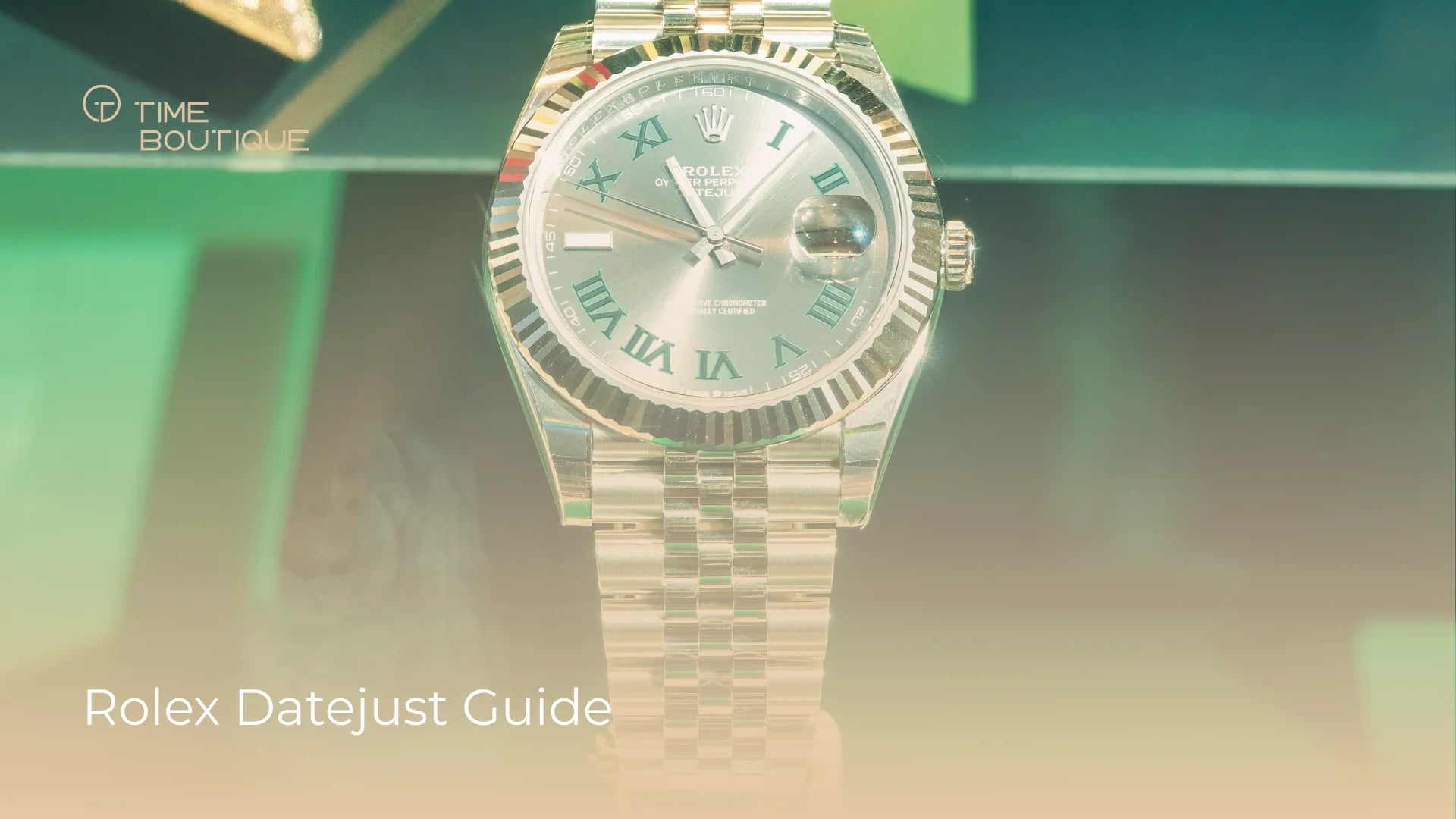
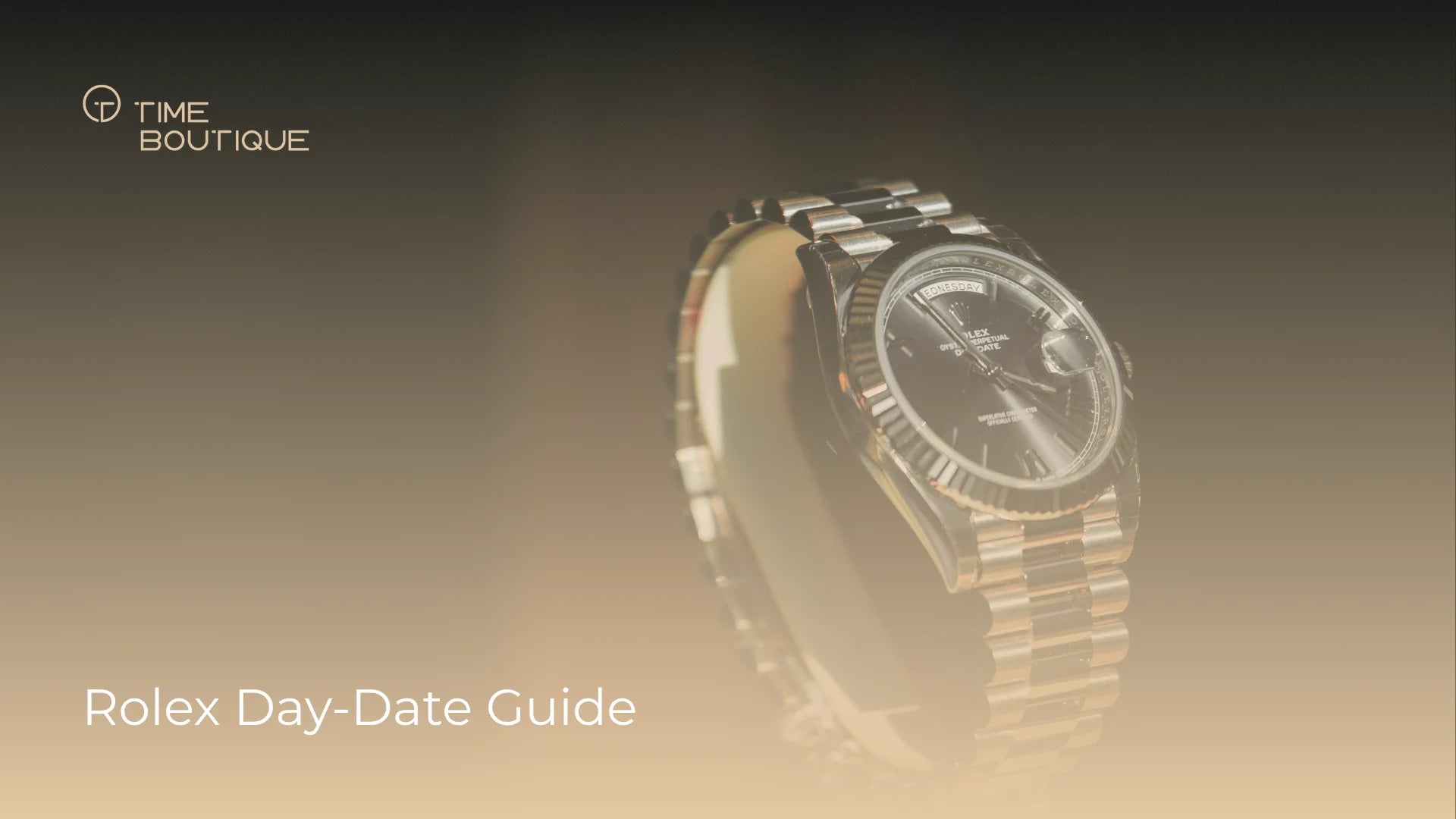
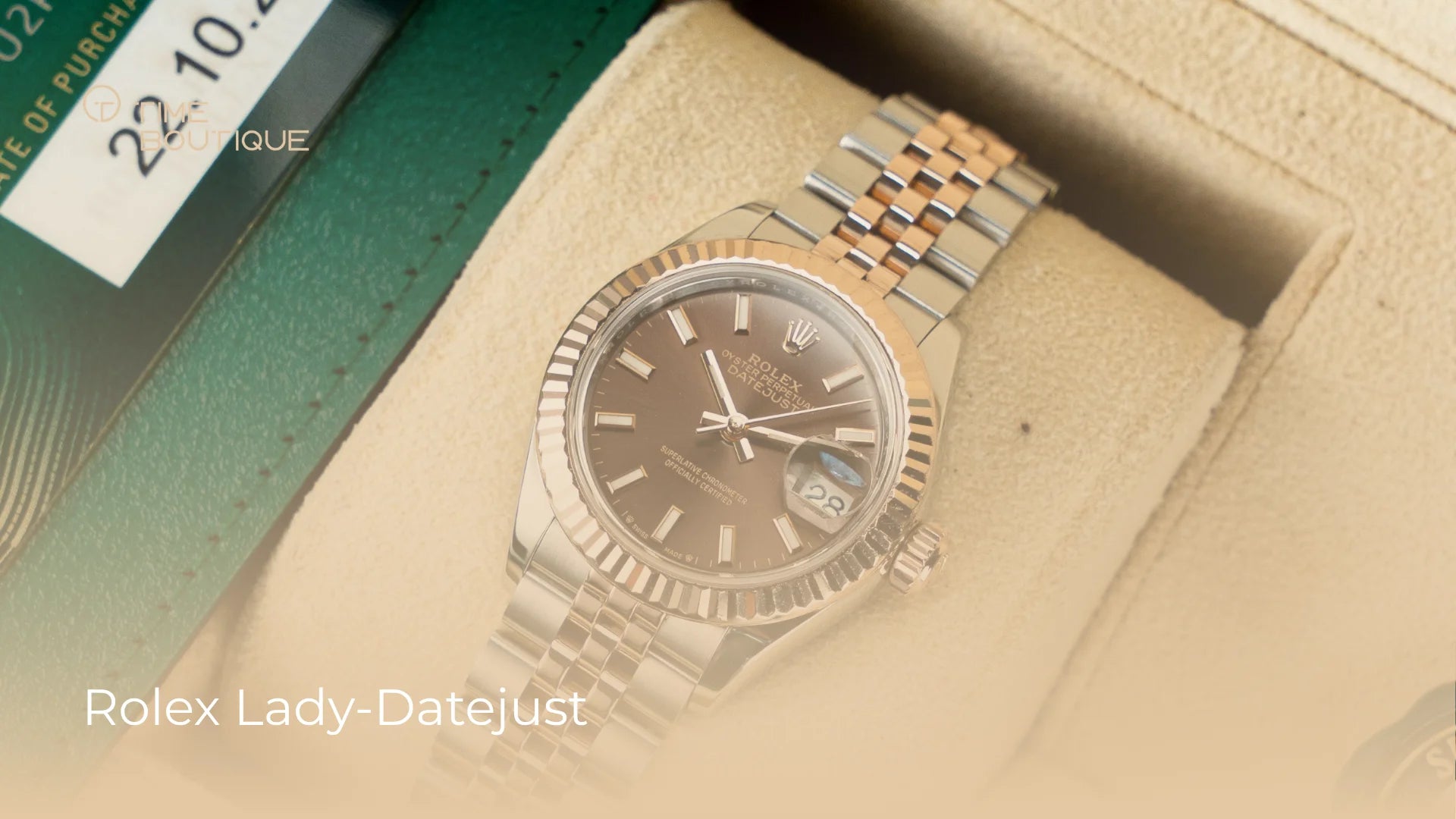
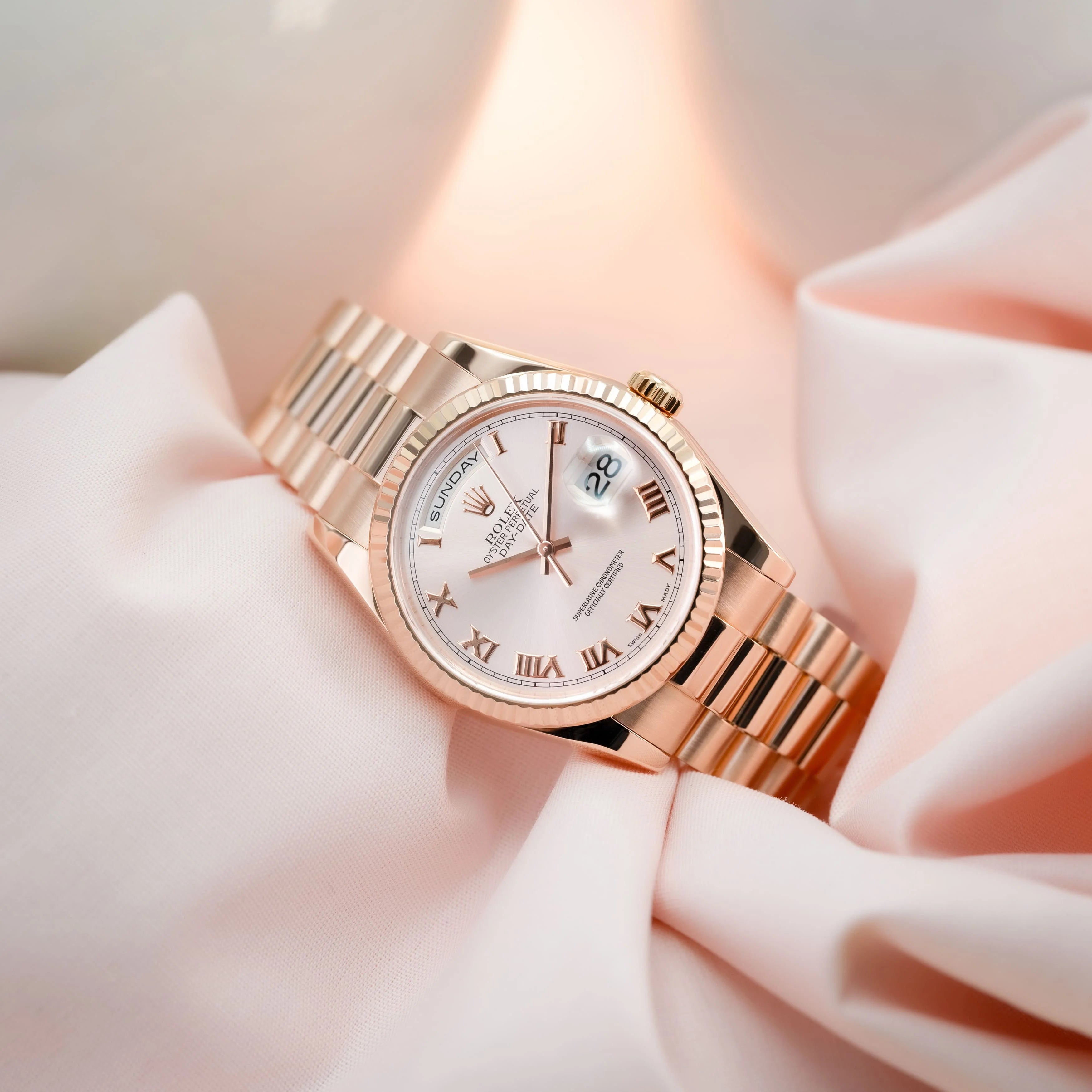
The classic line is the quiet side of Rolex. The Oyster Perpetual is the purest model of the brand, a watch without a date, with only hours, minutes and seconds, often with lively dial colours. For many it is the most uncomplicated first Rolex. The Datejust builds on this and adds the date in the window with the Cyclops lens. It is the archetypal Rolex and perhaps the best choice when a single classic watch is to cover all occasions. The Day-Date, often simply called the President, stands at the top of this line. It additionally shows the spelled-out day of the week, is made exclusively in precious metal and stands for status in its quietest form. More on the Day-Date is in the glossary.
The professional line
The professional line is the better-known, louder side. The Submariner is the diving watch that has become the general idea of a good watch. The Sea-Dweller and the Deepsea carry the same idea further and are designed for greater depths, accordingly built more strongly. More on the Sea-Dweller is in the glossary. The GMT-Master II adds a second time zone and a rotating 24-hour bezel whose colour variants carry nicknames of their own. It is the travel watch of the brand.
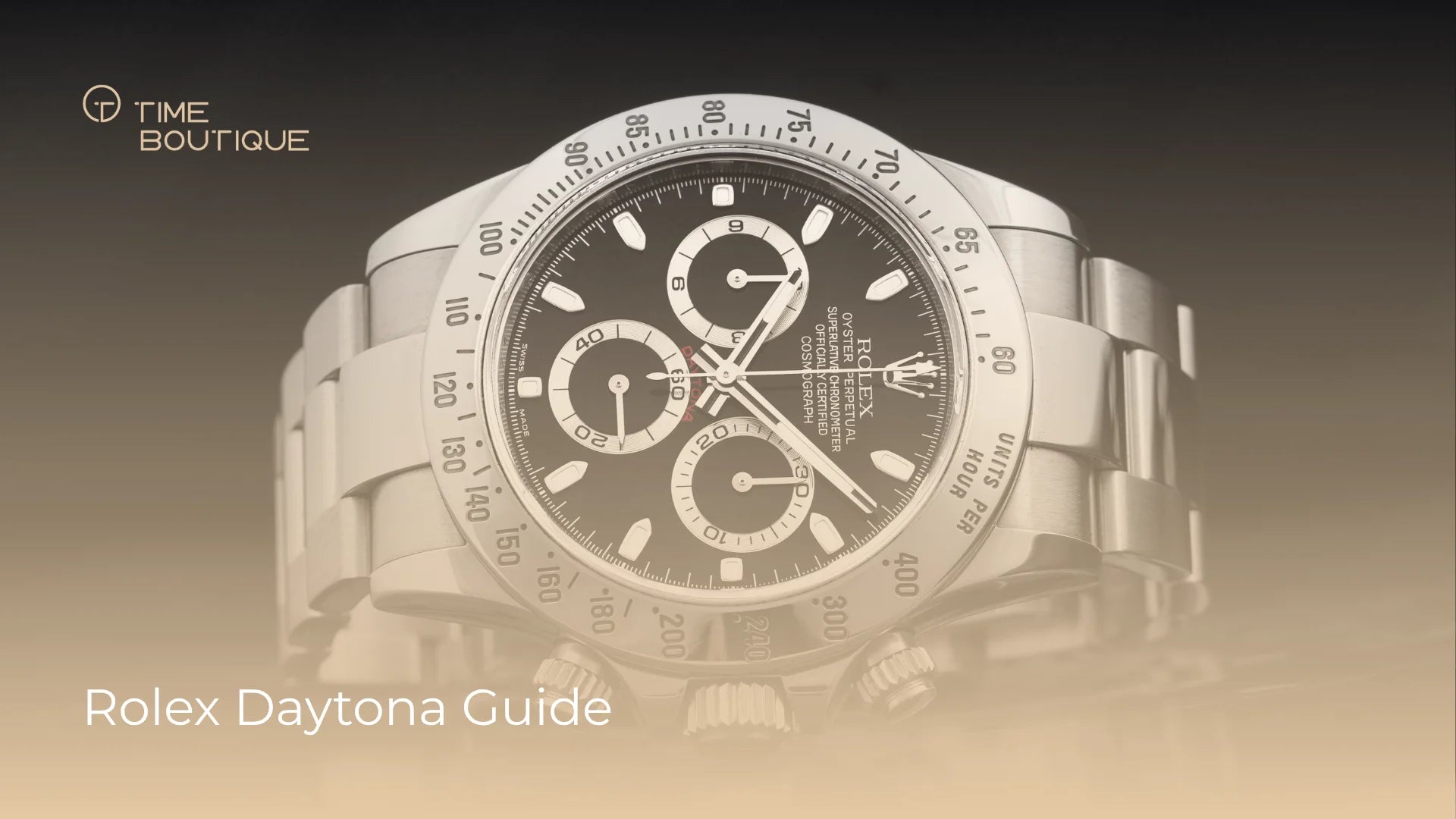
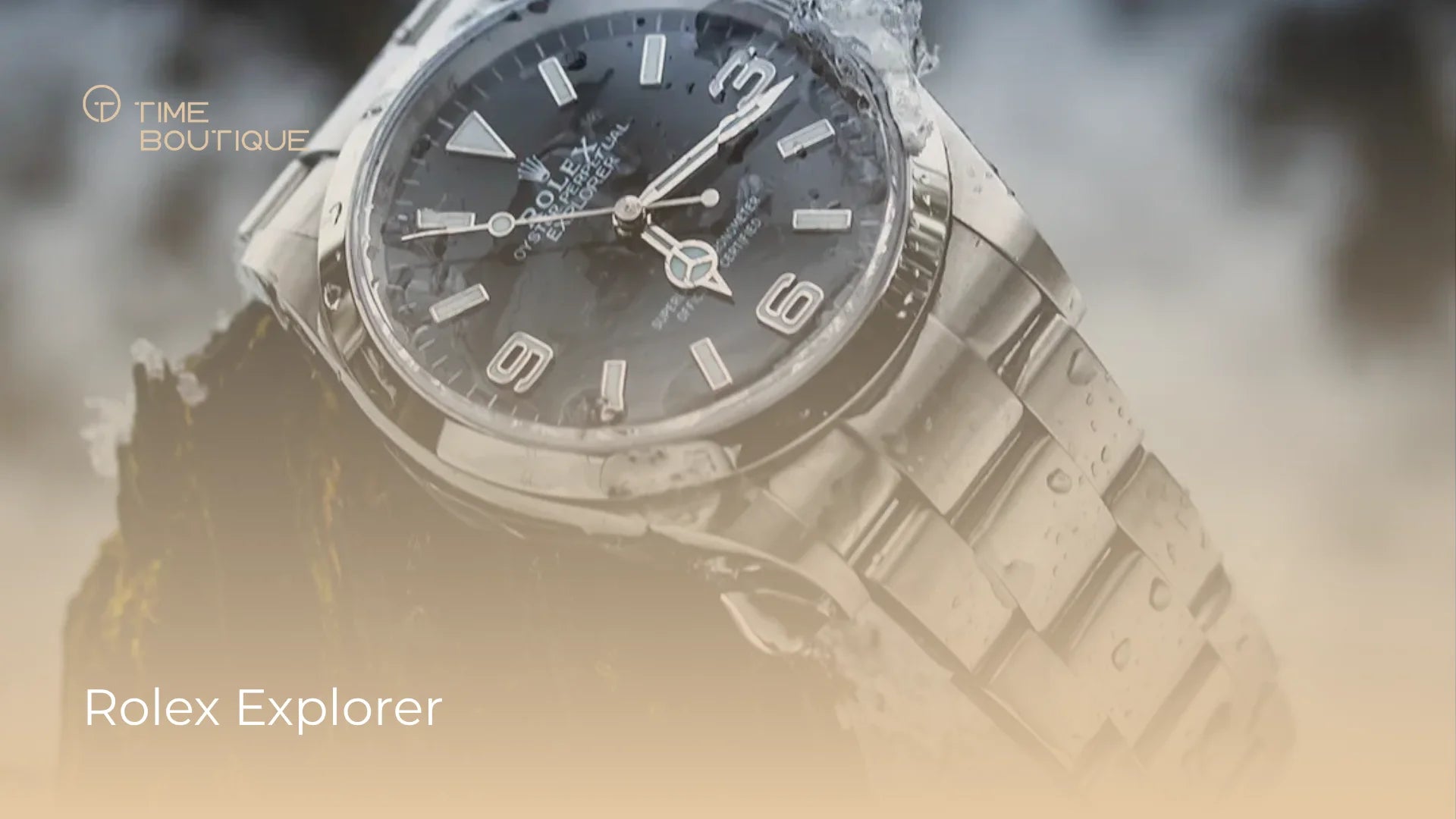
The Explorer and the Explorer II stand for adventure and simplicity, the one in a compact, the other in a larger form with an additional 24-hour display. The Yacht-Master is the nautical sister of the Submariner, more elegant and often in precious metal. The Sky-Dweller is the most complicated of the series, with an annual calendar and a second time zone. The Air-King carries the heritage of aviation in an emphatically sober form. And finally the Daytona, the chronograph that comes from racing and is today probably the most sought-after Rolex of all.
The materials
The choice of material is at Rolex almost as important as the model. Oystersteel is the resistant stainless steel of the brand and the basis of most sports models. Rolesor is what Rolex calls the combination of steel and gold, a warmer reading that brings precious metal into play without relying on it entirely. Above this stand the solid gold versions in yellow, white and Everose gold, as well as platinum, which Rolex reserves for particular models and dial colours. The bezels of the sports models are frequently made of Cerachrom, a ceramic that does not fade and barely scratches. This choice of material determines not only the price but also the character and the availability of a watch.
A short history of Rolex
To understand the models, a look at the foundation on which they all stand helps. In 1926 Rolex introduced the first water-resistant wristwatch with the Oyster case, a milestone that defines the name of every Oyster watch to this day. In 1931 the Perpetual rotor followed, which winds the watch itself through the movement of the wrist. These two inventions, the water-resistant case and the automatic winding, are the basis of almost every modern Rolex. In 1945 came the Datejust with the date in the window, in 1956 the Day-Date with the additionally spelled-out day of the week. In the fifties and sixties the professional line then arose, from the Submariner through the GMT-Master to the Daytona, each meant for a particular task. This history explains why Rolex still develops cautiously rather than reinventing. The models stand on a foundation grown over almost a century, and exactly this constancy is a large part of their value.
Sizes and proportions, what suits which wrist
Rolex thinks in clear sizes, and it is worth having them in mind. The classic dress models move frequently around 36 to 40 millimetres, the sports models around 40 to 42. The women's models begin at 28 millimetres. For most wrists a range of 36 to 41 millimetres is the balanced core. Anyone with a narrow wrist often feels more comfortable with 36 millimetres or below, anyone with a strong one with 41. More important than the bare number, however, is how a watch actually sits, for lugs, case height and bezel strongly influence the effect. That is why trying on cannot be replaced by anything. In the atelier we like to lay several sizes side by side, because the right proportion shows on the wrist in seconds, while it can hardly be described in numbers.
Cerachrom, Chromalight and the technology in detail
Behind the model names stand a few technologies that almost all Rolex watches share and that make up their everyday value. Cerachrom is the ceramic of the bezels that does not fade and barely scratches. Chromalight is the luminous material that glows blue for a long time in the dark and secures legibility at night. The stainless steel called Oystersteel is especially corrosion-resistant and keeps its shine. To this come modern movements with the Chronergy escapement, designed for better energy efficiency and longer power reserves. These details sound technical, but they are the reason a Rolex still runs reliably and looks good even after years of daily wear. Anyone who has once placed the terms understands the descriptions of the individual models distinctly more easily and buys more securely.
Which model suits whom
For the first Rolex, classic and suited to everyday wear, the Datejust 36 and the Oyster Perpetual are the most obvious models. Anyone looking for a single watch for really everything will struggle to get past the Submariner. Anyone who travels or wants a more striking bezel is well served by the GMT-Master II. Anyone seeking status and precious metal lands at the Day-Date. Anyone who wants a chronograph and a collector's piece looks to the Daytona. And anyone who likes it plain and suited to the outdoors finds in the Explorer the unfussy answer. A more detailed comparison with references is in which Rolex to buy.
Bezels and bracelets, small differences with a large effect
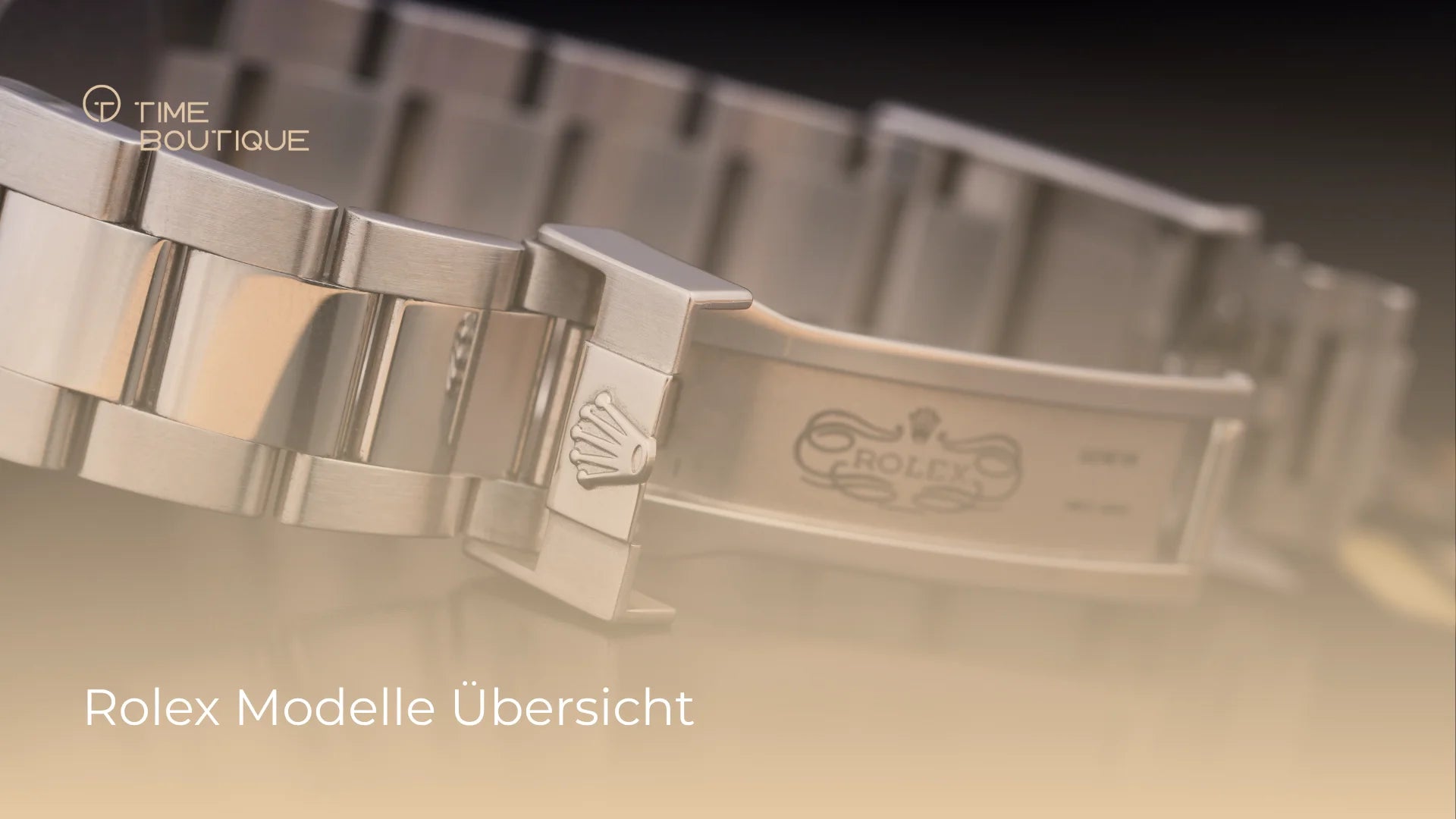
Two details shape the character of every Rolex more strongly than one first thinks, the bezel and the bracelet. With the bezels the span ranges from the smooth, domed form through the fluted bezel in gold to the rotating Cerachrom bezel of the sports models. With the bracelets the robust Oyster bracelet, the more festive Jubilee bracelet, the precious metal President bracelet of the Day-Date and the rubberised Oysterflex bracelet stand side by side. The same watch reads more matter-of-fact on an Oyster bracelet and more elegant on a Jubilee bracelet. Anyone choosing a model should make these two decisions deliberately, because they determine the daily feel of wearing and the effect on the wrist. In the atelier we put on different combinations, because the difference only really shows on the arm. It is worth not being hasty here.
Model names, reference numbers and nicknames
Anyone who engages with Rolex soon encounters three levels of designation. There is the model name like Submariner or Datejust, which names the family. There is the reference number, a multi-digit figure that encodes size, material and configuration and which among connoisseurs names the exact variant unambiguously. And there are the nicknames that have taken hold for individual colour and material variants, for example Pepsi or Batman on the GMT-Master II, or Hulk and Kermit on the Submariner. These three levels seem confusing at first but soon make sense. The model name says what it is about, the reference says which one exactly, and the nickname is the quick language among collectors. Anyone buying on the secondary market should at least know the reference of their desired watch, because condition, generation and market price can be reliably compared through it.
The model guides in detail
For the most important families we have written our own detailed guides. They go deeper into references, history and buying points than an overview can.
- Rolex Daytona, the chronograph and its myth.
- Rolex Datejust, the archetypal Rolex in all sizes.
- Rolex Submariner, the diving watch and its nicknames.
Further model guides we will add over time. Anyone looking in the meantime for a placement on prices will find it in Rolex prices and value.
Frequent questions about the Rolex models
Which Rolex is the right one for the entry? For most the Datejust 36 or the Oyster Perpetual are the most obvious first models, because they are classic, versatile and timeless in their basic form.
Why are some models so hard to get? With certain steel sports models demand has exceeded retail allocation for years, which leads to waiting lists. The classic models and the precious metal versions, by contrast, are mostly well available.
What does the term Professional mean at Rolex? It groups together the models originally developed for particular activities, for example the Submariner for diving or the GMT-Master for travel, in contrast to the classic, elegant line.
Steel or gold? Steel is the unfussy, everyday-capable choice and the most sought-after among the sports models. Gold and Rolesor appear more present and suit those who deliberately want to wear something more festive. A detailed placement is given by which Rolex to buy.
Advice at Time Boutique
Which model is ultimately the right one is best decided on the wrist. In our atelier in Munich we lay different families, sizes and materials side by side and advise without haste. You will find an overview of our current stock in our Rolex selection. Appointments are by arrangement, in person and at ease.
- How the Rolex world is ordered
- The classic line
- The professional line
- The materials
- A short history of Rolex
- Sizes and proportions, what suits which wrist
- Cerachrom, Chromalight and the technology in detail
- Which model suits whom
- Bezels and bracelets, small differences with a large effect
- Model names, reference numbers and nicknames
- The model guides in detail
- Frequent questions about the Rolex models
- Advice at Time Boutique