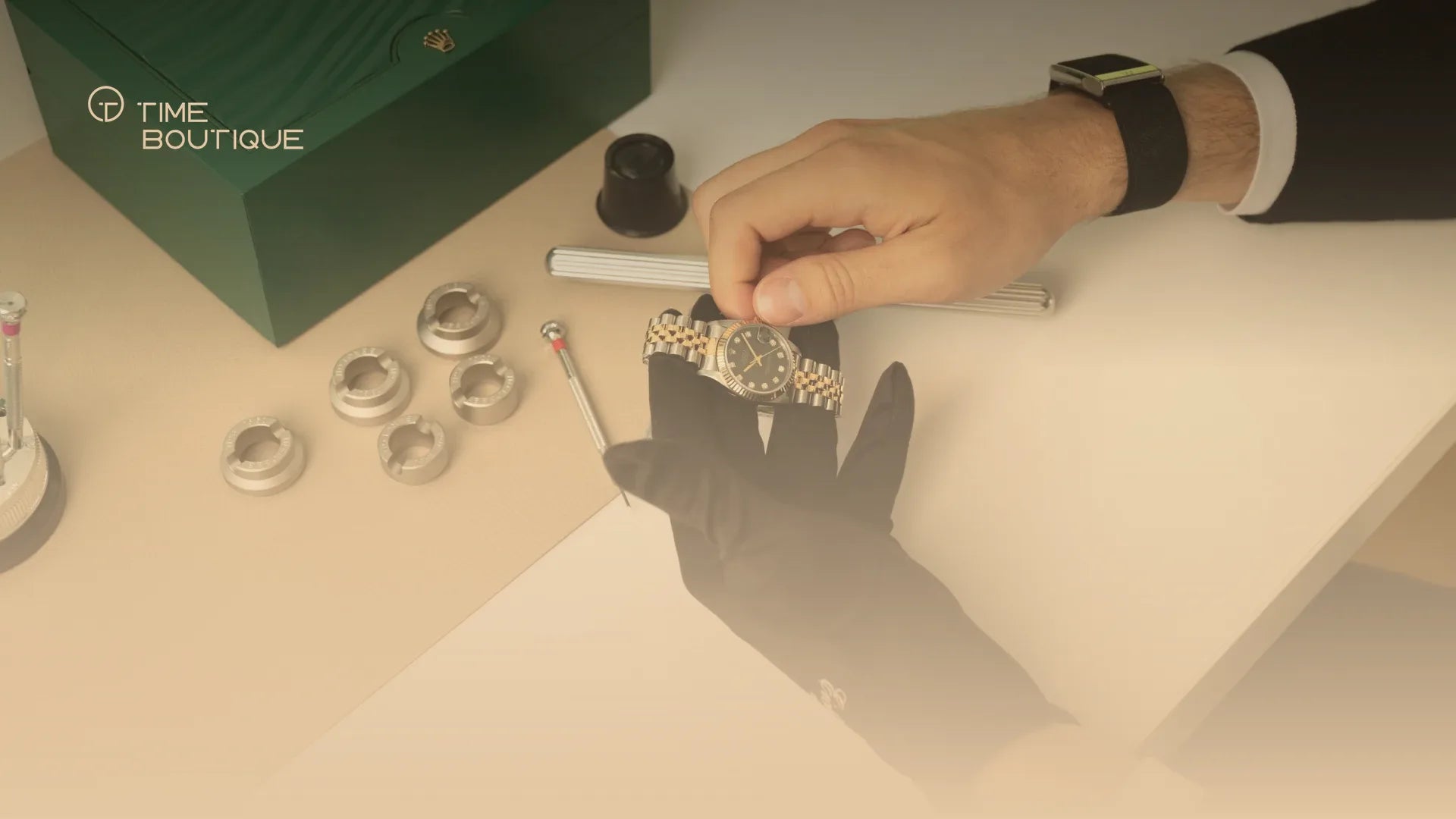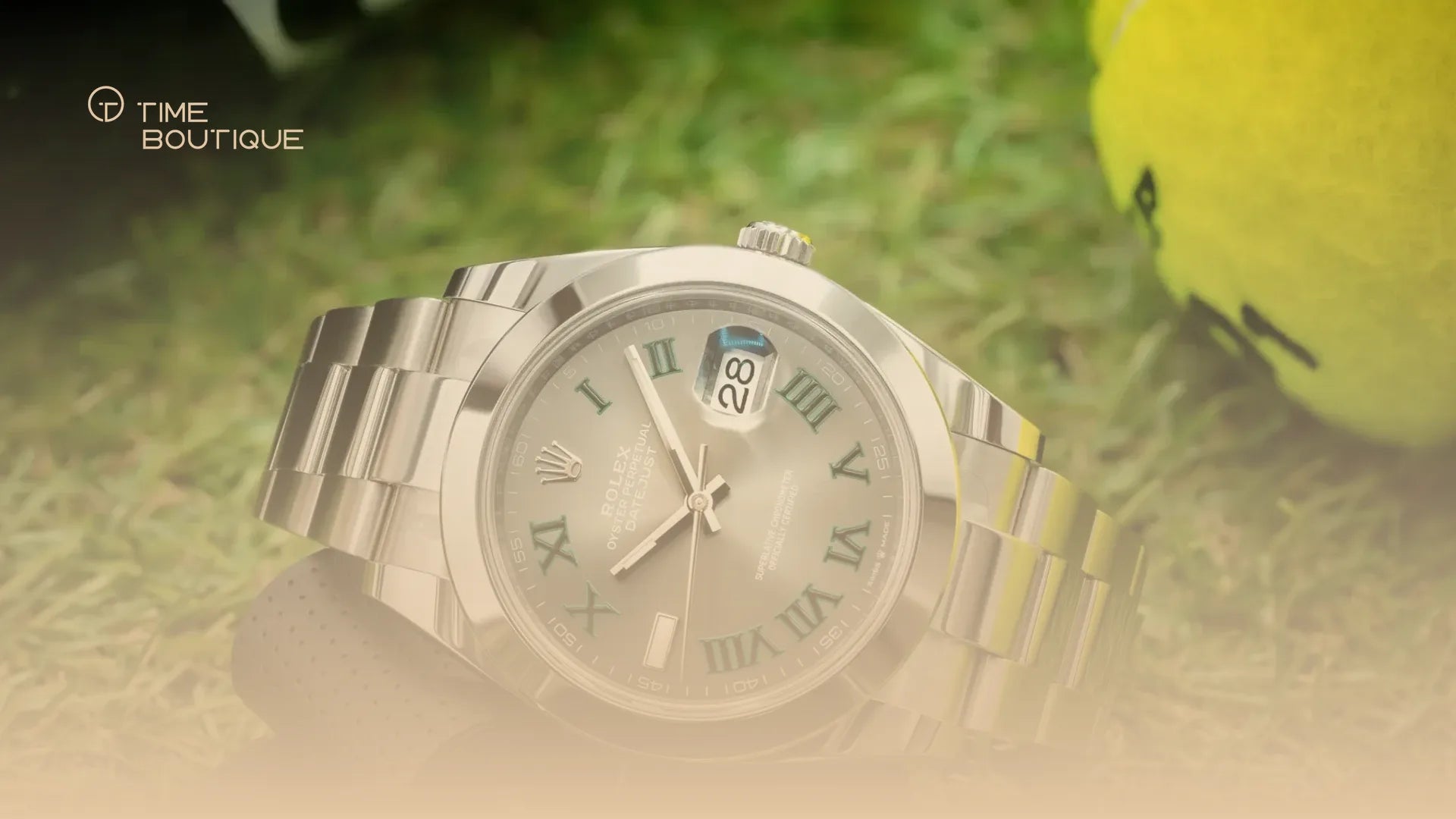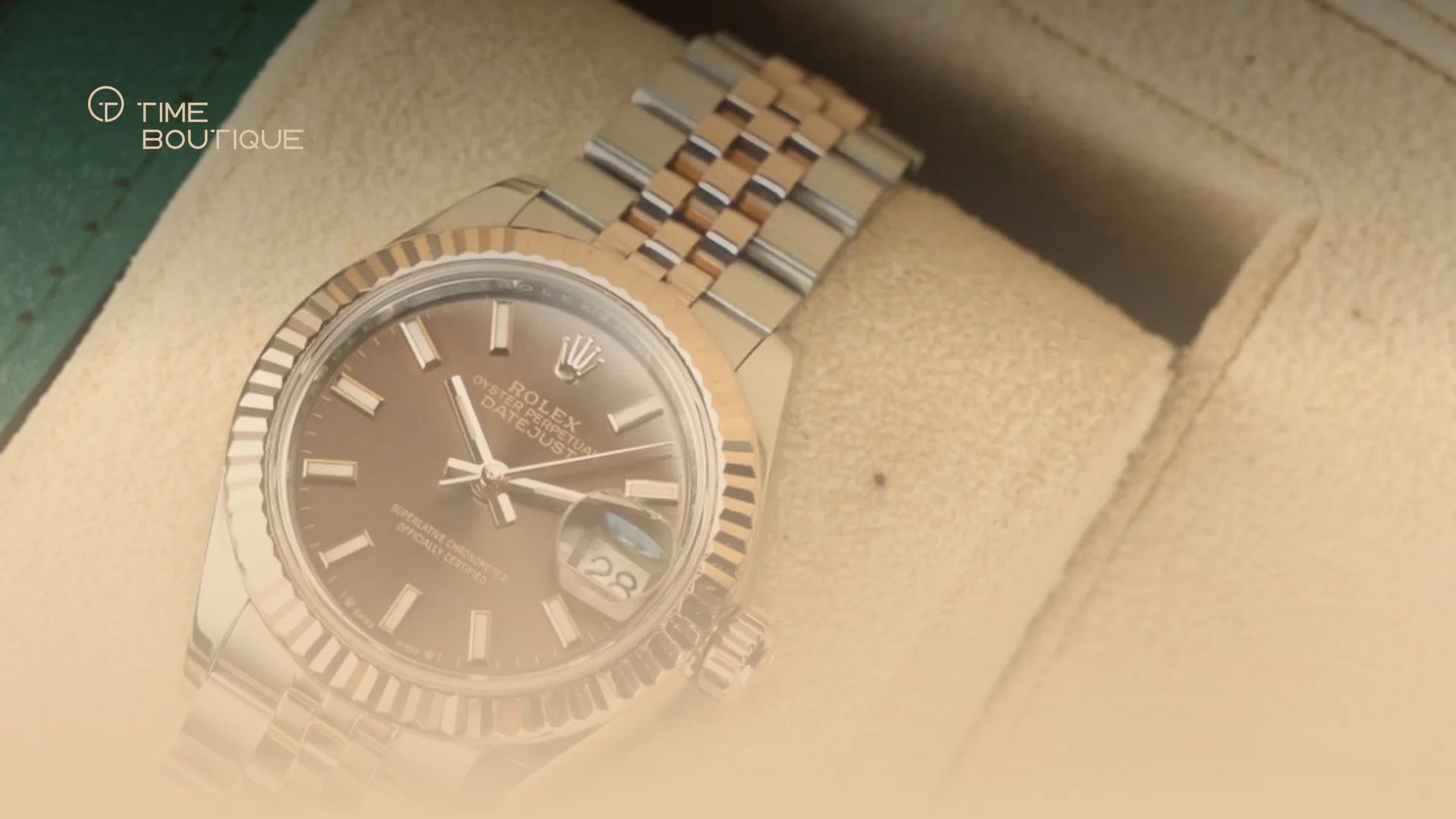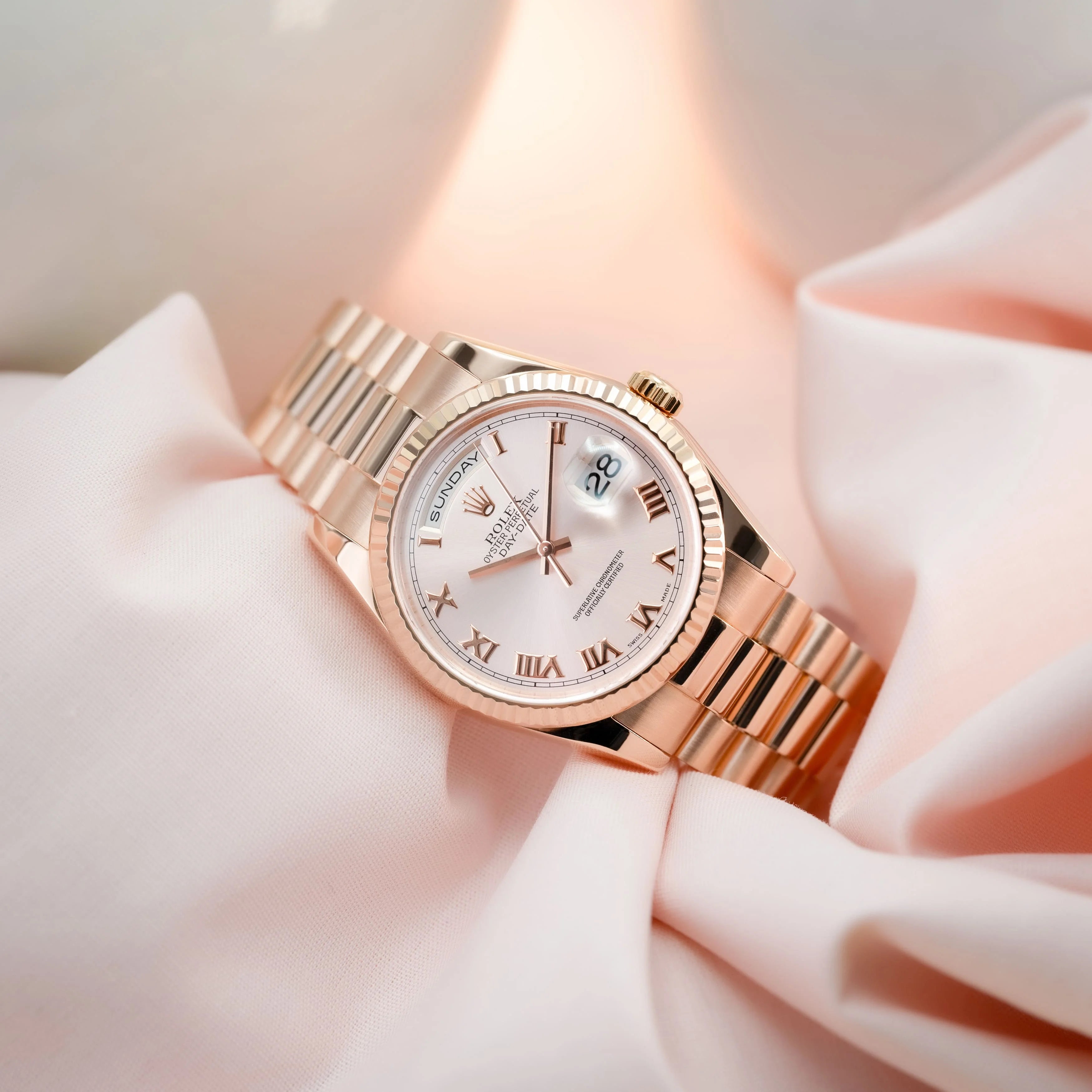

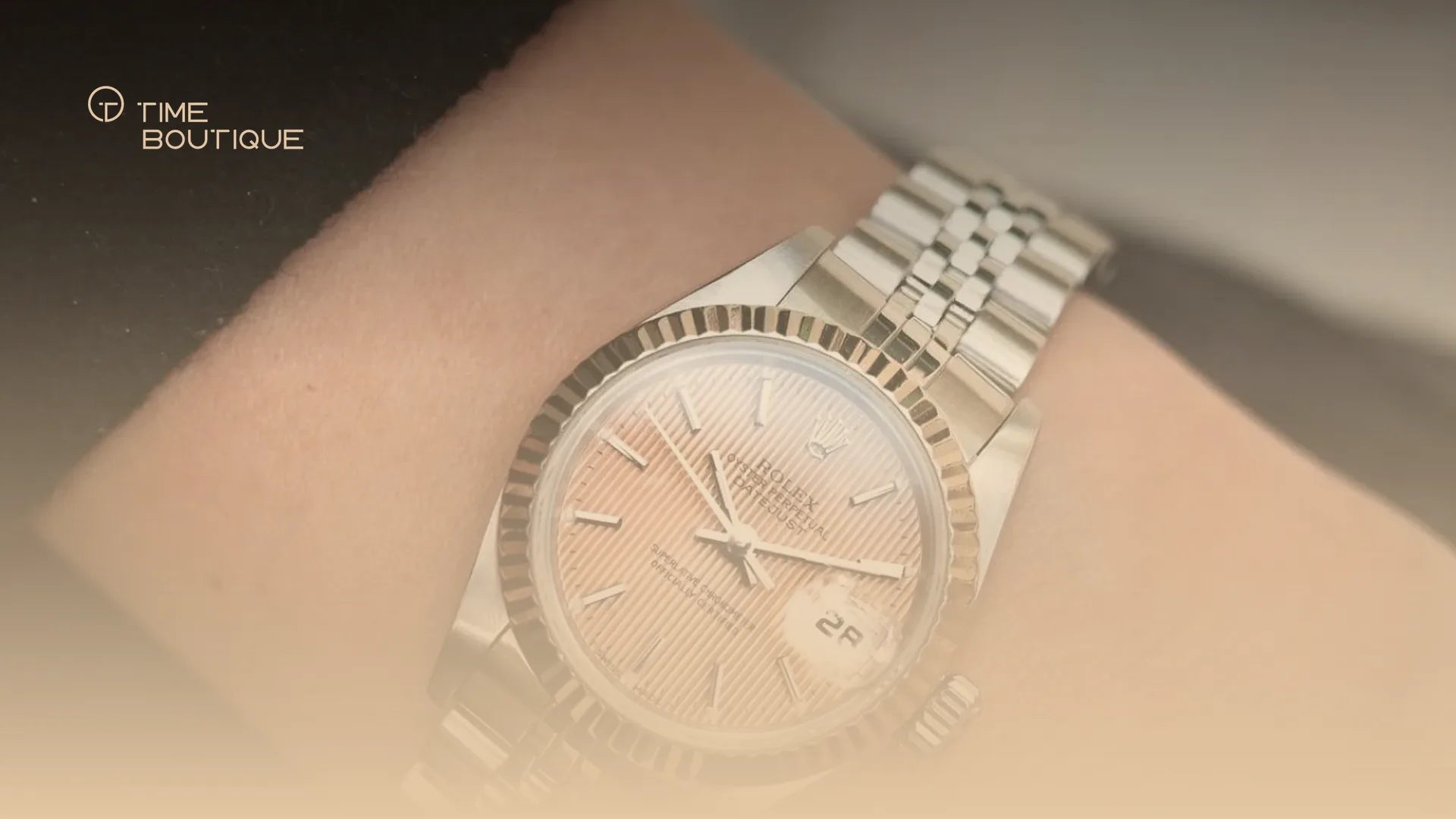
Anyone looking for an older ladies' Rolex steps into a surprisingly rich world. The decades from the seventies to just after the turn of the millennium in particular produced a wealth of small ladies' watches in many versions, above all the 26 mm Lady-Datejust. These watches are in demand again today, not merely as an accessible way into the brand but for qualities of their own: fine proportions, plenty of gold and a character that new watches have yet to develop.
This article places the key references of the Lady-Datejust 26 and the Datejust 31, explains what markings such as T SWISS T on the dial mean, and walks you through the points that really matter with a vintage Rolex for women: dial, diamonds, bracelet, case, papers and production year. If you would first like an overview of today's Lady-Datejust, you will find it in the Rolex Lady-Datejust guide.
Why vintage Rolex for women are so sought after
For decades, 26 mm was the size of the classic ladies' Rolex. On the wrist such a watch looks delicate, almost like a piece of jewellery, and slips easily beneath a blouse cuff. Many women who find modern watches too bulky discover in these dimensions an elegance that suits a watch meant as a personal companion. Small cases also pair well with bangles and rings without outshining the rest of one's jewellery.
A second reason is the gold content. Many ladies' models of the period were made in Rolesor, meaning a bezel, crown and bracelet centre links in solid gold, or entirely in yellow gold. A vintage ladies' Rolex therefore often carries more precious metal than its slender size would suggest, which adds to its ability to hold value.
And finally there is character. Aged luminous material, a champagne dial that has grown warmer, the softly draping links of an old Jubilee bracelet: an older watch speaks of its era without looking old-fashioned. Many of these models also tend to sit below a current Lady-Datejust in price, although material, condition and originality decide the matter.
The Rolex Lady-Datejust 26 and its generations
The centrepiece among Rolex's vintage ladies' models is the Lady-Datejust with a 26 mm diameter, often simply called the Datejust 26 or Rolex 26 in the market. Across several generations the basic form remained almost unchanged: Oyster case, date with Cyclops lens, usually a fluted bezel and a Jubilee or President bracelet. The differences lie in the detail, above all in the movement.
| Generation | Typical references | Calibre | Period |
|---|---|---|---|
| Four-digit generation | 6917 | earlier movement generation | before the five-digit models |
| First five-digit generation | 69173, 69174, 69178 | 2135 | roughly from the eighties to around the turn of the millennium |
| Second five-digit generation | 79173, 79174 | 2235 | around the turn of the millennium and the years after |
| Six-digit generation | 179173, 179174 | 2235 | successor to the five-digit models |
The last digit of the reference reveals the material. A 3 stands for Rolesor in steel and yellow gold, a 4 for steel with a white gold bezel, an 8 for a yellow gold case. A 69178 is therefore the solid gold version of the first five-digit generation, which on a President bracelet is often called the Lady President in the market. How Rolex references are structured as a whole is explained in decoding the Rolex reference number.
In practical terms, calibres 2135 and 2235 are proven automatic movements with a quickset date. On the wrist the difference between a 69173 and a 79173 is barely visible. The choice therefore usually depends more on condition, dial and originality than on generation. Anyone who knows today's 28 mm Lady-Datejust will find the 26 a touch more delicate.
The Datejust 31 for women, pre-owned and vintage
Between the Lady-Datejust and the classic 36 mm Datejust sits the 31 mm size, long referred to as the midsize in the market. Today many women choose precisely this size because it has more presence without being large. The sequence mirrors that of the Lady-Datejust: the 68273 with calibre 2135 was followed by the 78273 with calibre 2235 and later by the six-digit 178273. Here too the final 3 stands for steel and yellow gold.
If you are looking for a pre-owned Rolex Datejust 31 for women, the five-digit references offer a pleasing balance of vintage character and everyday practicality. The points to check are the same as for the 26: dial, bracelet, case edges and papers. An overview of all Datejust generations and how they fit together is given in Rolex Datejust references.
Older Rolex ladies' models beyond the Datejust
Not every older ladies' Rolex is a Datejust. The Oyster Perpetual Lady does without the date and, with its clear dial, looks even more pared back, in some cases a little smaller too. Alongside it are the ladies' models of the Oyster Perpetual Date, with a date but more simply equipped, often with a smooth bezel on an Oyster bracelet. They are more sober, sportier and particularly uncomplicated in daily wear.
The Cellini models form a world of their own, designed by Rolex as classic jewellery and evening watches, mostly in gold, often on a leather strap and sometimes in unusual case shapes. These models come up less often in the market than the Lady-Datejust, which makes them especially appealing to enthusiasts. The same rules apply when checking them, although parts for older movements in these lines can be harder to source. Which Rolex models suit women in general today is answered in Rolex for women.
Tritium, Luminova and the markings on the dial
For the age and originality of a dial, the small marking along the lower edge at six o'clock is an important clue. Dials with tritium luminous material carry the designation "T SWISS T" or "SWISS T<25" there. Around the end of the nineties Rolex switched to the non-radioactive luminous material Luminova, and the dials then read simply "SWISS".
Over the years tritium loses its glow and often takes on a cream to light brown tone, known as patina. On a coherent watch the luminous plots on the dial and the luminous material on the hands usually share a similar shade. If the hands look bright white while the indices have clearly aged, that can point to replaced parts. This need not be a flaw, but it should be explainable.
With ladies' models one further point comes in: many Lady-Datejust dials, for instance those with diamonds or Roman numerals, carry little or no luminous material at all. With these, looking at the patina helps little, and the print, the hands and the way everything fits with the reference and serial number become more important.
Original dial or service dial
During overhauls within the brand's service network, older dials and hands were in the past frequently exchanged for new parts, for instance when the luminous material was damaged or the watch was to be visually refreshed. Such a part is called a service dial. It is a genuine Rolex part and technically flawless, but it no longer reflects the state in which the watch was delivered. A Luminova dial in a watch whose serial number clearly falls into the tritium era is a typical example.
With ladies' models the difference between an original and a service dial usually carries less weight in the market than with sought-after sports models. For collectors and for a later resale, originality still counts. If the original dial that was exchanged comes with the watch, that is a plus. A service dial is no flaw, but it should be named openly and reflected in the price. Clearly distinct from this are reworked or reprinted dials that do not come from Rolex. They reduce the value considerably.
Diamonds on the Rolex Datejust 26, factory-set or added later
Diamonds belong to the Lady-Datejust as much as the Jubilee bracelet does. Rolex itself offered numerous versions with a diamond bezel, diamond indices or fully set dials. The market, however, also holds many watches whose bezel or dial was fitted with stones after the fact. Such alterations reduce the value as a rule. Within the brand's service network, diamonds set later are, by widespread experience, not treated as original parts, which can lead to queries or to an exchange for original parts at a later overhaul.
How can the difference be recognised? Rolex generally lists factory diamond bezels under references of their own. If the reference between the lugs points to a fluted bezel but the watch wears diamonds, that is a sign worth clarifying. With factory diamond dials the stones are even in size and colour, the settings sit cleanly and the print is crisp and intact. Irregular settings, scratches around the stones or a blurred print suggest later work. When in doubt, documents confirming the configuration and the assessment of an experienced watchmaker will help.
Stretched bracelets, checking the Jubilee and President
The Jubilee bracelet with its five rows of links and the President bracelet with its semi-circular links are elegant, but prone to wear over time. Decades of wear widen the holes and grind down the pins between the many small links. The bracelet lengthens, sags and loses its tension. This is known as a stretched bracelet.
A simple test: hold the watch by the case so that the bracelet extends horizontally to the side. A well-preserved bracelet stays largely straight, a stretched one droops noticeably. Also look for visible gaps between the links, a folding clasp that closes firmly and end links that sit neatly against the case.
Slight stretch is normal for a watch of this age and no reason to walk away. With pronounced stretch, a refurbishment or replacement may make sense, which carries noticeable costs, particularly with gold bracelets. A later original Rolex bracelet is no drawback for wearing, though collectors value a bracelet that matches the period.
Polished cases and sharp lugs
A 26 mm case has little material to spare. Every polish removes a thin layer, and after several heavy refinishes the lugs look slimmer, the edges rounded and, where present, the transitions between polished and brushed surfaces blurred. With gold, which is softer than steel, this happens faster. The fluted bezel suffers too: its fine ridges lose their sharpness over time.
Look for clearly defined edges on the lugs, even surfaces and legible engravings between the lugs. Honest signs of wear are no defect on a vintage watch and are often preferred to an over-polished case, because lost material cannot be brought back.
Papers, box and service history on older pieces
With a watch several decades old, complete documents are rarer than with a young model. That is precisely why they carry weight. Original guarantee papers that match the serial number confirm origin and configuration and support the value. Older Rolex papers are paper documents, later generations cards. Missing papers are not unusual with vintage pieces and no reason to rule a watch out, but they call for all the more careful examination of the watch itself.
A documented service history is almost as valuable. Invoices and receipts from overhauls show when the movement was last serviced and whether parts such as the dial or hands were exchanged. How strongly box and papers affect value is set out in box and papers, how important are they really. How to check a Rolex for authenticity overall is described in the guide how to check if a Rolex is authentic.
How to tell the production year of a vintage Rolex
On older ladies' models the serial number is engraved between the lugs at six o'clock, with the reference opposite at twelve o'clock. Seeing them requires removing the bracelet, which is best left to a specialist workshop. The serial number allows the production period to be placed. A quick lookup is offered by the Rolex serial number check.
Two points help with dating. The purchase date on the papers can differ from the production year, because watches sometimes sat in retail stock for a while. And on more recent models Rolex no longer issues sequential numbers, so their age is narrowed down mainly through the papers. For the classic five-digit ladies' models, by contrast, dating via the serial number works well. If serial number, reference, calibre and dial marking fit together in time, that is a good sign of a coherent watch. A selection can be found in the Rolex women's watches and vintage collections.
Vintage ladies' Rolex at Time Boutique
Classic Lady-Datejust and Datejust 31 models are a fixture of our ladies' Rolex watches and our vintage collection. Every watch is inspected in our own workshop in Munich.
Our collection changes constantly. If you are looking for a particular reference, year or dial, we will find it for you. Get in touch.
If you already own a vintage Rolex, we handle service and overhaul and will buy your watch if you wish, via the selling enquiry.
Frequently asked questions
Which references belong to the Rolex Lady-Datejust 26?
The best known include the four-digit 6917, the five-digit 69173, 69174 and 69178 with calibre 2135, the 79173 and 79174 with calibre 2235, and the six-digit 179173 and 179174. The last digit shows the material: 3 for steel and yellow gold, 4 for steel with a white gold bezel, 8 for yellow gold. Outwardly the generations differ only slightly.
What does a pre-owned Rolex Lady-Datejust 26 cost?
The price depends above all on material, condition, the originality of dial and diamonds, and completeness with box and papers. A solid gold version sits well above a steel and gold one, factory diamonds raise the value, while diamonds added later tend to lower it. As the market moves, comparing several similarly specified pieces is the most reliable way to an assessment.
Lady-Datejust 26 or Datejust 31, which suits better?
The 26 is the daintier, more jewellery-like choice and suits slender wrists in particular. The 31 has more presence and is, for many women today, the preferred everyday size. It is best to try both sizes on your own wrist.
Is a vintage ladies' Rolex suitable for everyday wear?
Yes, provided it is in good technical condition. The automatic movements of these generations are robust, and what matters is an overhaul that is not too far in the past. On older watches water resistance depends on the condition of the seals and should be tested before swimming.
How can I recognise a tritium dial on an old Rolex?
By the marking "T SWISS T" or "SWISS T<25" along the lower edge of the dial. Over the years the luminous material has usually taken on a cream tone and barely glows any more. Luminova dials from the period that followed read only "SWISS" there.
- Why vintage Rolex for women are so sought after
- The Rolex Lady-Datejust 26 and its generations
- The Datejust 31 for women, pre-owned and vintage
- Older Rolex ladies' models beyond the Datejust
- Tritium, Luminova and the markings on the dial
- Original dial or service dial
- Diamonds on the Rolex Datejust 26, factory-set or added later
- Stretched bracelets, checking the Jubilee and President
- Polished cases and sharp lugs
- Papers, box and service history on older pieces
- How to tell the production year of a vintage Rolex
- Vintage ladies' Rolex at Time Boutique
- Frequently asked questions
- Which references belong to the Rolex Lady-Datejust 26?
- What does a pre-owned Rolex Lady-Datejust 26 cost?
- Lady-Datejust 26 or Datejust 31, which suits better?
- Is a vintage ladies' Rolex suitable for everyday wear?
- How can I recognise a tritium dial on an old Rolex?